

Bitcoin Active Addresses Drop to 14-Month Low, Signaling Potential Accumulation Shift
BTC/USDT
$6,616,323,678.03
$79,199.48 / $78,084.08
Change: $1,115.40 (1.43%)
-0.0015%
Shorts pay

Contents
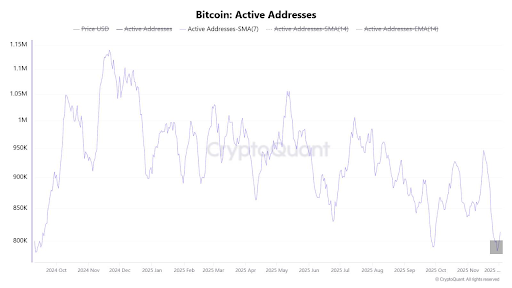
Bitcoin network activity has reached its lowest point since September 2024, with the 7-day average of active addresses falling to 785,000. This decline signals reduced user engagement on the blockchain, contrasting sharply with peaks over 1.1 million in late 2024, and may precede accumulation phases.
-
Bitcoin active addresses hit 785,000, the lowest since mid-September 2024, highlighting a drop in daily network participation.
-
The downtrend began early in 2025, diverging from high-activity periods like November 2024 when addresses exceeded 1.1 million.
-
Historical data from sources like CryptoQuant shows such lows often lead to accumulation, with potential rises in engagement signaling market recovery.
Discover why Bitcoin network activity is at a 14-month low in 2025, with active addresses down to 785K. Explore implications for users and markets—stay informed on blockchain trends today.
What Is Causing the Drop in Bitcoin Network Activity in 2025?
Bitcoin network activity has declined steadily since early 2025, reaching a 14-month low with the 7-day simple moving average of active addresses at 785,000. This reduction points to waning user participation amid quieter market conditions, far below the 1.1 million peak seen in November 2024. Analysts attribute it to broader market fatigue, where fewer retail users engage in daily transactions or transfers.
How Has On-Chain Participation Evolved Recently?
Data from on-chain analytics platforms like CryptoOnchain reveal a prolonged downtrend in Bitcoin’s on-chain activity starting at the beginning of 2025. Active addresses, which track unique users interacting with the network, have fallen consistently from highs over 1.1 million a year ago and in late 2024. This shift indicates a cooling phase, with routine usage dropping as retail interest wanes during periods of market uncertainty.
The trend is evident in visualization tools from CryptoQuant, showing a steady decline rather than sudden drops, suggesting a gradual reduction in frequent user interactions. Experts note that such patterns often align with phases of consolidation, where transaction volumes decrease but long-term holders remain steady. For instance, during similar historical lows, network engagement has rebounded as confidence returns, potentially boosting addresses by 20-30% in recovery cycles, according to past metrics from blockchain research firms.
Source: CryptoQuant
This structured decline provides valuable insights for investors monitoring blockchain health, as sustained low activity can influence perceptions of Bitcoin’s utility and adoption rates.
Frequently Asked Questions
What does the low number of Bitcoin active addresses mean for investors in 2025?
The drop to 785,000 active addresses on a 7-day average signals reduced short-term engagement but does not indicate fundamental issues with Bitcoin’s protocol. Historically, such levels have preceded accumulation by long-term holders, potentially setting the stage for price stability or gains as market sentiment improves, based on data from analytics providers like CryptoQuant.
Why is Bitcoin network activity lower now compared to late 2024?
Bitcoin network activity is lower in 2025 due to a combination of market consolidation and decreased retail trading following the November 2024 highs. With fewer daily transactions, the 7-day average of active addresses has stabilized at 785,000, reflecting a natural pause in user-driven momentum that often occurs after peak periods, as observed in on-chain reports.
Key Takeaways
- Lowest Activity Since September 2024: Bitcoin’s 785,000 active addresses mark a 14-month low, driven by a steady downtrend from early 2025 peaks.
- Contrast to Past Highs: This level is well below the 1.1 million addresses seen in November 2024, highlighting a shift toward quieter network usage amid market fatigue.
- Potential for Recovery: Historical patterns suggest monitoring for rebounds, as rising activity could signal renewed confidence and accumulation phases for investors.
Conclusion
The Bitcoin network activity drop in 2025, with active addresses at a low of 785,000, underscores a phase of reduced on-chain participation compared to vibrant periods like late 2024. While this trend reflects broader market cooling, historical precedents from sources such as CryptoOnchain and CryptoQuant indicate it may foster accumulation and eventual engagement growth. As blockchain dynamics evolve, staying attuned to these metrics will help users navigate future opportunities in the cryptocurrency landscape.