

Polymarket Insider Cluster Nets $2.4M, BNB Chain Quantum Test Cuts Throughput 40%, Standard Chartered Eyes $4T Tokenized
BNB/USDT
$234,978,561.81
$563.28 / $550.00
Change: $13.28 (2.41%)
-0.0024%
Shorts pay

Crypto News
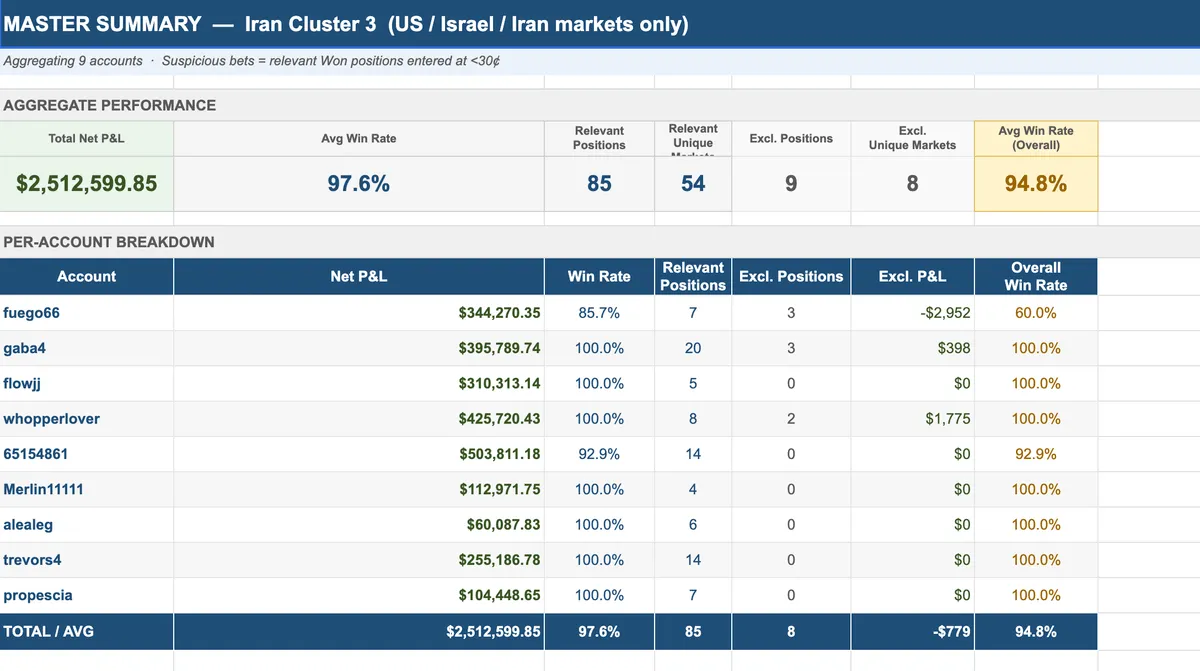
A cluster of nine blockchain wallets generated roughly $2.4 million in profit with a 98% win rate on Polymarket contracts tied to US military operations, on-chain analytics firm Bubblemaps disclosed in a Monday report. The accounts placed concentrated bets just before high-impact events, including the February 28 strike on Iran, the killing of Iranian Supreme Leader Ayatollah Ali Khamenei and a subsequent US-Iran ceasefire agreement. Funding was routed through centralized exchanges within a tight window, and four wallets each pocketed near $400,000 on the February 28 strike contract alone. A handful of small losing trades on February 20 appear designed to mask the pattern, fueling fresh insider-trading concerns around prediction venues.
BNB Chain published the first major proof-of-concept showing a high-throughput Ethereum-compatible network can absorb post-quantum cryptography, though at a sharp performance cost. Engineers replaced ECDSA transaction signatures and BLS12-381 validator vote signatures with quantum-resistant alternatives, pushing typical transaction size from about 110 bytes to roughly 2.5 kilobytes and block size from 130 KB to nearly 2 MB. Cross-region native-transfer throughput fell from 4,973 transactions per second to 2,997, a 40% drop driven by data bandwidth rather than verification load. Validator-side checks held up better thanks to signature compression, but ordinary user payments absorbed most of the strain in the trial.
Crypto mining pool EMCD and ASIC firmware specialist Vnish unveiled a joint operating stack that bundles pool services with chip-level firmware tuning in a single environment. Operators gain autotuning, dynamic load balancing, real-time reject-rate monitoring and uptime telemetry from one console. The companies cite EMCD-reported figures showing stock firmware configurations can leave up to 25% of potential performance unrealized, while latency-driven rejected shares strip another 2% to 5% of monthly revenue. Vnish firmware reportedly cuts energy consumption by up to 25%, lifts efficiency 8% to 20% over stock loads and boosts hashrate by as much as 24%, while EMCD claims 99.9% pool uptime with low-latency routing.
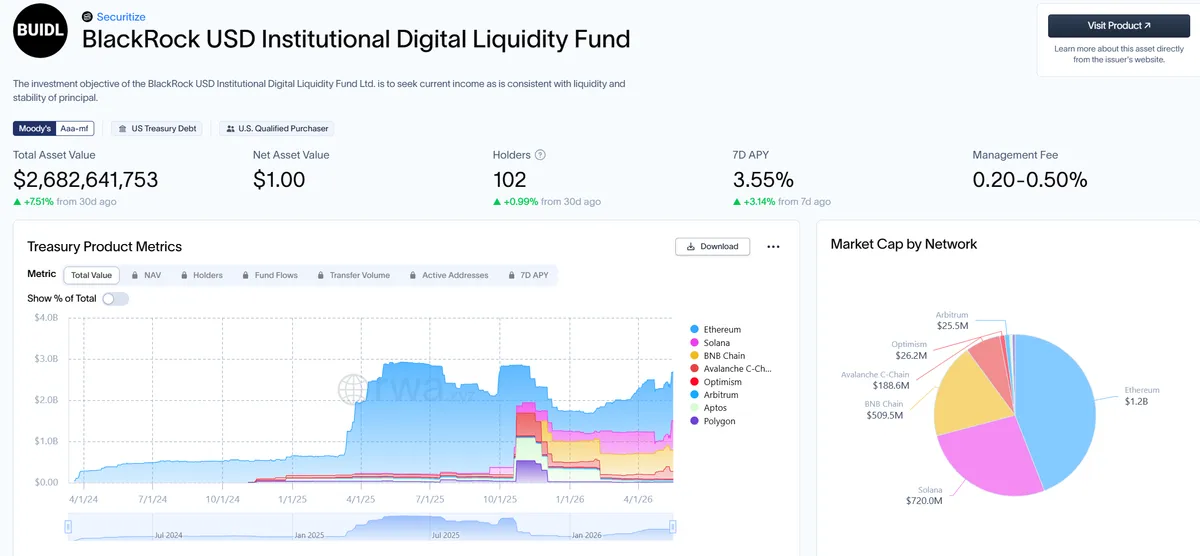
Standard Chartered's digital assets research desk projects $4 trillion in tokenized assets will sit on-chain by the end of 2028, split evenly between stablecoins and tokenized real-world assets. Geoff Kendrick, the bank's global head of digital assets research, frames composability as the structural moat that traditional finance cannot match, citing how BlackRock's BUIDL fund — with about $2.7 billion in assets — earns roughly 4% on tokenized Treasuries while simultaneously backing stablecoins and serving as collateral on lending protocols such as Aave. The bank identifies three compounding throughput drivers for DeFi protocols: more assets migrating on-chain, a rising deposit share, and increasing collateralized borrowing against those positions.
Three Wall Street desks — Benchmark, TD Cowen and Mizuho — converged Monday on buy-equivalent ratings across Bitdeer, DeFi Technologies, Strive and Gemini, signaling that traditional analysts are re-rating crypto-linked companies as AI infrastructure and capital-markets utilities. Benchmark's Mark Palmer kept a $27 target on Bitdeer, anchoring the call to its roughly 3.0 gigawatt global power portfolio spanning the US, Norway, Bhutan, Ethiopia, Canada and Malaysia. Bitdeer's AI cloud annual recurring revenue ballooned from about $10 million in January to roughly $69 million by April, with GPU deployment past 4,100 units and utilization above 90%, even as Q1 net losses widened to $159.5 million on accelerated fleet rollout.
US lawmakers have widened their pushback on war-linked prediction contracts following the Polymarket disclosures. Senator Adam Schiff's DEATH BETS Act, introduced in March, seeks to bar federally regulated venues from listing contracts tied to war, terrorism, assassination or individual deaths, building on revelations that six Polymarket traders pocketed roughly $1 million on the Iran strike outcome. California Governor Gavin Newsom layered a March executive order restricting public servants from trading prediction markets tied to political or economic events they can influence. The combined response underscores how on-chain transparency is increasingly forcing regulatory action where traditional surveillance falls short across the DEX ecosystem.
Taken together, the cycle's dominant narrative is institutional maturation colliding with structural risk. Wall Street is re-pricing miners and DeFi platforms as power-and-capital-markets infrastructure, Standard Chartered is sizing the tokenization opportunity in the trillions, and operational players such as EMCD and Vnish are squeezing efficiency from existing rigs. At the same time, the Polymarket episode and BNB Chain's quantum trial expose the maturation tax: information-asymmetry abuse on transparent venues, and the throughput penalty of future-proofing cryptography. Capital is rotating into Bitcoin and Ethereum-adjacent infrastructure on the bet that consensus mechanism upgrades and regulatory guardrails arrive before the next stress event.
COINOTAG does not provide financial advisory services. This content is for informational purposes only and should not be considered investment advice. Cryptocurrency investments involve high risk.
Add COINOTAG as a Preferred Source
Add COINOTAG to your preferred sources in Google News and Search to see our coverage first.
Add on GoogleRelated Tags
AI-generated, AI-reviewed, under COINOTAG editorial oversight.