

Ray Dalio: The World Has Collapsed, BTC and Gold Are Standing Out
Ray Dalio's wild nature warning: BTC and gold are rising. M2 explosion, technical analysis (RSI 35, support 65K USD), Metaplanet 35K BTC, NYSE ETF options. BTC


Ray Dalio's Wild Nature Warnings
Ray Dalio stated that the post-World War II order has officially collapsed and the world has entered a power-focused “wild nature” phase. The Bridgewater Associates founder wrote that major powers are facing a prisoner's dilemma in trade, technology, capital flows, and military tensions, and foolish wars can be easily triggered. He emphasized that amid economic stress and wealth inequality, governments are devaluing assets through tax increases and money supply expansion. In this environment, apolitical assets like BTC detailed analysis and gold stand out; crypto advocates argue that demand for assets that can be kept outside state control will increase.
According to Econovis data, global broad money supply rose from 26 trillion dollars in 2000 to 142 trillion dollars in 2025. According to Asymmetry, every major  Bitcoin (BTC) rally coincides with M2 expansion. Gold prices also follow US M2. Dalio's framework indicates that asset freezes and sanctions highlight the risks of traditional savings, potentially increasing the need for global, permissionless, and apolitical money assets, as Bitwise CEO Hunter Horsley said.
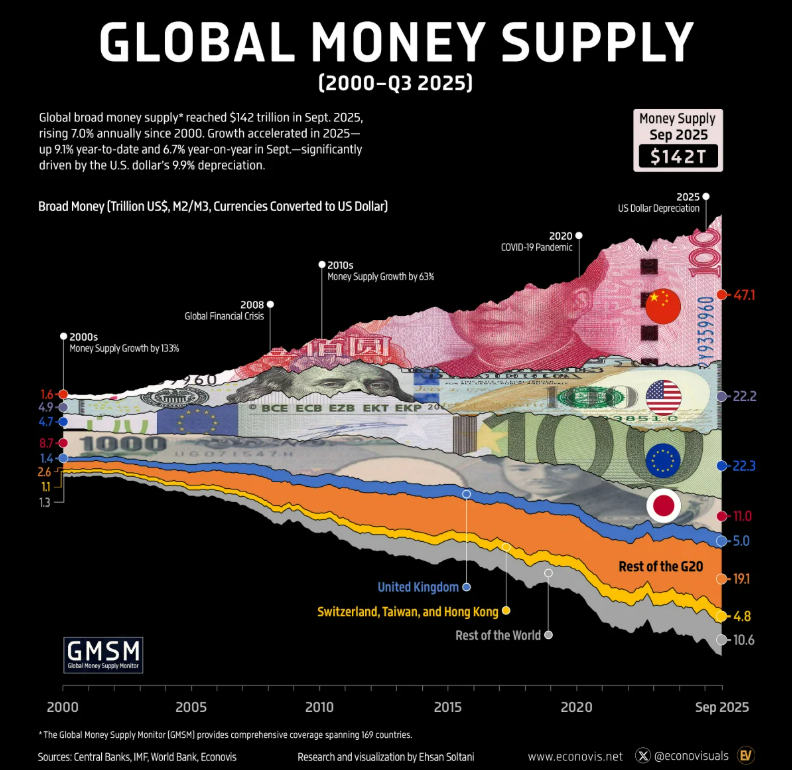
Global money supply. Source: Visual Capitalist
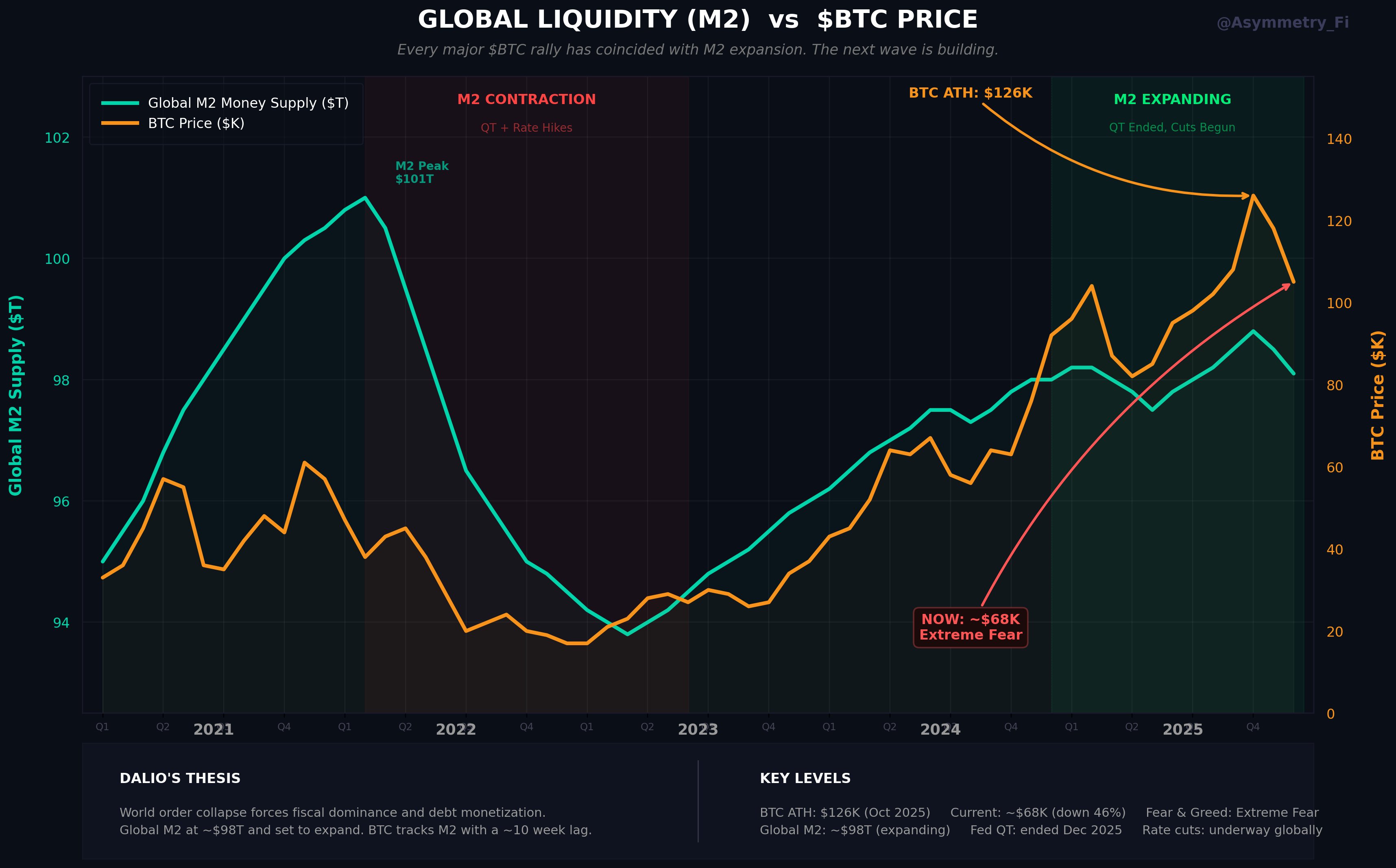
M2 vs. BTC price. Source: Asymmetry
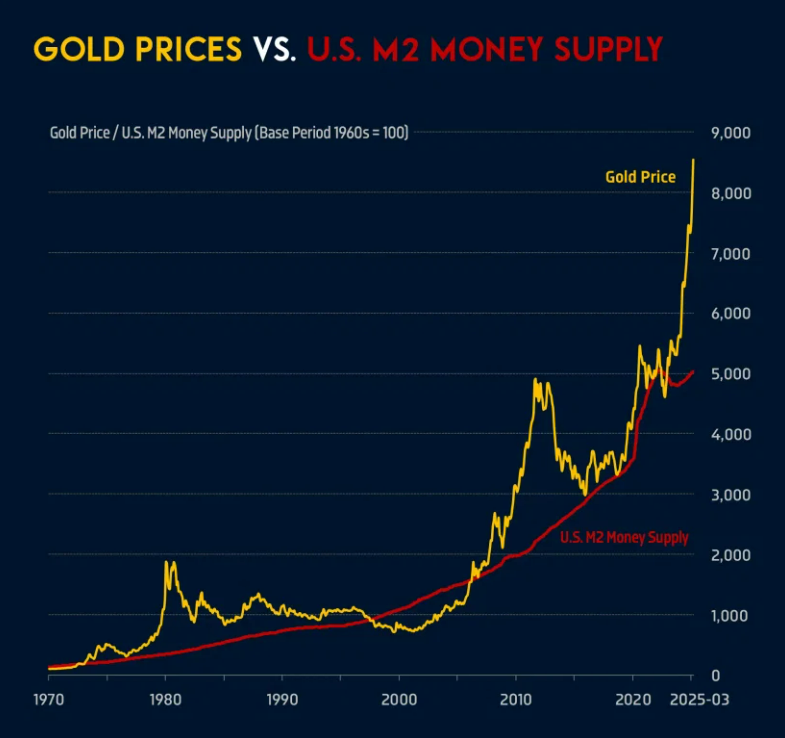
Gold price vs. M2 expansion. Source: Visual Capitalist
BTC Technical Outlook and Supports
BTC price at 67.485 USD, down -%2.25 in 24 hours. RSI 35.48 (Oversold), downtrend continues. Strong supports: S1 65.656 USD (%3.94 distance, ⭐ STRONG), S2 60.000 USD. Resistances: R1 70.146 USD (%2.63), R2 78.145 USD. BTC futures should be monitored.
- EMA 20: 73.250 USD
- Supertrend: Bearish
Latest BTC Developments
Metaplanet announced a 619 million USD net loss in Bitcoin (BTC) valuation but assets reached 35.102 BTC. BTC weekly candle recovered %8 turning positive. NYSE American is listing options for multi-crypto ETFs – signal of increasing institutional demand.
AI-generated, AI-reviewed, under COINOTAG editorial oversight.