

Warsh Takes Fed Helm, Galaxy Wins NY BitLicense, SEC Eyes Tokenized Stock Rules
Kevin Warsh sworn in as Fed chair, Galaxy secures a New York BitLicense, and the SEC readies a tokenized stock framework as institutional rails expand.
Kevin Warsh is set to be sworn in as the new chair of the US Federal Reserve Board of Governors on Friday, replacing Jerome Powell and stepping into a role under intense political pressure to deliver lower borrowing costs. The Senate confirmed Warsh largely along party lines on Wednesday, ending months of speculation over whether President Donald Trump's nominee would prioritize White House preferences when shaping monetary policy. Markets are watching closely because the next Federal Open Market Committee meeting on June 16 represents the earliest opportunity for any policy shift. Crypto traders, meanwhile, are recalibrating expectations after a sharp swing in rate-cut probabilities tied to the leadership change.
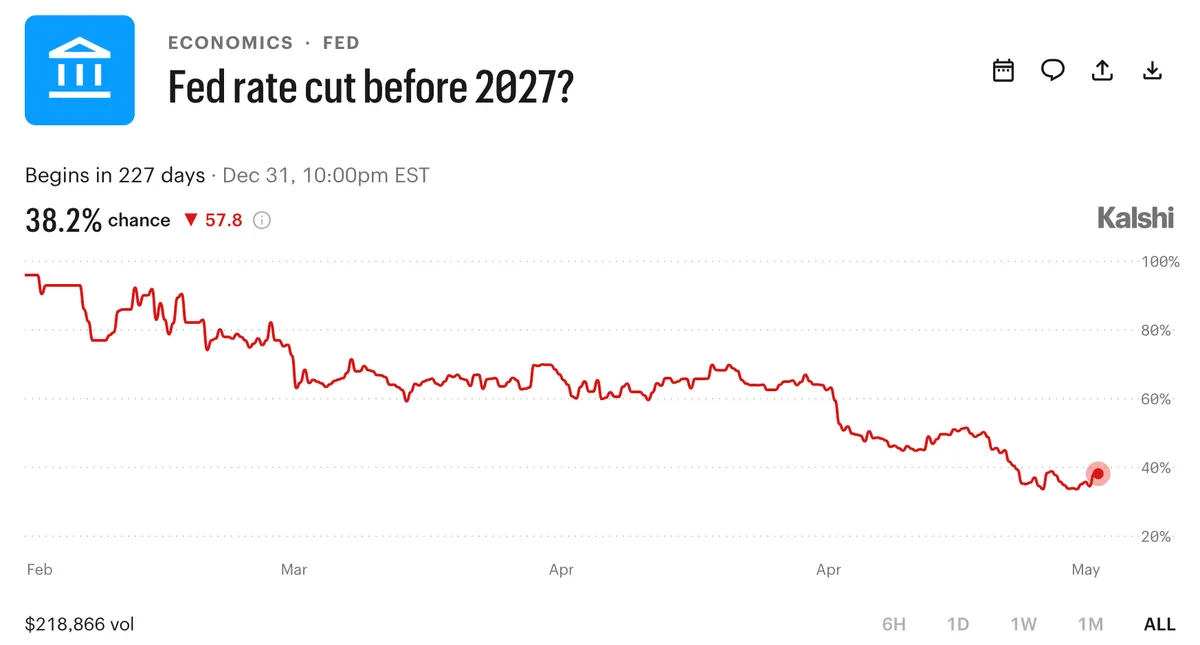
Prediction markets and futures-implied probabilities are telling sharply different stories about how quickly Warsh might move. Kalshi event contracts now price a roughly 38.2% chance of a rate cut before 2027, a stunning drop from the 96% odds recorded in February. CME FedWatch data, by contrast, places the probability of no change at the current 3.50% to 3.75% range above 98% through June and above 94% through July. Trump publicly urged Warsh to begin cutting immediately, but Senator Elizabeth Warren warned the new chair could open the door to favorable treatment for the president's allies, citing Warsh's disclosed crypto and AI holdings.
Galaxy Digital, the crypto-focused financial services firm led by Mike Novogratz, secured a coveted New York BitLicense and a money transmission license from the state's Department of Financial Services. The approvals cover GalaxyOne Prime NY, the subsidiary handling trading and financing for institutional clients, and unlock access to what Novogratz described as the deepest institutional capital pool in the country. New York's BitLicense regime, introduced in 2015, demands rigorous compliance covering anti-money-laundering controls, cybersecurity safeguards, capital reserves, and consumer protection rules. The green light expands Galaxy's regulated footprint and follows a similar approval granted recently to Jack Mallers' Strike for Bitcoin services in the state.
The licensing win arrives as Galaxy works through a turbulent quarter for digital asset valuations. The firm posted a $216 million net loss for the period ending March 31, with gross revenue of $10.2 billion versus $12.9 billion a year earlier — a softer result driven largely by depressed token prices but still ahead of analyst projections. Galaxy guided to accelerating revenue beginning this quarter as its Helios Data Center campus in Texas scales up, mirroring an industry-wide pivot among crypto-native operators toward AI and high-performance compute infrastructure. The strategy aims to diversify earnings beyond pure trading exposure as institutional rails mature.
The US Securities and Exchange Commission is preparing to release a long-awaited innovation exemption for tokenized stocks, with publication expected as early as this week. The framework would allow traditional financial institutions to experiment with on-chain equity issuance without completing a full registration process, removing one of the largest procedural hurdles facing tokenization pilots. The agency has signaled that tokenized assets remain securities under federal law, but the exemption pathway is designed to encourage live testing of settlement, custody, and trading mechanics on public blockchain networks. Industry projections place the tokenized real-world asset market between $2 trillion and $10 trillion by 2030.
Major US exchange operators are already lining up to deploy. The agency cleared a Nasdaq rule change in March to support trading of tokenized shares and approved a parallel proposal from the New York Stock Exchange in April. NYSE is building an onchain settlement platform and locked in a strategic partnership with OKX earlier this year, while the Depository Trust and Clearing Corporation received a three-year authorization to tokenize highly liquid assets on pre-approved chains. Together, these moves position legacy market infrastructure to offer the low-latency settlement, reduced intermediary costs, and round-the-clock trading long associated only with crypto-native venues such as any major DEX.
The common thread running through this week's headlines is regulatory normalization rather than retreat. A new Fed chair inherits a politically charged easing debate, New York extends institutional licensing to a major crypto-native firm, and Washington's top securities regulator moves to graft blockchain rails directly onto equity markets. Each development reflects a maturing handshake between traditional finance and digital asset infrastructure, with capital allocators increasingly able to engage through regulated wrappers. For traders, the practical takeaway is that interest-rate uncertainty remains the dominant near-term risk, while structural tailwinds for institutional adoption of Bitcoin and the broader altcoin complex continue to strengthen quietly in the background.
Related Tags
AI-generated, AI-reviewed, under COINOTAG editorial oversight.