

Bezos Pushes Zero Tax for Bottom 50%, SpaceX Files $1.75T IPO With $4.28B Q1 Loss
Jeff Bezos pushes zero federal income tax for bottom 50% earners as SpaceX confidentially files Nasdaq IPO under SPCX with $4.28B Q1 loss disclosed.

Jeff Bezos publicly called for eliminating federal income taxes on the bottom 50% of US earners, framing the move as a structural shift in how Washington funds itself. Speaking on CNBC on May 20 and amplifying the message across his X account, the Amazon founder argued that the lowest-earning half of taxpayers contribute only a small fraction of total receipts while shouldering an outsized share of household stress. He maintained that most federal revenue already comes from the top brackets, making removal of the bottom-half burden essentially budget-neutral. The proposal landed alongside renewed debate over wealth concentration and the relationship between traditional finance and hard-money assets such as bitcoin.
To illustrate his case, Bezos pointed to a Queens-based nurse earning $75,000 annually and paying more than $12,000 in taxes — over $1,000 monthly that could otherwise cover rent or groceries. Tax Foundation figures support the framing: the top 1% of US filers contributed 40.4% of all federal income tax in 2022, while the bottom 50% accounted for just 3.3%. "Best way to put money in someone's pocket is to not take it out in the first place," Bezos wrote on X, arguing that zeroing out the lower half would be marginal for the Treasury but life-changing for working households across the country.
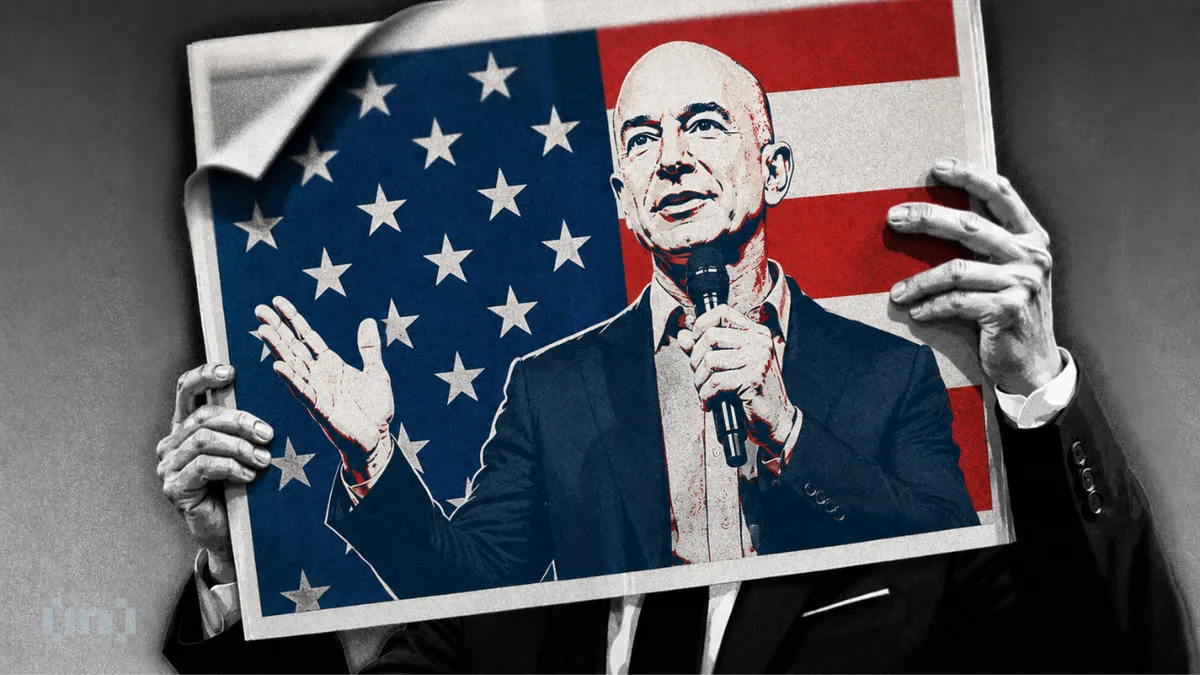
Bezos paired the tax pitch with a sharper attack on federal and municipal spending, contending that Washington has a budget discipline problem rather than a revenue gap. He cited New York City public schools spending roughly $44,000 per student as evidence that bloated bureaucracies, not under-taxation, drive deficits. The argument echoes a long-running critique among crypto-native investors who view fiat monetary expansion and unchecked fiscal outlays as the macro tailwind behind hard-asset accumulation. Holders of deflationary digital assets have repeatedly cited similar government spending dynamics when defending long-duration positions through volatile bear-market cycles and policy-driven drawdowns.
SpaceX confidentially filed a draft S-1 registration with the SEC ahead of one of the largest public offerings in market history, targeting a Nasdaq listing under ticker SPCX. The company is reportedly aiming for a June 12 debut, seeking to raise up to $75 billion at a valuation between $1.75 trillion and $2 trillion. A planned 5-for-1 stock split is designed to broaden retail access. The filing offers the first consolidated view of the combined SpaceX, Starlink, X, and xAI entity following the February 2026 xAI merger, signaling Elon Musk's intention to fold his commercial empire under a single publicly traded vehicle.
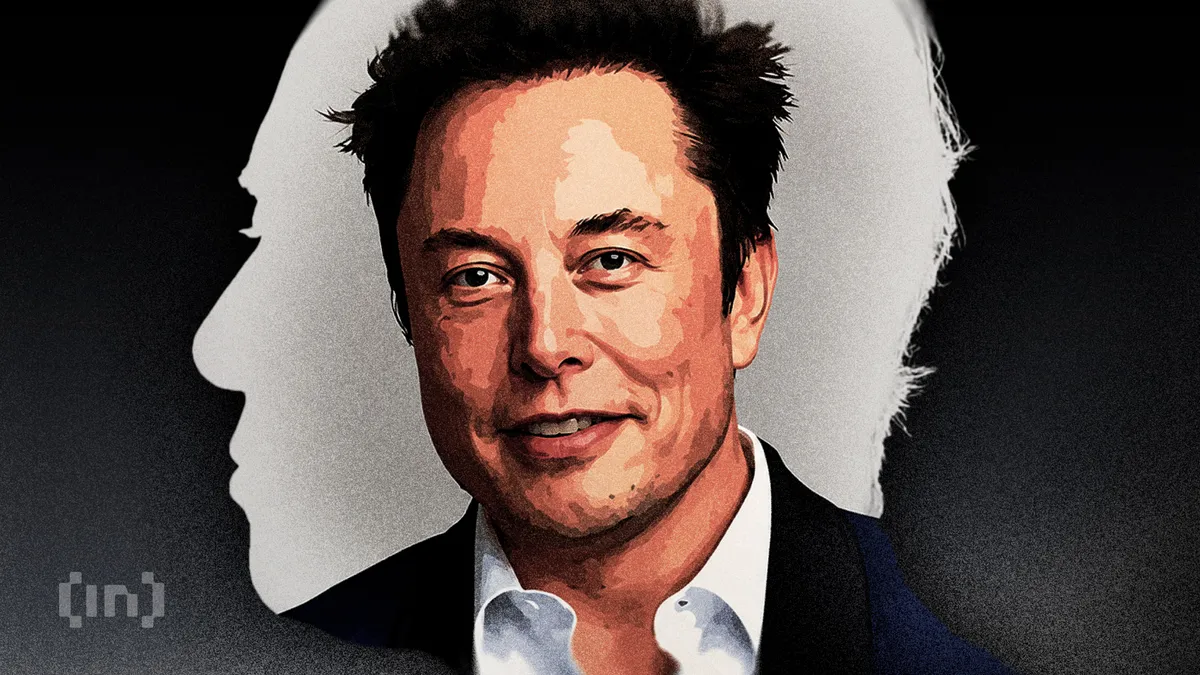
Disclosed financials show the dual reality behind the IPO push. SpaceX recorded $4.69 billion in Q1 2026 revenue, driven by Starlink subscriber growth and accelerating Falcon 9 launch cadence, yet the quarter produced a $4.28 billion GAAP net loss. Heavy outlays on Starship development, AI compute infrastructure tied to the xAI integration, and ongoing capital expenditure absorbed most of the top-line gains. Full-year 2025 revenue is estimated near $18.67 billion against a $4.94 billion net loss, reversing a $791 million profit booked the prior year. Capex totaled $20.7 billion in 2025, with $12.7 billion earmarked specifically for AI infrastructure build-out.
Even after the listing, Musk will retain near-total operational control of the combined company. He will continue serving as CEO, CTO, and Chairman of the nine-member board, holding roughly 42% of equity while commanding 85.1% of voting rights through a dual-class share structure. The arrangement mirrors governance models adopted by other founder-led tech firms but carries unusual weight given SpaceX's strategic role across satellite communications, defense contracting, and AI development. For investors familiar with token-weighted voting in decentralized protocols and DAO structures, the setup underscores how concentrated control now defines both legacy equity and on-chain governance.
The dominant thread across both developments is a widening conversation about how wealth, capital, and political power concentrate at the top of every economic stack. Calls to relieve the bottom half from federal taxation arrive in the same news cycle as a trillion-dollar IPO controlled almost entirely by a single founder, framing 2026 as a year defined by extreme asymmetry. Crypto markets sit squarely inside this narrative, with bitcoin and major altcoin assets increasingly treated as macro hedges against fiat dilution and institutional concentration. Whether the response is policy reform or capital rotation, structural inequality has become a measurable market variable.

AI-generated, AI-reviewed, under COINOTAG editorial oversight.