

Ethereum Lags Bitcoin Recovery: Korean Firm Loses $33M, ETH ETF Inflows Stall
Analysts warn ETH may struggle to catch Bitcoin as spot ETF flows lag at 33% recovery and a Korean funeral firm faces $33M loss on leveraged ETH ETFs.

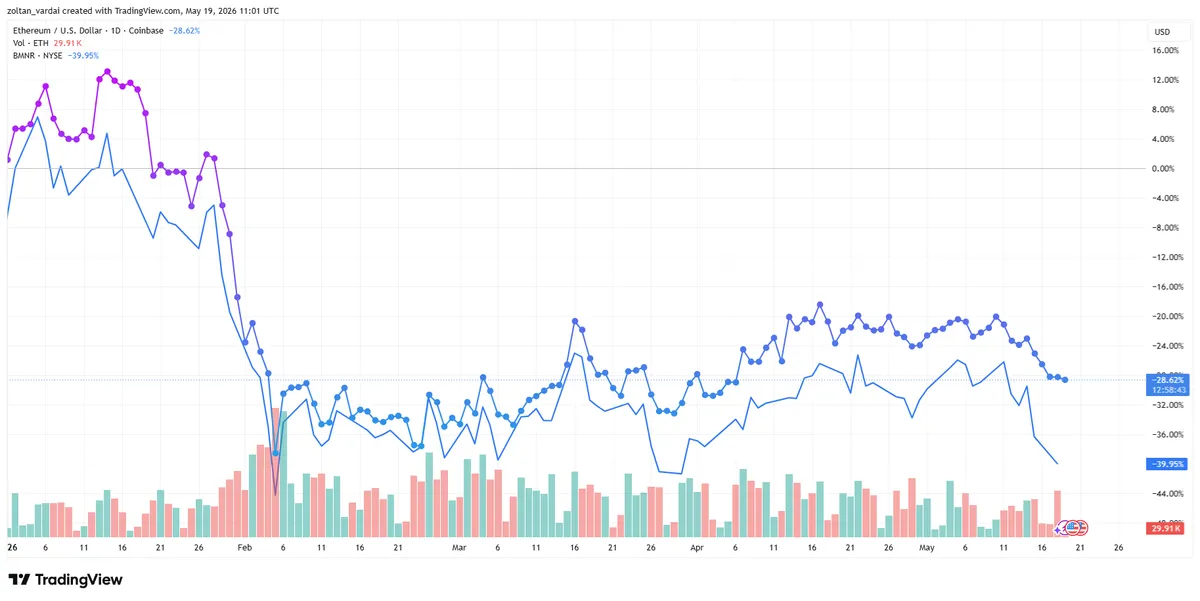
JPMorgan analysts have flagged a deepening divide between Ethereum (ETH) and Bitcoin (BTC), warning that ETH and the broader altcoin segment may struggle to close the gap without a significant rebound in network usage, decentralized finance growth, and real-world adoption. The note from analysts led by Nikolaos Panigirtzoglou points to soft demand fundamentals as the primary headwind weighing on second-tier digital assets. Cryptocurrency markets have wobbled over the past six months as elevated interest rates, sticky inflation, and weakened risk appetite combined to pressure valuations. ETH and BTC both endured sharp drawdowns alongside heavy exchange-traded fund outflows earlier this year.
Spot exchange-traded fund flows underscore the disparity highlighted by the bank's research team. Spot Bitcoin ETF products have clawed back roughly two-thirds of the capital that exited during recent drawdowns, while spot Ether ETF vehicles have recovered only about one-third of their prior outflows. The data suggests institutional appetite for direct ETH exposure remains comparatively muted even as broader risk sentiment has stabilized. Momentum-driven participants, including commodity trading advisors and crypto quant funds, remain positioned slightly underweight on both assets, indicating that speculative inflows have yet to return at scale. The relative ETF recovery gap is one of the cleanest signals of structural weakness in ETH demand.
Looking further out, the upcoming Glamsterdam and Hegota upgrades scheduled for 2026 are designed to enhance Ethereum scalability and reduce transaction costs. However, skeptics warn that prior upgrade cycles did not translate into materially stronger on-chain activity. Earlier improvements pushed costs lower at the Layer 2 level, which in turn weakened the token's burn mechanism by reducing base-layer fee pressure. The net effect was an increase in circulating supply, undermining one of the price-support narratives that bulls had relied upon. Whether the next upgrade wave can avoid repeating that dynamic remains a central question for long-term holders weighing exposure here.
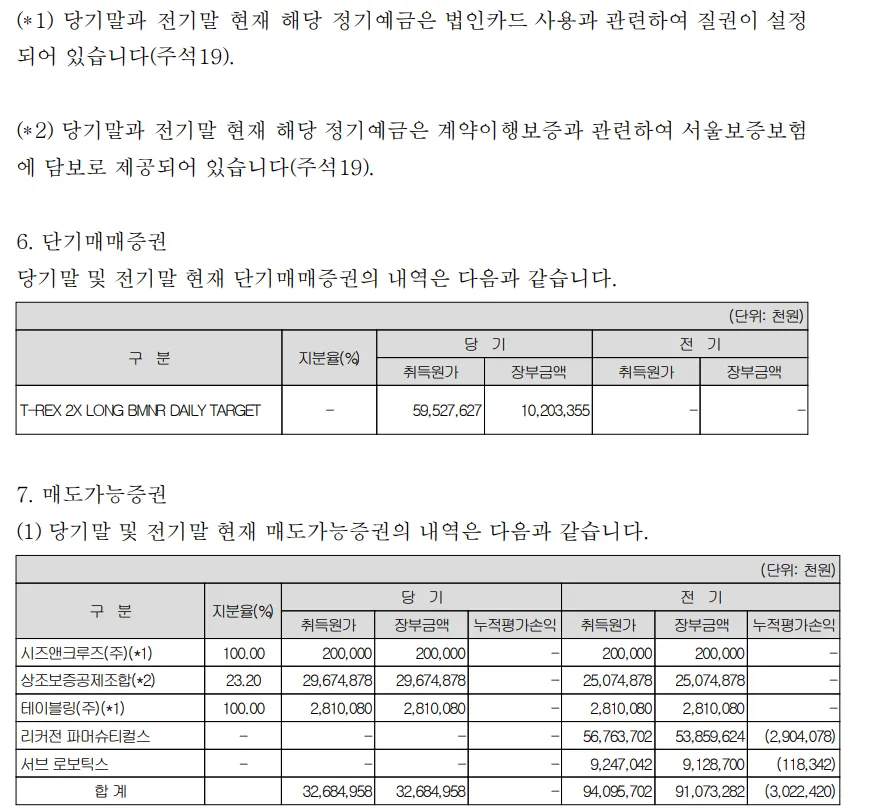
In Asia, a striking case of retail-adjacent exposure has emerged. Bumo Sarang, a South Korean funeral services provider, is sitting on roughly 49.3 billion won — approximately $32.7 million — in unrealized losses after deploying about $40 million of customer prepayment funds into leveraged crypto-linked ETFs. The firm's audit filing for 2025 confirms the position was concentrated in the T-REX 2X Long BMNR Daily Target ETF, a product that delivers twice the daily return of Bitmine, a publicly listed Ether treasury company. A separate funeral provider, Christian Funeral Family of Faith, recorded a $331,700 net loss tied to similar exposure, raising fresh concerns over customer fund protections.
The disclosures have intensified scrutiny over South Korea's funeral mutual-aid sector, which is overseen by the Fair Trade Commission rather than dedicated financial regulators despite managing sizable pools of customer prepaid capital. Local reporting indicates that roughly 43% of domestic funeral providers held fewer assets than customer advance payments, raising questions about repayment capacity in the event of mass cancellations. The exposure ties into a broader trend: industry observers estimate that around $6 billion of Korean retail capital flowed into ETH treasury companies during 2025, often through leveraged ETF products that magnify both upside and downside moves on the underlying asset.
Beyond ETH-specific dynamics, the broader altcoin complex has trailed Bitcoin since 2023 amid tighter liquidity conditions, thinner market depth, and the lingering effects of repeated security breaches that have shaken investor trust. Real-world utility growth in DeFi has been slower than many had anticipated, while capital concentration has continued to favor large-cap assets with the deepest liquidity profiles. Crypto prices have stabilized somewhat in recent weeks, helped by round-the-clock market access during macro turbulence and renewed signs of institutional engagement, but the structural performance gap between BTC and the long tail of digital assets has not yet meaningfully narrowed.
On the chart, ETH trades near $2,108 with a modest 0.33% daily gain, but the technical setup remains pressured. The 14-day RSI at 33.24 sits just above oversold territory, while MACD continues to print a bearish signal in line with the prevailing downtrend. Immediate support stacks at $2,066, $1,942, and $1,875 — a loss of the first level would expose the lower tier. Overhead, $2,132, $2,210, and $2,320 mark the resistance zones traders should watch. A reclaim of $2,210 would invalidate the bearish thesis and open room toward the upper resistance, while a clean break below $1,942 would confirm further downside.
Related Tags
AI-generated, AI-reviewed, under COINOTAG editorial oversight.