

EU Reopens MiCA, Tether Takes Twenty One, Fairshake Wins 6 Southern Primaries
EU launches MiCA crypto framework review, Tether buys SoftBank's stake in Twenty One Capital, and Fairshake PAC scores a 6-0 sweep in Southern primaries.

The European Commission opened a formal review of the Markets in Crypto-Assets Regulation on Wednesday, soliciting public and industry feedback on whether the bloc's landmark blockchain rulebook remains fit for purpose two years after it became law. The consultation, open until August 31, invites responses from crypto firms, financial institutions, academics, technology providers and consumer groups. Officials said the move reflects rapid shifts in digital asset markets and the international regulatory landscape since MiCA was first drafted. Stablecoin provisions took effect in June 2024, with the broader framework becoming fully applicable that December. Industry observers have begun referring to the prospective revision as MiCA 2.
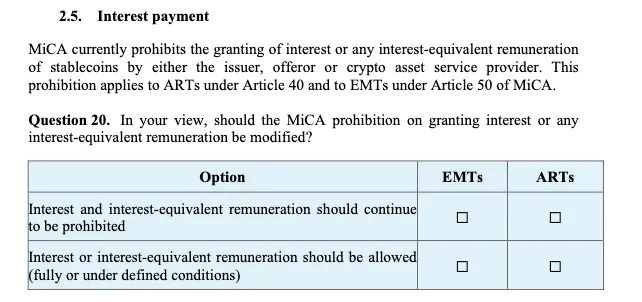
The targeted consultation accompanying the public questionnaire drills deeper into a politically sensitive piece of the regime: the prohibition on interest or interest-like remuneration for stablecoin holders. Brussels is now openly asking whether that restriction should be maintained, eased, or paired with adjusted reserve and liquidity rules. The questionnaire also reopens classification debates around wrapped tokens, synthetic assets and tokenized fund interests that straddle the line between crypto and traditional securities. DeFi, staking, lending, NFTs and crypto-asset service providers — all originally largely outside MiCA's scope — are explicitly named as emerging risk areas that could fall under a future expansion of the framework.
Tether International disclosed on Wednesday that it has acquired SoftBank's entire equity stake in Twenty One Capital, the Bitcoin treasury vehicle co-founded by Strike chief executive Jack Mallers. SoftBank's directors stepped down at closing in line with the company's shareholder agreement, and no financial terms were disclosed. The transaction strips out the last major outside ownership bloc from the original three-sponsor structure that launched Twenty One via a combination with Cantor Equity Partners in April 2025. Tether was initially expected to contribute roughly 24,000 BTC at inception versus SoftBank's 10,500, and the firm later seeded a further 4,812 BTC before the vehicle's public listing, expanding its share of Bitcoin's circulating supply.
With SoftBank's exit, Twenty One transitions from a coalition-backed treasury into what is, in practical terms, Tether's public Bitcoin operating arm. Chief executive Paolo Ardoino framed the buyout as the beginning of a new phase, crediting SoftBank with helping shape the company's foundation. The strategic ambitions extend well beyond accumulation. In April, Tether proposed merging Twenty One with Mallers's Strike payments business and Elektron Energy, a Bitcoin mining operation, bringing treasury, payments and mining infrastructure under one corporate roof. The combined entity would position itself as a direct counterpoint to Michael Saylor's Strategy, tracking performance through metrics such as Bitcoin Per Share and Bitcoin Return Rate.
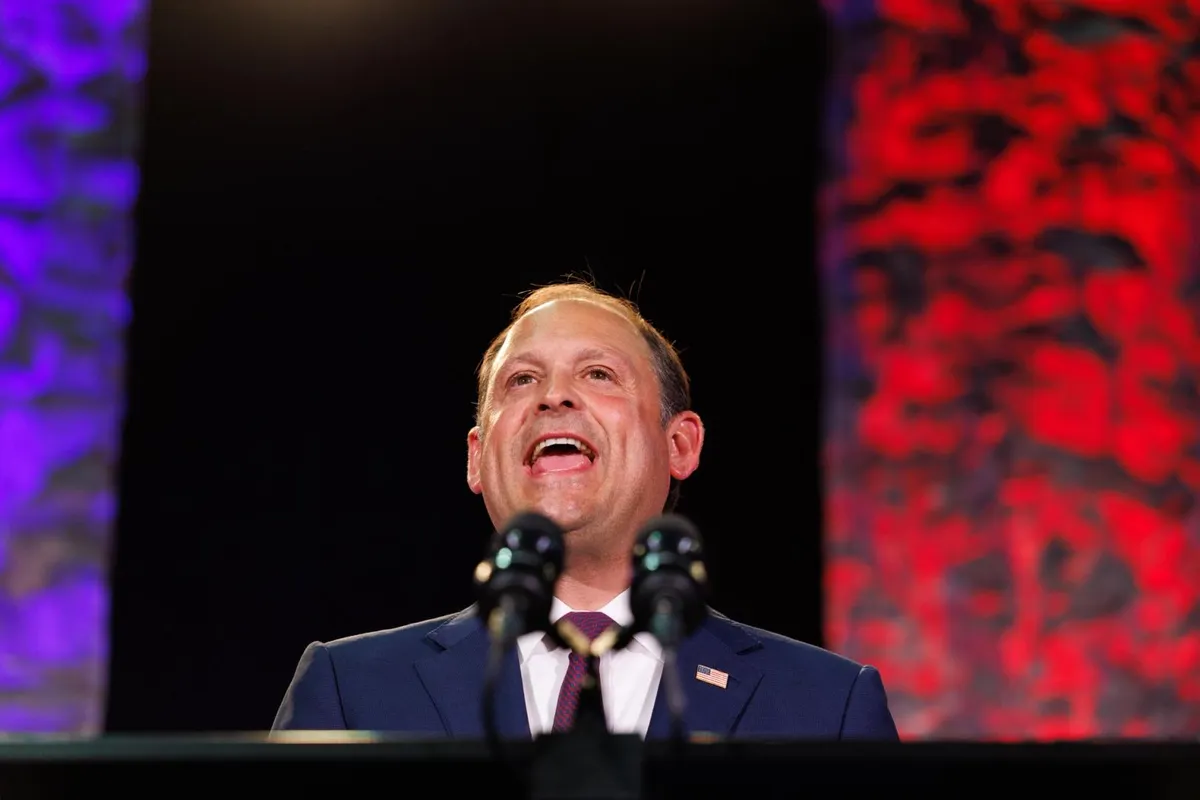
On the U.S. political front, the Fairshake super PAC declared a 6-0 sweep across Southern primaries on Tuesday after deploying more than $20 million in advertising across Kentucky, Alabama and Georgia. The crypto-aligned campaign-finance vehicle backed Representative Andy Barr's decisive Senate primary win in Kentucky, where Barr secured more than 60 percent of the vote in the race to succeed Mitch McConnell. In Alabama, the $7.4 million Fairshake committed behind Representative Barry Moore pushed him to a comfortable lead of more than 13 percentage points, though the Senate primary will still head to a runoff because Moore fell short of the 50 percent threshold.
In Georgia, Fairshake concentrated its firepower on four House races, most prominently the Democratic primary in the seat vacated by longtime Representative David Scott. State lawmaker Jasmine Clark won a crowded field after the super PAC funneled $4.2 million in crypto-funded advertising into the race, dwarfing conventional fundraising in the contest. Spokesperson Geoff Vetter described Tuesday's outcomes as a powerful bipartisan mandate stretching from Georgia to Alabama to Kentucky. The pattern is now familiar: Fairshake has bankrolled dozens of pro-crypto candidates into Washington over previous cycles, with a track record marred only by occasional setbacks such as the Illinois Democratic primary loss in March.
Wednesday's developments capture the converging forces shaping this cycle of crypto policy and corporate strategy. Brussels is recalibrating a rulebook that once represented the high-water mark of regulatory clarity, while in Washington crypto capital is reshaping legislative arithmetic primary by primary. At the same time, balance-sheet consolidation continues at the corporate layer, with Tether tightening its grip on a public Bitcoin vehicle that increasingly resembles an integrated holding company. Together these threads point to a maturing industry negotiating its place in both regulated finance and democratic politics, with the next twelve months likely to determine whose framework defines the cycle.
Related Tags

AI-generated, AI-reviewed, under COINOTAG editorial oversight.