

Treasury Sanctions Sinaloa Cartel Crypto Network as SEC's 'Crypto Mom' Peirce Exits
U.S. Treasury sanctions Sinaloa Cartel members and six Ethereum addresses tied to fentanyl laundering as SEC Commissioner Hester Peirce confirms exit.

The U.S. Treasury imposed fresh sanctions Wednesday targeting two networks linked to the Sinaloa Cartel and accused of laundering fentanyl proceeds through digital assets. The Office of Foreign Assets Control added Armando de Jesus Ojeda Aviles, identified as a network head, alongside associate Jesus Alonso Aispuro Felix to the Specially Designated Nationals list. Both individuals allegedly converted bulk cash from narcotics sales into cryptocurrency before routing the funds back to cartel operators. Treasury Secretary Scott Bessent framed the action as part of an ongoing effort to dismantle narco-terrorist financing channels, citing coordination between the Homeland Security Task Force and the Drug Enforcement Administration.
Beyond the named individuals, the sanctions package also targeted six Ethereum wallet addresses connected to the trafficking network, five of which are tied directly to Ojeda Aviles. The on-chain footprint is uneven — most of the flagged addresses have sat dormant for years. However, one wallet ending in "e27cb" came back to life on April 27, moving roughly $894 in Tether after a yearlong silence. The action escalates federal enforcement against crypto-enabled money laundering and signals that OFAC continues to treat blockchain-based laundering channels as a priority surface for sanctions designations against foreign terrorist organizations.
In a separate development reshaping the regulatory map, SEC Commissioner Hester Peirce confirmed plans to depart the agency for academia. Regent University School of Law announced her appointment as an associate professor beginning November 2026, where she will teach securities regulation, financial markets, and digital assets policy. Peirce, dubbed "Crypto Mom" by industry stakeholders, has served in a holdover capacity since her second five-year term expired in June 2025. She telegraphed the move in March 2025, declining to seek another nomination. Her exit removes one of the few consistent pro-innovation voices from the commission's bench heading into 2027.
Peirce built her tenure on dissent. She repeatedly criticized the SEC's reliance on enforcement actions over written rulemaking and pushed for safe-harbor frameworks that would have given altcoin issuers clearer compliance paths. Her opposition extended to broker-dealer custody proposals she viewed as hostile to DeFi participants and to wallet rules she said overreached the agency's statutory authority. Joining the commission in January 2018 after stints on the Senate Banking Committee and at George Mason's Mercatus Center, Peirce holds a J.D. from Yale and an economics degree from Case Western Reserve.
The reactivated wallet flagged by Treasury is drawing scrutiny from blockchain analytics teams tracking sanctioned-address behavior. Movement of just under $900 in stablecoins after twelve months of inactivity is small in dollar terms but carries operational weight — it indicates either continued access by sanctioned operators or attempted obfuscation through dormant infrastructure. Stablecoin issuers will likely freeze any USDT balances at affected addresses, while compliance teams across centralized exchanges face new screening obligations. The episode reinforces a recurring pattern: Bitcoin and Ethereum networks remain transparent enough for forensic tracing yet permissive enough to attract illicit actors seeking pseudonymity.
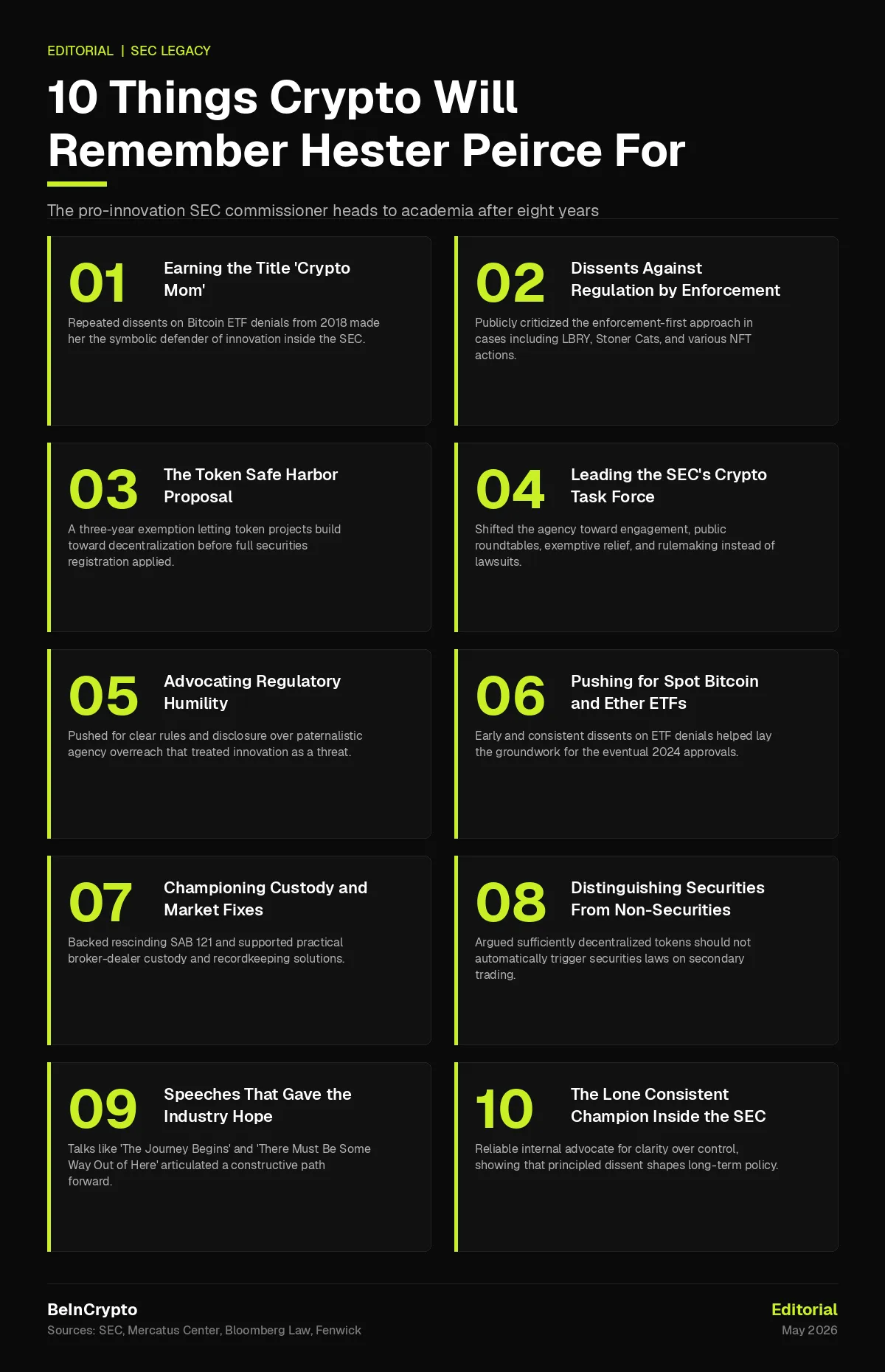
Peirce's exit also fits a broader migration of senior crypto-policy voices from regulators into academia. Former SEC Chair Gary Gensler returned to MIT Sloan after his departure, co-directing research on artificial intelligence's role in financial markets. The pattern suggests that institutions of higher education are absorbing the policy expertise generated during the post-2018 enforcement cycle, even as the commission itself shifts under new leadership. With Peirce gone, attention will turn to who fills the dissenting seat and whether the remaining commissioners pursue the rulemaking-first approach she has championed throughout her seven years on the panel.
The week's news threads point to a single arc: regulatory infrastructure is hardening around digital assets even as some of its most visible advocates step aside. Treasury enforcement is reaching deeper into on-chain activity through targeted address designations, while the SEC's internal balance of voices is shifting with Peirce's planned departure. For market participants, the implication is twofold — compliance costs tied to sanctions screening will rise, and the policy debate over DEX oversight and broker definitions will continue without one of its most consistent internal critics. Capital allocation increasingly requires regulatory mapping alongside fundamental analysis.
Related Tags

AI-generated, AI-reviewed, under COINOTAG editorial oversight.