

CBDC Quietly Advances as Trump Reviews Fintech Banking, Europe Pushes Euro Stablecoin to 37 Banks
Former CFTC chair says U.S. CBDC work continues behind closed doors as Trump orders fintech review, Qivalis expands euro stablecoin to 37 banks.

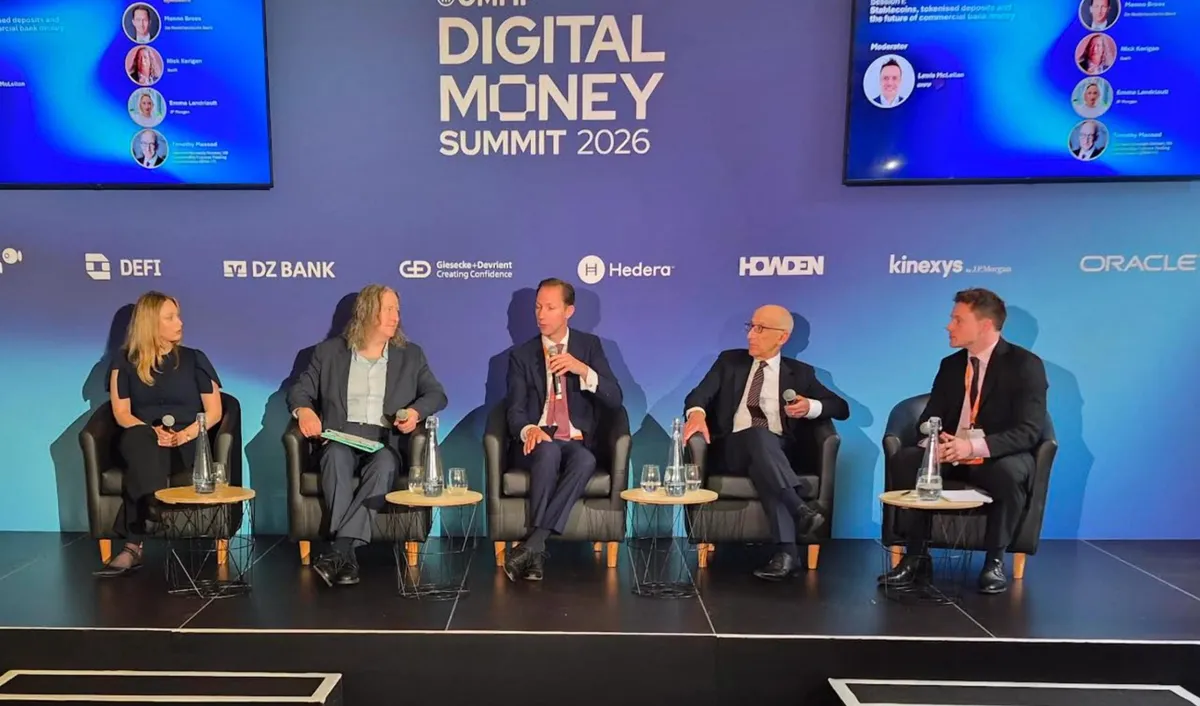
Despite the White House's public opposition to a U.S. central bank digital currency, work on government-backed settlement rails is reportedly progressing behind closed doors. Speaking at the Digital Money Summit in London, former CFTC Chairman Timothy Massad said a CBDC is effectively inevitable, driven by international experiments that risk leaving the United States behind in tokenized finance. Massad pointed to Project Agora, a Bank for International Settlements initiative involving seven central banks including the Federal Reserve, as evidence that quiet groundwork continues. While a March Senate vote backed a ban on a retail digital dollar, wholesale CBDC research persists inside policy circles.
Frankfurt-based AllUnity, the stablecoin venture backed by DWS, Flow Traders and Galaxy Digital, plans to launch a Swedish krona-pegged token called SEKAU in June pending final approvals. Fully reserved and issued under the EU's MiCA framework, SEKAU joins the firm's existing euro and Swiss franc blockchain tokens. AllUnity also unveiled Agentic Payments, an infrastructure layer enabling autonomous AI agents to transact and settle directly into bank accounts using Coinbase's x402 standard. CEO Alexander Höptner framed the launch as essential digital plumbing for Sweden's cashless transition, while CTO Peter Grosskopf described the system as a gateway for European businesses pursuing new agent-driven revenue streams.
The Qivalis consortium tripled its membership this week, expanding to 37 European banks across 15 countries as it pushes a regulated euro-denominated stablecoin. New entrants include ABN AMRO, Rabobank, Intesa Sanpaolo, Nordea, Erste Group and the National Bank of Greece. The group plans to debut its token in the second half of 2026 under MiCA and is seeking an electronic money institution license from the Dutch central bank. With U.S. dollar tokens accounting for roughly 99% of the $318 billion stablecoin market, the initiative targets strategic autonomy. Forecasts cited by the consortium see the euro stablecoin segment growing from €770 million today toward €1.1 trillion by 2030.
The Indian rupee slid to a record low of roughly 96.9 per dollar on Wednesday, marking an eighth straight session of losses and a cumulative decline of more than 50% since 2009. Global macro desks at Aberdeen Investments, MetLife Investment Management and Gamma Asset Management now flag a slide toward the symbolic 100 level as a realistic scenario if the U.S.-Iran standoff persists. Surging crude prices, elevated bond yields and roughly $22 billion in foreign equity outflows from Indian stocks this year compound the pressure. Citi economists expect New Delhi to tighten currency controls, potentially curbing outward business investment to stem dollar leakage.
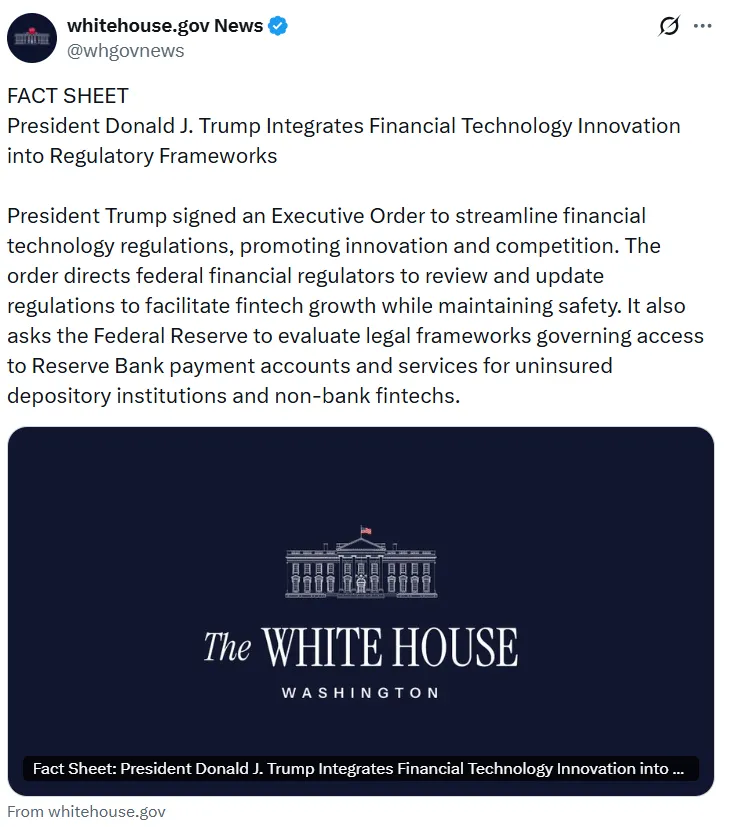
President Donald Trump signed an executive order on Tuesday directing the Federal Reserve Board to evaluate barriers preventing fintech and DeFi-adjacent firms from accessing core payment systems, with a report due within 120 days. The order also instructs federal financial regulators to review, within 90 days, rules and supervisory practices that may obstruct partnerships with credit unions, broker-dealers and investment advisers. The move targets lingering effects of so-called Operation Chokepoint 2.0, which left many digital asset firms without basic banking rails. A Cato Institute analysis from January concluded most U.S. debanking episodes stemmed from government pressure rather than independent bank policy decisions.
The total crypto market capitalization edged up 0.28% to $2.54 trillion on May 20 as capital rotated out of equities and into digital assets. Bitcoin traded flat near $77,106, holding the floor of an ascending channel that has shaped price action since late March. The 30-year U.S. Treasury yield hit 5.19% on May 19, the highest reading since July 2007, signaling renewed bond market stress. Separately, AI trading platform Bankr confirmed an attacker accessed 14 user wallets and pledged full reimbursement, while Japan's FSA finalized rules permitting foreign trust-type stablecoins, including USDC, into its payment system from June 1.
This week's dispatches converge on one theme: sovereign monetary infrastructure is being rebuilt around tokenized rails, often without public fanfare. Washington publicly rejects a digital dollar yet quietly participates in BIS settlement experiments. Europe accelerates regulated euro tokens to dilute dollar dominance, while South Carolina enshrines anti-CBDC language alongside mining protections. The rupee's collapse and surging long-end yields underscore why governments increasingly view stablecoins and programmable money as strategic assets, not fringe instruments. For markets, the bullish read is that institutional rails — from consensus layer protocols to bank consortia — are converging on a single, regulated stack.
Related Tags

AI-generated, AI-reviewed, under COINOTAG editorial oversight.