

Ethereum Foundation Faces $1B Reform Push as Harvard Exits $87M ETH, OFAC Sanctions Cartel Wallets
Ethereum Foundation faces calls for a $1B replacement organization as Harvard liquidates $87M ETH ETF and OFAC sanctions cartel-linked ETH addresses.

A former top Ethereum Foundation researcher escalated the brewing leadership crisis on Thursday, publicly calling for the creation of a new $1 billion organization to replace the Foundation's current stewardship of the network. Dankrad Feist, who departed the EF last year, argued the existing body controls less than 0.1% of all ETH and receives no flow of staking or fee revenue, leaving it economically detached from the asset it oversees. He proposed funding the new entity through staking fees and installing a board that explicitly wants the price of Ethereum to rise, led by someone he described as competent and willing to fight for the network's commercial interests.

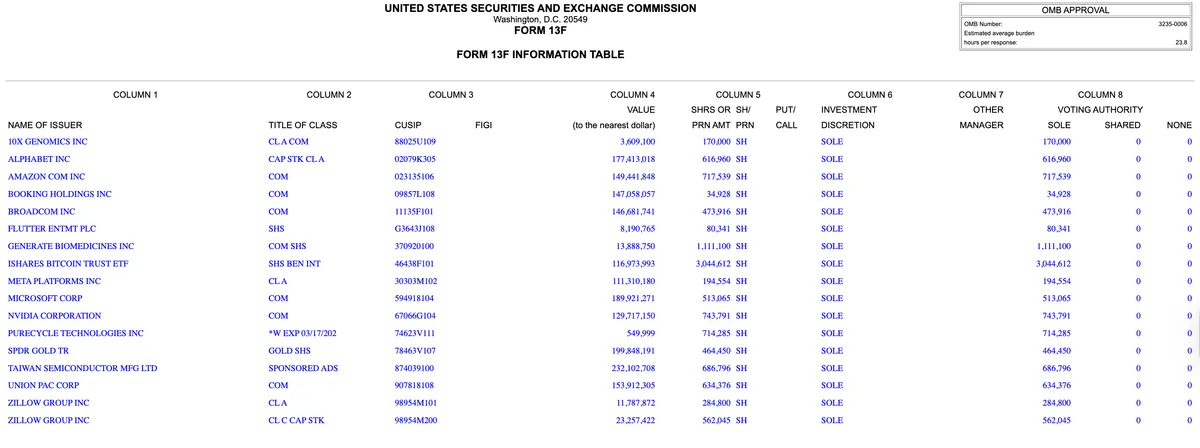
Institutional confidence took a parallel hit as Harvard Management Company disclosed it had liquidated its entire $87 million position in BlackRock's iShares Ethereum Trust, just one quarter after establishing the stake. The Q1 2026 SEC filing showed the endowment exited the spot ETF wholesale while also trimming its Bitcoin ETF exposure by roughly 2.3 million shares, retaining about $117 million in iShares Bitcoin Trust shares. The reversal underscores how quickly large allocators are reassessing ETH exposure amid the asset's prolonged drawdown from its August 2025 peak near $5,000 and the deepening governance turmoil surrounding the Foundation.
The departures fueling that turmoil now total eight researchers and contributors for 2026, with Julian Ma and Carl Beek the latest to resign this week. Longtime project manager Josh Stark exited in April, extending a leadership reshuffle that began in January 2025. Critics inside the community describe the situation as an identity crisis, accusing the Foundation of prioritizing idealism and protocol research over tokenomics, marketing and the economic alignment competitors have aggressively pursued. Journalist Laura Shin labeled the failure to weigh tokenomics after the Dencun upgrade Ethereum's original sin, arguing the ultrasound money thesis collapsed once layer-2 fees compressed base-layer burn rates.
Feist's proposal sketched the blueprint in more concrete terms, calling for a permanent treasury seeded with at least $1 billion in ETH and overseen by a board incentivized to grow the asset's value. The former researcher, who co-created the Danksharding design that underpins current Layer 2 scalability and authored EIP-9698 to expand the gas limit a hundredfold, has since joined alternative Layer 1 network Tempo. Former EF researcher Danny Ryan, once viewed as a candidate to run the Foundation, instead co-founded Etherealize to handle institutional marketing for the chain — another signal that core talent is migrating to mission-focused organizations outside the EF umbrella.
The ecosystem also lost a high-profile consumer experiment as Fantasy Top announced it will wind down at the end of June, two years after launching on the Ethereum layer-2 network Blast. The game, which fused fantasy sports with NFT trading cards of crypto influencers and tracked engagement on X as its scoring metric, paid out more than $20 million to players and $3.2 million to the personalities who served as in-game heroes. The team said the trading card economic model proved unsustainable and that adjacent product iterations failed to find market fit, with final competitions concluding June 18 and prediction markets sunsetting earlier in the month.
Regulatory pressure also tightened around the network's settlement layer. The US Treasury's Office of Foreign Assets Control added six Ethereum addresses to its Specially Designated Nationals list, tying them to a Sinaloa Cartel-linked laundering operation that allegedly converted bulk US drug proceeds into crypto before routing funds to Mexico. The action targeted 11 individuals and two entities across two cartel financial networks, including one led by Armando de Jesus Ojeda Aviles. The sanctions raise immediate compliance exposure for centralized exchanges and virtual asset service providers that must now screen the flagged wallets across the blockchain. Separately, infrastructure builder Syndicate Labs confirmed it is shutting down after five years, citing a 36% decline in layer-2 total value secured and consolidation around Arbitrum, Base and OP Mainnet, which together command roughly 75% of rollup market share.
ETH is trading at $2,133.7, up 0.71% on the day but anchored firmly in a bear market structure roughly 57% below the prior all-time high. Immediate support at $2,131.6 is being tested live, with deeper bids at $2,055 and $1,942 if it fails. RSI at 37.39 sits near oversold without confirming reversal, while the bearish MACD reinforces the downtrend bias. Bulls need a reclaim above resistance at $2,149.8 to challenge $2,211 and $2,260; a daily close below $2,055 would invalidate any near-term recovery thesis and open the path toward the sub-$2,000 range.
Related Tags

AI-generated, AI-reviewed, under COINOTAG editorial oversight.