

Grayscale Names 4 CLARITY Act Winners as SEC Delays Tokenized Stocks Exemption
Grayscale names four chains best placed for post-CLARITY Act flows as the SEC pauses its tokenized stocks exemption and deepfake prosecutions begin.

Asset manager Grayscale published a list of four blockchains positioned to absorb regulated capital once the CLARITY Act becomes law, pairing Ethereum and Solana with BNB Chain and Canton Network. Three of the named altcoin networks lead the field on stablecoin supply and total value locked across DeFi protocols, a footprint the firm argues will attract incumbent institutional flows. The thesis is that regulated capital will gravitate toward chains already wired into traditional finance pipes, with each named network offering a distinct value proposition spanning general-purpose smart contracts, retail-grade throughput, and institutional settlement rails.
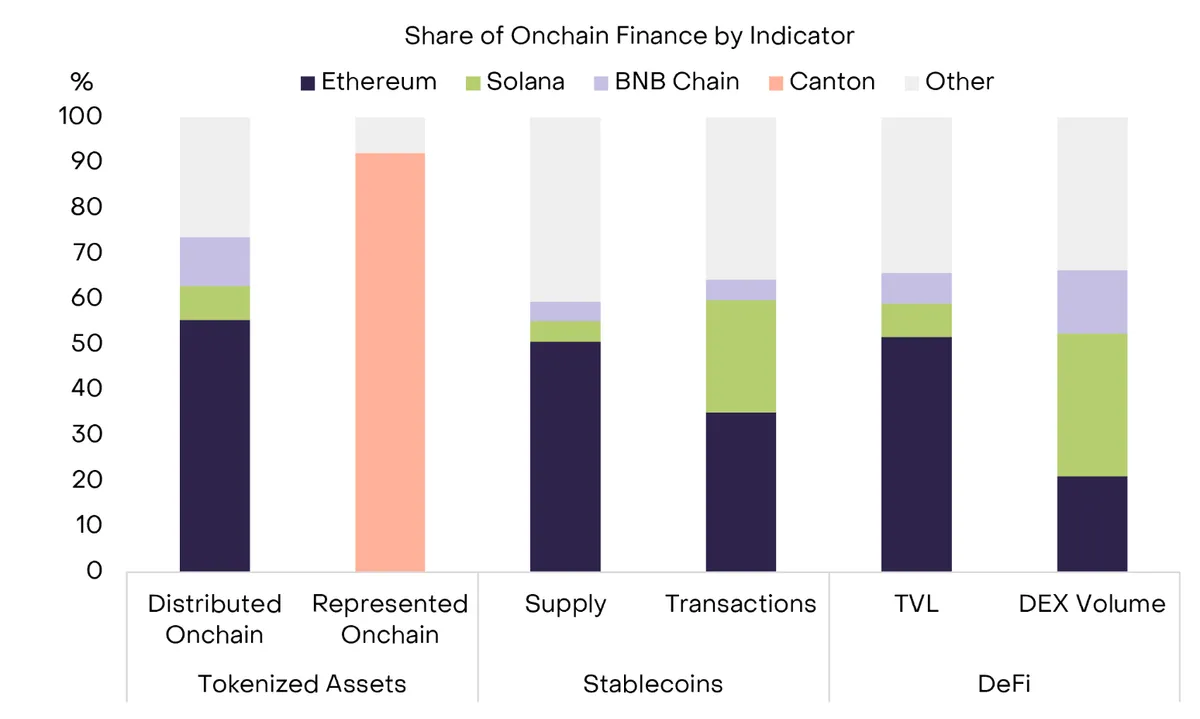
The Digital Asset Market Clarity Act cleared the Senate Banking Committee on a 15-9 vote on May 14 and now heads to the full Senate floor. The bill seeks to divide crypto market oversight between the Securities and Exchange Commission and the Commodity Futures Trading Commission, ending years of jurisdictional ambiguity that has slowed institutional adoption. Supporters say a finalized framework would give exchanges, custodians, and asset managers the legal certainty needed to scale on-chain products. The vote follows months of negotiations and represents the most concrete legislative progress on digital asset rules since the FIT21 push in 2024.
An apparel store linked to FBI Director Kash Patel went offline on Friday after researchers flagged the site for serving wallet-draining malware. Visitors using macOS were prompted to install ClickFix, an infostealer that exfiltrates session tokens, browser data, and crypto wallet credentials by tricking users into running commands inside their system terminal. MetaMask warned users that the domain carried a risk of stolen assets, while the store typically attracts roughly 33,600 monthly visits. Total user losses have not been disclosed. The episode underlines the persistent threat posed by infostealers, with attackers increasingly probing self-custody users who lack a cold wallet setup.
The Securities and Exchange Commission has paused plans to publish a broad innovation exemption that would have allowed U.S. crypto firms to trade tokenized representations of stocks and other traditional assets. Staff had reportedly intended to release the framework this week, but the timeline shifted as feedback poured in from stock-exchange officials and market participants. A central sticking point involves third-party tokens, digital wrappers issued without the underlying corporation's approval, which former regulators warn could complicate dividend administration and shareholder voting. Commissioner Hester Peirce defended the narrow scope of the proposal, saying it would only cover digital representations of existing equity securities, not synthetics.
Canton Network occupies a distinct position among the four CLARITY Act picks. The privacy-focused Layer-1 blockchain was engineered specifically for regulated financial institutions and now hosts the Depository Trust and Clearing Corporation's tokenized U.S. Treasury pilot. J.P. Morgan, HSBC, and Visa serve as validators on the network, which reports approximately $350 billion in daily settlement volume and more than $6 trillion in tokenized real-world assets running through its production environment. A spot Canton ETF launched earlier this year, giving retail investors direct exposure to the chain. Its institutional credentials make it a natural bridge for capital migrating from legacy clearing infrastructure.
Federal prosecutors in the Eastern District of New York charged Arturo Hernandez of Texas and Cornelius Shannon of New Jersey this week under the Take It Down Act, marking one of the first major enforcement actions under the 2025 law. Court filings allege the pair uploaded more than 470 albums depicting over 140 women, including actresses, musicians, and political figures, to platforms where the synthetic content drew millions of views. Each defendant faces up to two years in prison. The statute criminalizes the publication of non-consensual intimate imagery, whether authentic or AI-generated, and requires online platforms to remove flagged material within 48 hours.
A clear pattern is emerging this cycle: regulators are simultaneously building bridges for legitimate on-chain finance while ramping up enforcement against bad actors who exploit the same technology. Senate progress on the CLARITY Act and ongoing SEC engagement with tokenized equities signal that institutional pipes are being formally connected to public networks, drawing capital toward incumbents like Ethereum, Solana, and Canton. Yet the Patel-linked site malware incident and Take It Down Act prosecutions show that consumer-protection scrutiny is intensifying in parallel. The dominant narrative is no longer adoption versus prohibition; it is the construction of guardrails that let institutional crypto scale responsibly.
Related Tags

AI-generated, AI-reviewed, under COINOTAG editorial oversight.