

House Probes Polymarket and Kalshi, SEC Curbs Synthetic Tokens, GameStop Eyes eBay
Crypto News
GameStop is asking shareholders to approve a sharp expansion of its authorized share count, raising the cap from 1 billion to 2.5 billion shares ahead of its July 7 annual meeting. The proposal, filed Friday with US regulators, is one of five governance items going to a vote and explicitly references long-term capital flexibility. The retailer framed the measure as essential to act decisively on future opportunities, language that arrives only weeks after CEO Ryan Cohen launched an unsolicited bid for eBay. The expanded count would give Cohen additional currency for stock-funded transactions and further accumulation of strategic positions across the broader marketplace landscape.
The push for more shares follows eBay's rejection of GameStop's $55 billion half-stock, half-cash takeover proposal, which the marketplace called neither credible nor attractive in a letter directly addressed to Cohen. Undeterred, the gaming retailer added 25 million common shares to its eBay position this week and disclosed additional exposure through paired put-call structures, lifting its overall stake to roughly 6 percent. The threshold required a fresh 13D filing with the SEC. By stacking equity and derivative positions simultaneously, GameStop is signaling that the eBay pursuit remains active and that a renewed offer with deeper stock financing remains on the table.

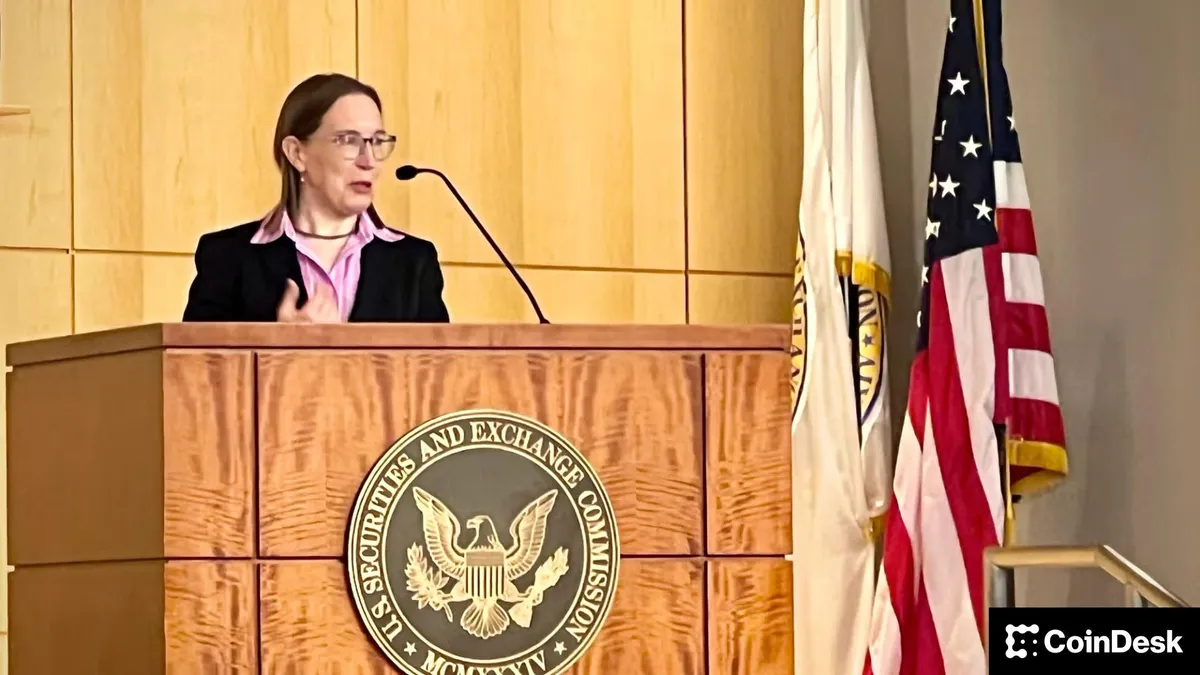
SEC Commissioner Hester Peirce took the unusual step of pre-empting confusion around the agency's pending tokenization rule, posting on social media that the proposal will not authorize synthetic tokenized securities. Peirce, who leads the SEC's Crypto Task Force, said the upcoming rule would be limited in scope and would facilitate trading only of digital representations of equity securities already available in secondary markets, settled on blockchain rails. She pointed to the SEC's January statement, which distinguished issuer-sponsored tokenized stocks from third-party synthetics that merely reference an equity without conveying voting or ownership rights.
The clarification matters because tokenization is shaping up as one of the most consequential pieces of US capital markets regulation under the current SEC leadership. A framework that allows tokenized equities while blocking third-party synthetic instruments traded on DeFi venues and decentralized exchange platforms would meaningfully reshape how brokerages, custodians and on-chain protocols interact with traditional securities. Peirce's intervention appears designed to manage expectations after reporting suggested the agency might leave a path open for synthetic exposures, a feature crypto-native platforms had hoped to capture but that traditional finance lobbyists opposed.
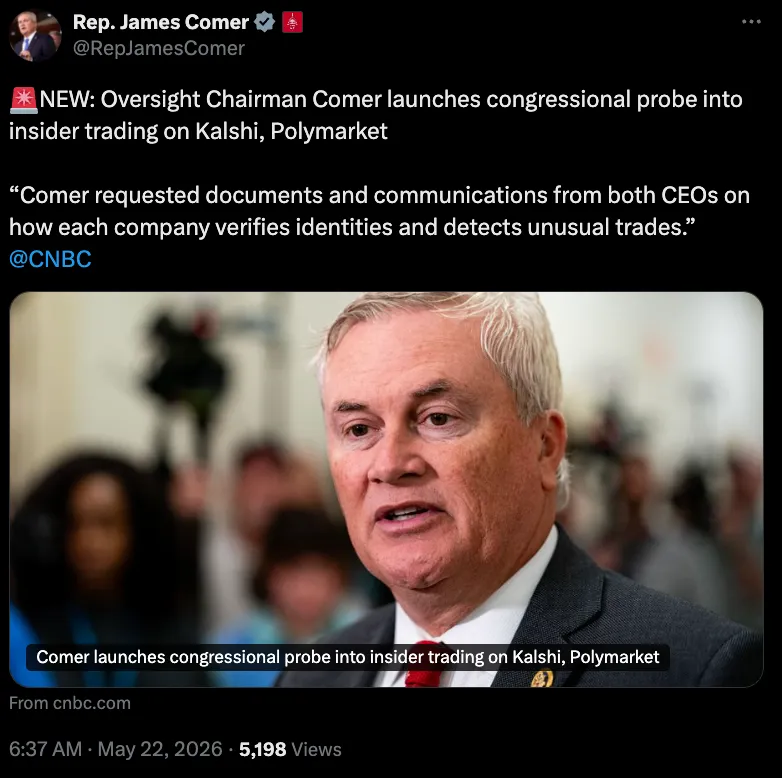
House Oversight Committee chair James Comer formally requested internal records from Polymarket CEO Shayne Coplan and Kalshi CEO Tarek Mansour, asking how each platform monitors and deters insider trading by US officials. Comer cited more than 80 suspiciously timed trades placed ahead of Iran military operations and broader concerns that elected officials and government staff have been exploiting non-public information through event contracts. The letters, sent Friday, mark the first formal congressional inquiry into how prediction markets surveil their politically connected user base, and they raise the prospect of subpoenas if either platform stonewalls the document request.
The congressional probe arrives as a related criminal case continues to play out in federal court. Master Sergeant Gannon Ken Van Dyke, who participated in the military operation that captured Venezuelan President Nicolas Maduro, has pleaded not guilty to commodities fraud and unlawful use of confidential government information after prosecutors alleged he netted more than $400,000 on Polymarket event contracts tied to the operation. Van Dyke was released on $250,000 bail with travel restrictions limiting him to parts of North Carolina, California and New York. Earlier this year both platforms tightened policies, with Polymarket revising surveillance protocols and Kalshi banning three politicians who bet on their own races.
The thread connecting these stories is regulatory tightening around the boundary between traditional capital markets and crypto-native financial products. Washington is moving simultaneously on three fronts: governance and disclosure for public-equity strategies, the legal architecture for on-chain securities, and surveillance of prediction markets exposed to insider knowledge. Each development sharpens what regulated digital-asset infrastructure will look like, and each tilts the field away from permissionless workarounds. For investors riding the current bull market alongside Bitcoin's mainstream integration, the price of legitimacy is a tighter compliance perimeter around every venue that touches public market data.
COINOTAG does not provide financial advisory services. This content is for informational purposes only and should not be considered investment advice. Cryptocurrency investments involve high risk.
Add COINOTAG as a Preferred Source
Add COINOTAG to your preferred sources in Google News and Search to see our coverage first.
Add on GoogleRelated Tags
AI-generated, AI-reviewed, under COINOTAG editorial oversight.