

JPMorgan Files Tokenized Treasury Fund as Warsh Confirmed to Fed, CLARITY Act Heads to Markup
JPMorgan files tokenized Treasury fund, Senate confirms Warsh to Fed, CLARITY Act heads to Thursday markup, Osero raises $13.5M for stablecoin yield.


JPMorgan is preparing to launch a tokenized money market fund, deepening Wall Street's push to move traditional assets onto blockchain rails. A filing with the U.S. Securities and Exchange Commission outlined the JPMorgan OnChain Liquidity-Token Money Market Fund (JLTXX), which will invest exclusively in short-term Treasuries, cash, and overnight repo agreements backed by government securities. Token balances tied to investor ownership records will operate on Ethereum, with infrastructure run by Kinexys Digital Assets, the bank's blockchain unit. The structure is designed to meet reserve requirements under the GENIUS Act, positioning the product as a compliant yield-bearing vehicle for stablecoin issuers seeking regulated Treasury exposure.
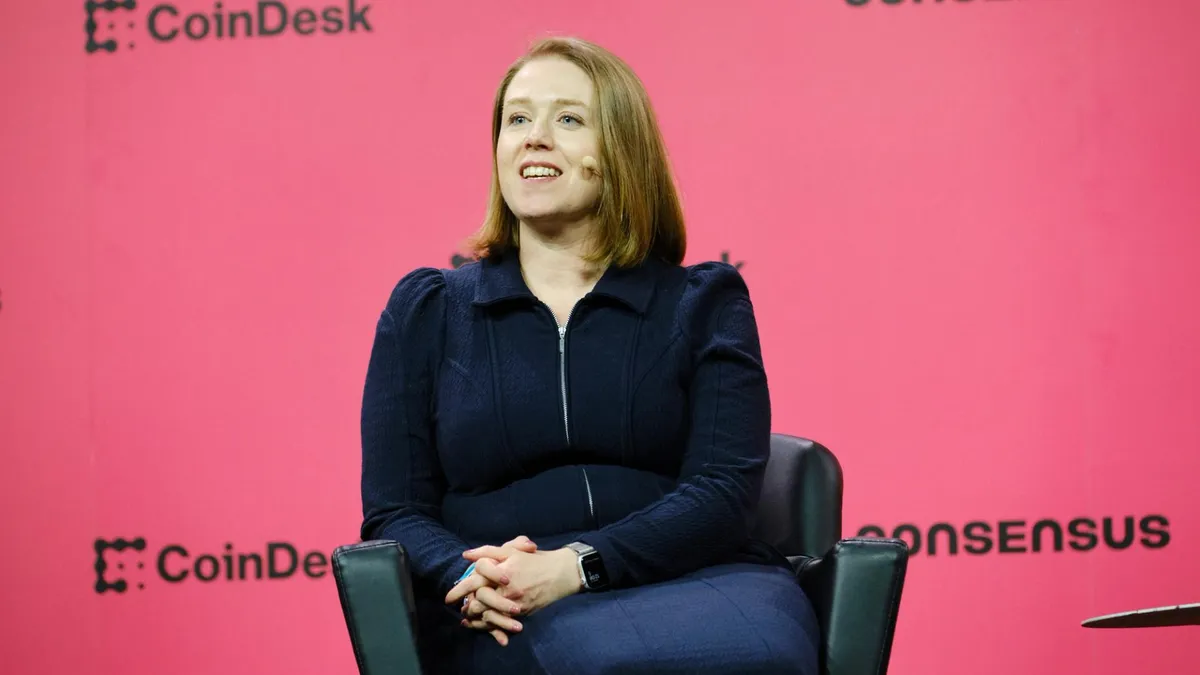
The U.S. Senate confirmed Kevin Warsh to the Federal Reserve Board of Governors in a 51-45 vote, with Senator John Fetterman the sole Democrat backing the nomination. Lawmakers immediately moved to invoke cloture on his pending nomination as Fed chair, setting up a vote expected this week to replace Jerome Powell, whose term ends Friday. Warsh, 56, previously served as a Fed governor between 2006 and 2011 and has publicly described Bitcoin as a transformative technology. His confirmation arrives as policymakers weigh stablecoin regulation, bank custody rules, and the central bank's broader stance on digital payment systems amid renewed inflation pressures.
Google unveiled Gemini Intelligence, a new artificial intelligence feature suite that aims to convert Android phones into proactive assistants capable of completing multi-step tasks across apps. The rollout begins this summer on Samsung Galaxy S26 and Google Pixel 10 devices before expanding to watches, cars, glasses, and laptops tied to the Android ecosystem. The feature introduces AI-powered browsing, smarter autofill, custom widgets, and voice-to-text cleanup tools, built around a redesigned Material 3 Expressive interface. Google emphasized that Gemini only acts on explicit user commands and requires final confirmation before executing tasks, addressing concerns over autonomous AI behavior on consumer hardware.
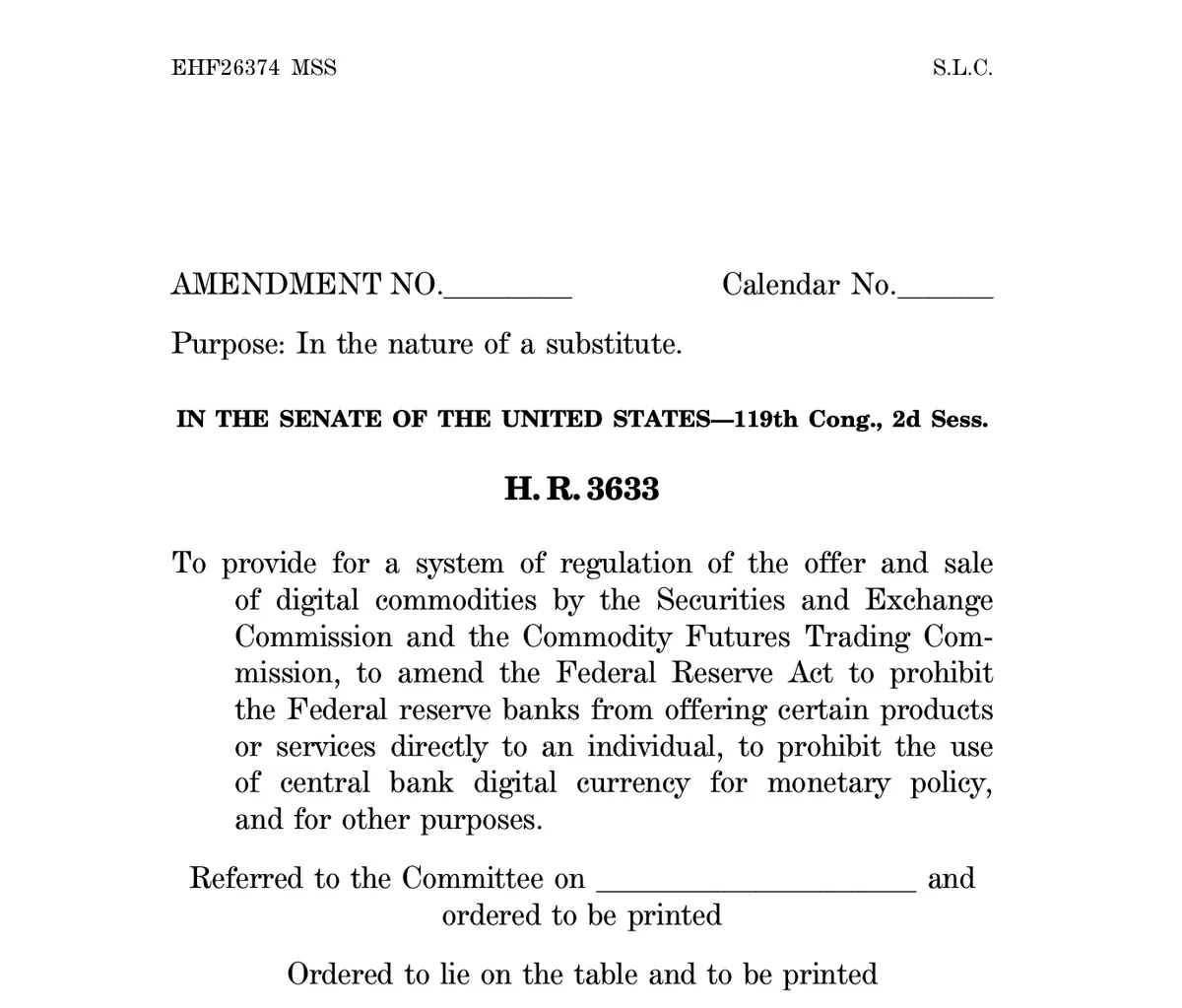
Senate Republicans released the text of the Digital Asset Market Clarity Act (CLARITY) ahead of a Thursday markup in the Banking Committee, building on earlier drafts circulated through 2025. The bill is expected to grant the Commodity Futures Trading Commission expanded authority over digital assets, shifting oversight historically managed by the SEC. The text includes a compromise provision on stablecoin yield and notably attaches a housing pilot program called the Build Now Act. Some Democrats have signaled they will withhold floor support absent stronger ethics language addressing potential conflicts of interest tied to elected officials and the industry.
Osero, a stablecoin yield infrastructure project incubated by Stablewatch and Soter Labs, closed a $13.5 million round led by Sky Ecosystem with co-lead Plasma. The capital will fund initial allocations for Osero Foundry, which offers up to $2.5 billion in capacity for anchor funding, swap liquidity, and lending liquidity across DeFi deployments. The project's three products — Earn, App, and Foundry — route deposits into the Sky Savings Rate, embedding yield infrastructure into wallets, neobanks, custodians, and exchanges. Each deployment will pass through a Basel III-inspired risk review, reflecting growing institutional standards across stablecoin yield products that now sit on a $300 billion asset base.
Bitwise CIO Matt Hougan said privacy is emerging as crypto's next killer application, citing more than $1 billion in combined fundraising for Arc, Canton, and Tempo, three institution-focused chains. Circle raised $222 million at a $3 billion valuation for Arc, Digital Asset is reportedly raising $300 million at a $2 billion valuation for Canton, and Tempo previously secured $500 million at a $5 billion valuation backed by Stripe and Paradigm. Hougan argued businesses and workers increasingly view fully transparent ledgers like Ethereum and Solana as a liability for commercial activity, accelerating demand for compliant, private blockchain rails suited to institutional finance.
The dominant narrative this cycle is institutional convergence with regulatory scaffolding. Tokenized Treasury products from JPMorgan, leadership transition at the Federal Reserve, a market structure bill heading to markup, fresh capital flowing into stablecoin yield infrastructure, and rising demand for privacy-focused chains all point toward the same arc — traditional finance is rebuilding on blockchain rails while Washington races to define the rules. Even consumer-facing AI deployments now intersect with on-chain identity and payments. The trade-off between transparency, compliance, and speed is no longer abstract; it is shaping where institutional capital and regulatory authority settle.
AI-generated, AI-reviewed, under COINOTAG editorial oversight.