

XRP News
Crypto news, in-depth analysis and latest market developments tagged XRP. The COINOTAG editorial desk keeps the archive continuously updated.
On This Page
20
Related Topics
5
Last Updated
September 27, 2026 at 12:19 AM UTC
For developments across every coin and topic, browse the crypto news archive, or follow the breaking news feed for real-time updates.
Latest Articles
20 articles
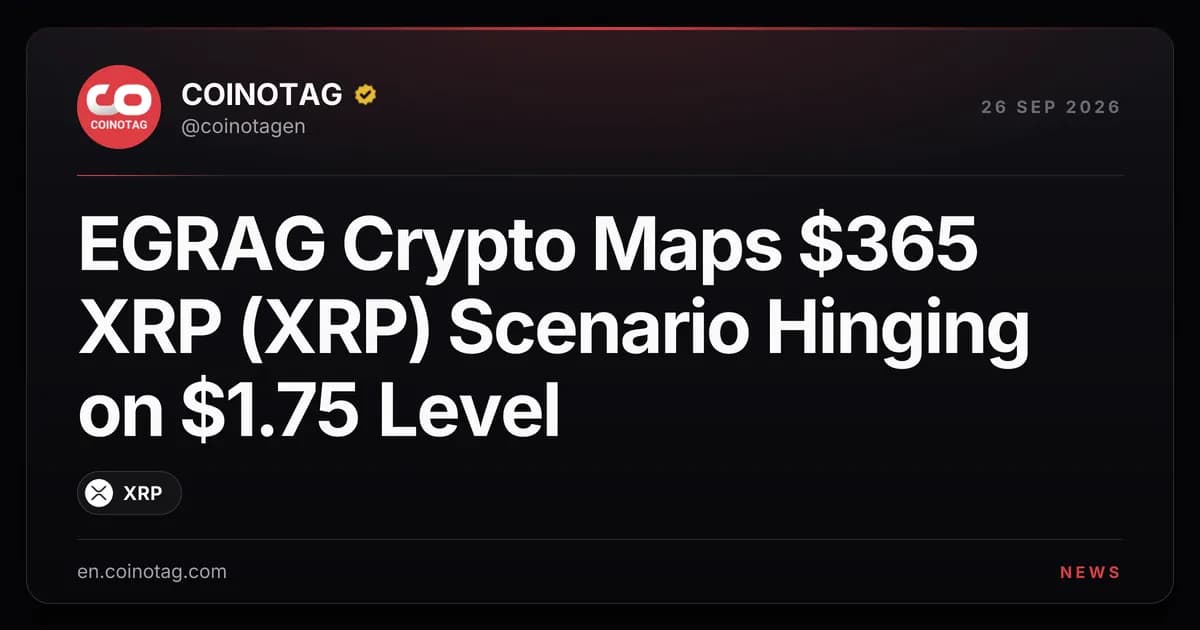
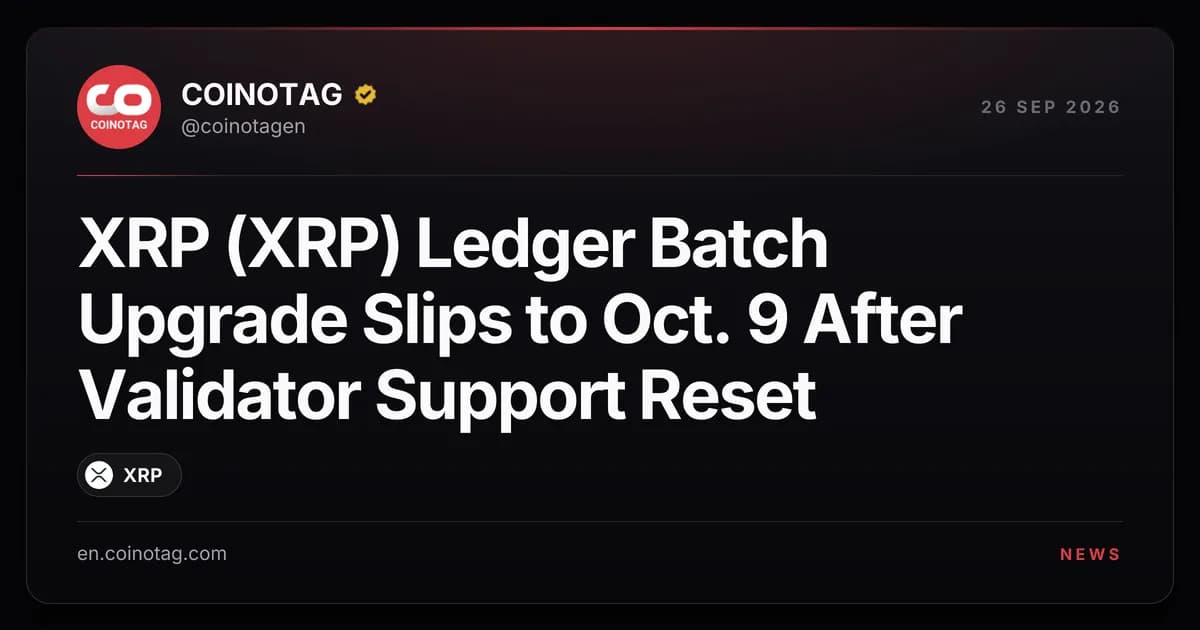
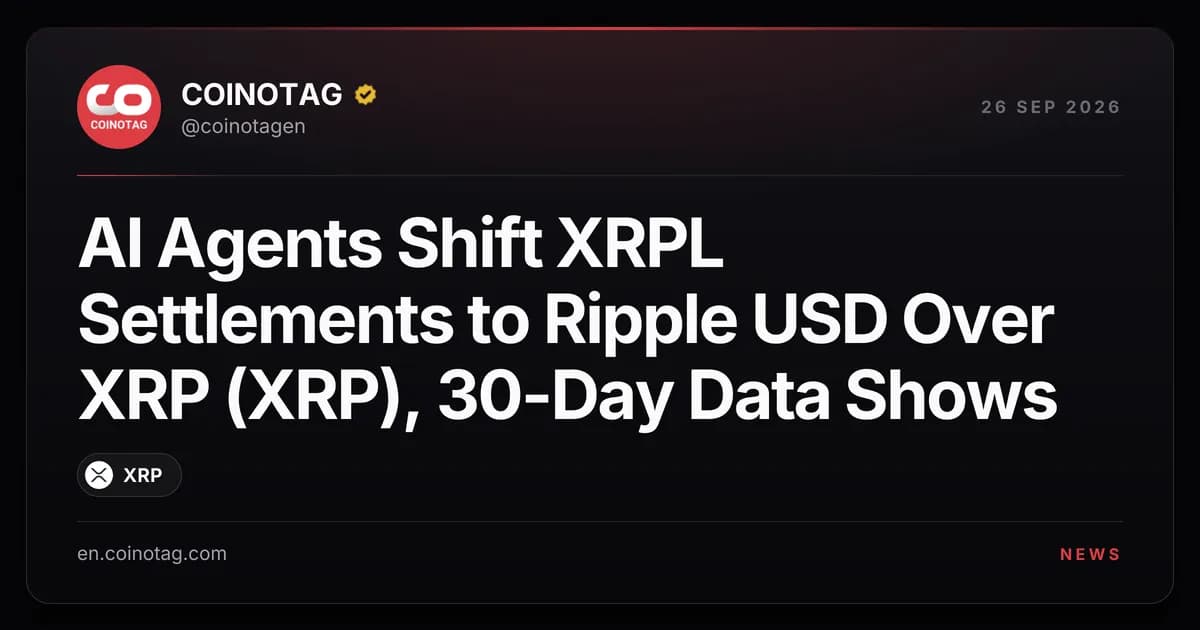
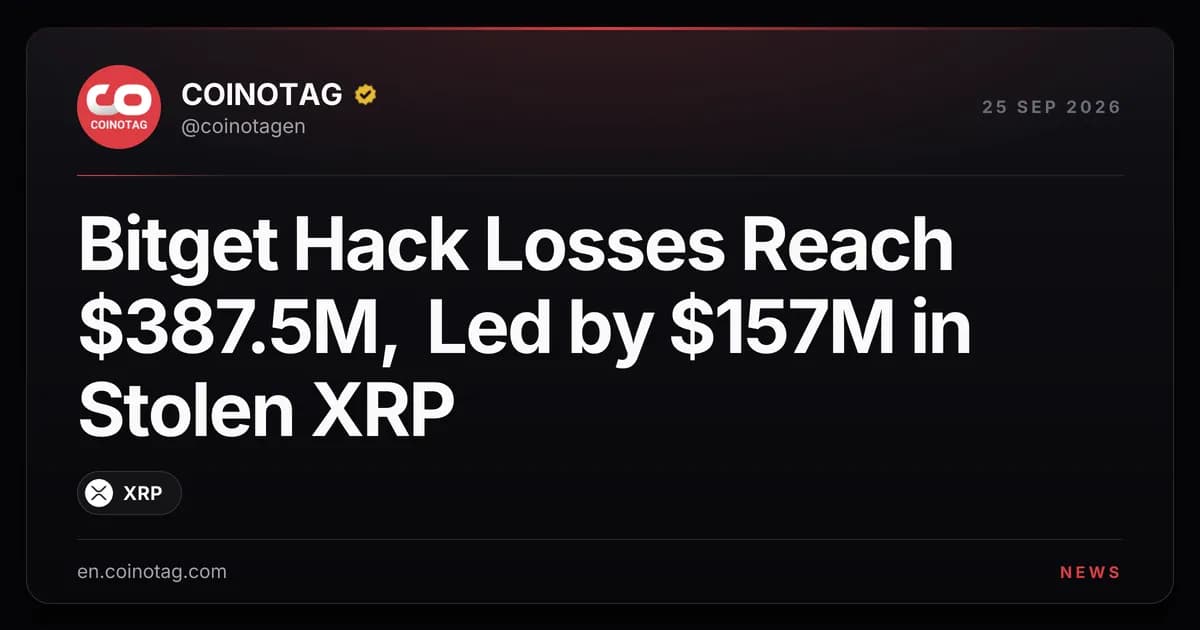
About XRPShow more
XRP is the native digital asset of the XRP Ledger (XRPL), an open-source blockchain developed by Ripple Labs to enable fast, low-cost cross-border value transfer and currency settlement at institutional scale. Unlike proof-of-work networks that require energy-intensive mining, the XRPL uses a federated consensus model that achieves transaction finality in under five seconds at a fraction of a cent per transfer, positioning it as one of the most operationally efficient networks in digital finance. The asset has consistently ranked among the top digital assets by market cap, and its trajectory has been shaped as much by legal milestones as by technological progress — most notably the multi-year SEC enforcement action against Ripple Labs that questioned whether the token constituted an unregistered security offering under US law. A pivotal partial ruling in 2023 found that programmatic secondary-market sales did not qualify as securities transactions, and further developments through 2024 and into 2025 progressively narrowed the regulatory ambiguity that had kept many institutional participants on the sidelines. That improving clarity has coincided with growing momentum around a spot ETF application in the United States, drawing direct parallels to the regulatory pathway that unlocked institutional access to Bitcoin and Ethereum funds. Beyond payment infrastructure, the XRPL has expanded its native capabilities into DeFi territory — including a built-in automated market maker, decentralized exchange functionality, and tokenization tools that allow institutions to issue regulated financial instruments on-chain. XRP remains central to Ripple's On-Demand Liquidity network, which routes real-time cross-border transactions across corridors in Asia, Latin America, and the Middle East, using the asset as a bridge currency to eliminate pre-funded nostro accounts. COINOTAG tracks the full scope of developments surrounding this asset — from regulatory milestones and on-chain data to ecosystem expansion and market structure — giving readers the factual, editorially independent context needed to follow one of crypto's most consequential and closely watched projects.
Frequently Asked Questions
What is XRP and how does it differ from Bitcoin?
XRP is the native digital asset of the XRP Ledger, a blockchain designed specifically for fast, low-cost global payments and asset settlement rather than general-purpose computation or store-of-value use. The most significant technical difference from Bitcoin lies in consensus design: Bitcoin uses proof-of-work mining, where validators compete to solve cryptographic puzzles, consuming substantial energy and taking roughly ten minutes per block. The XRP Ledger instead relies on a federated consensus mechanism involving a network of trusted validators, enabling transaction finality in three to five seconds at a cost of a fraction of a cent per transfer. Additionally, XRP's total supply was pre-minted at 100 billion units at genesis with no mining — Ripple Labs holds a large portion in escrow and releases up to one billion per month under a contractual schedule. Bitcoin, by contrast, has a 21 million coin cap distributed gradually through mining rewards. In terms of primary use case, Bitcoin is broadly positioned as a censorship-resistant store of value and payment network, while XRP was engineered to serve as a bridge currency for financial institutions moving value across currency corridors in real time.
Is XRP legal to own, and what was the SEC lawsuit about?
XRP is legal to hold and trade in most jurisdictions worldwide, though regulatory treatment varies significantly by country. In the United States, XRP became the center of a landmark enforcement action when the Securities and Exchange Commission filed suit against Ripple Labs in December 2020, alleging that sales of XRP constituted unregistered securities offerings under federal law. The case became one of the most closely watched legal battles in crypto history. A pivotal partial ruling in July 2023 determined that programmatic sales of XRP on public exchanges did not qualify as securities transactions under the Howey test — a significant partial win for Ripple — though institutional direct sales were found to have violated securities law. Further proceedings and settlement discussions continued into 2025, with regulatory clarity improving incrementally. Outside the US, the picture has generally been clearer: Japan's Financial Services Agency recognized XRP as a legal means of payment early on, and several European jurisdictions classify it as a crypto-asset under the MiCA framework. Prospective holders should always verify the specific regulatory status of digital assets in their home jurisdiction before transacting.
How can I buy or acquire XRP?
XRP is available on most major centralized cryptocurrency exchanges globally, with trading pairs against USD, EUR, USDT, and other major currencies. To acquire it, users typically register on a supported exchange, complete any required identity verification, deposit funds via bank transfer or card, and place a spot buy order. It is worth noting that during the SEC litigation period several US-based exchanges temporarily suspended XRP trading; many restored access following the favorable partial court ruling in 2023. Once purchased, XRP can be held in the exchange account or transferred to a self-custody wallet — the XRPL is compatible with a range of hardware and software wallets. One detail specific to the XRPL: a minimum reserve of 10 XRP is required to activate a new wallet address, meaning that amount is effectively locked and cannot be sent. When selecting where to acquire the asset, it is advisable to compare trading fees, the platform's security track record, and available withdrawal options rather than choosing on convenience alone.
What factors drive the price of XRP?
The price of XRP is shaped by a combination of macro crypto market conditions, Ripple-specific developments, and broader financial sentiment. Like most digital assets, it tends to move in correlation with Bitcoin during major market cycles — rising in bull markets and declining during bear phases — but it also reacts sharply to XRP-specific news. Historically, the single largest idiosyncratic price driver has been the progression and outcome of the SEC lawsuit, with significant moves recorded on each major court filing, ruling, or settlement update. Institutional adoption of Ripple's cross-border payment corridors, new banking or fintech partnerships, and progress toward a US spot ETF also influence market pricing. On the supply side, Ripple's monthly escrow releases of up to one billion units represent a known inflation schedule that market participants factor into valuation models. On-chain metrics — including transaction volume, active addresses, and AMM liquidity depth on the XRPL — are increasingly used by analysts alongside price charts to assess real network utilization and ecosystem health.
What can the XRP Ledger actually be used for beyond payments?
The XRP Ledger was built with two core capabilities: ultra-fast low-cost value transfer and a built-in decentralized exchange. On the payment side, Ripple's On-Demand Liquidity service uses XRP as a bridge asset to settle cross-border transactions in real time, eliminating the need for financial institutions to pre-fund accounts in destination currencies — a model that reduces working capital requirements and accelerates settlement. Beyond traditional remittance corridors, the XRPL supports the issuance of fungible and non-fungible tokens, hosts a native automated market maker for decentralized trading, and has been explored by several central banks and financial institutions as a platform for tokenized real-world assets including government securities and commodities. An EVM-compatible sidechain extending Ethereum-style smart contract functionality to the XRPL ecosystem has further broadened its reach into decentralized finance applications without compromising the main ledger's speed or fee structure. The combination of institutional payment infrastructure and expanding on-chain financial tooling positions the XRPL as a multi-purpose network rather than a single-use payment rail.
Where can I track Xrp (XRP) technical analysis and support/resistance levels?
You can find up-to-date Xrp technical analysis with 42 indicators, support and resistance levels, and Fibonacci levels on the COINOTAG spot analysis pages: XRP Support/Resistance, XRP Indicators, XRP Fibonacci Levels.