

Minnesota Legalizes Bank Crypto Custody as Galaxy Digital Secures New York BitLicense
Minnesota legalizes bank crypto custody from August 1 as Galaxy Digital wins NYDFS BitLicense and money transmitter license in New York.
Minnesota became the latest US state to formally legalize cryptocurrency custody services for traditional financial institutions, after Governor Tim Walz signed House File 3709 into law. Effective August 1, the statute permits state-chartered banks and credit unions to offer virtual-currency custody on a nonfiduciary basis, with explicit authorization to engage third-party subcustodians provided client assets remain legally and operationally segregated from institutional balance sheets. The new framework affects roughly 240 commercial banks holding $128 billion in combined assets and 82 member-owned credit unions, reshaping the competitive landscape for Bitcoin and digital asset storage in the upper Midwest.
Separately on May 18, Galaxy Digital secured both a BitLicense and a Money Transmitter License from the New York State Department of Financial Services, opening direct institutional access to what Mike Novogratz called the largest pool of professional capital in the country. The dual approval applies to GalaxyOne Prime NY, the subsidiary tasked with serving registered investment advisors, hedge funds, and family offices through Galaxy's full blockchain-native trading and custody stack. Allocators that previously routed through offshore intermediaries to access regulated services can now transact directly with a Nasdaq-listed counterparty operating inside New York's regulatory perimeter.
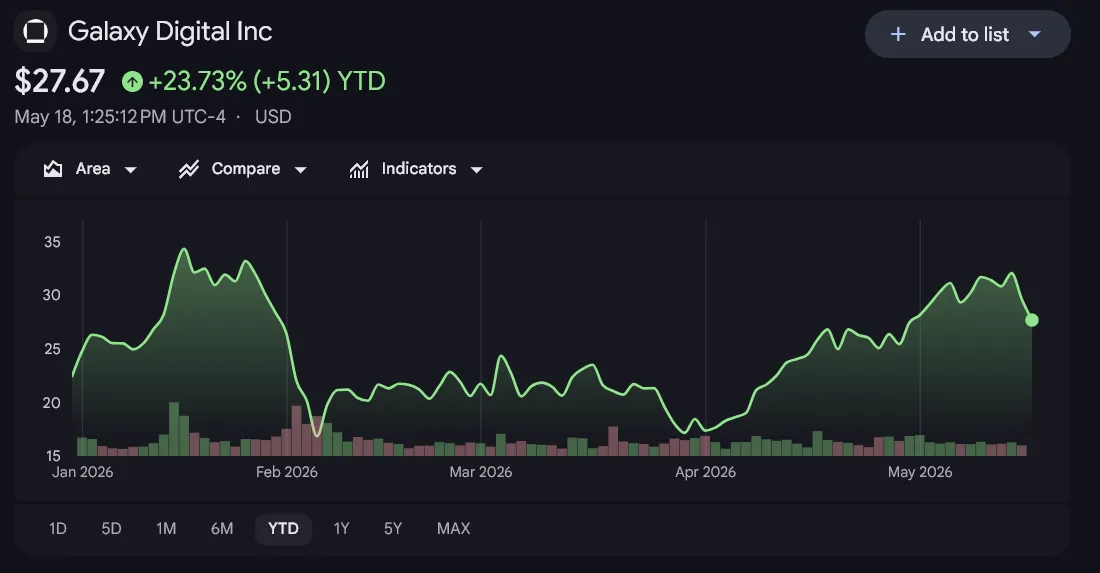
The New York approval pushes Galaxy's global regulatory footprint past 50 active licenses and reinforces the firm's positioning following its recent Nasdaq reorganization. The company currently administers roughly $9 billion in client assets across its digital asset business, a figure expected to grow as East Coast institutions migrate from intermediated offshore structures. Industry counts place fewer than 40 firms inside the active BitLicense club, putting Galaxy alongside the largest exchanges and stablecoin operators serving the state. Demand for institutional-grade cold wallet custody continues to outpace supply as professional allocations shift from speculative exposure toward strategic, long-duration positioning.
While Minnesota legitimized institutional custody, lawmakers in the same chamber advanced a separate measure targeting digital asset kiosks and crypto ATMs across the state. The proposed ban responds to a wave of scam incidents in which residents — often elderly — were directed by fraudsters to deposit cash into machines tied to wallets outside law enforcement's reach. The juxtaposition reflects a pattern visible nationwide: state governments are embracing regulated institutional rails while simultaneously hardening rules around retail-facing crypto infrastructure that has been repeatedly linked to consumer harm and untraceable fund movement.
Federal-level activity has tracked the state momentum. Earlier this month, Payward — the parent company of cryptocurrency exchange Kraken — filed with the US Office of the Comptroller of the Currency for a national trust company charter. The proposed Payward National Trust Company would, if approved, offer fiduciary custody and adjacent services oriented around digital assets. Crypto-native firms are increasingly pursuing the same federal banking credentials historically held by Wall Street custodians, signaling a structural shift in how regulated digital asset infrastructure is being built and supervised inside the United States banking perimeter.
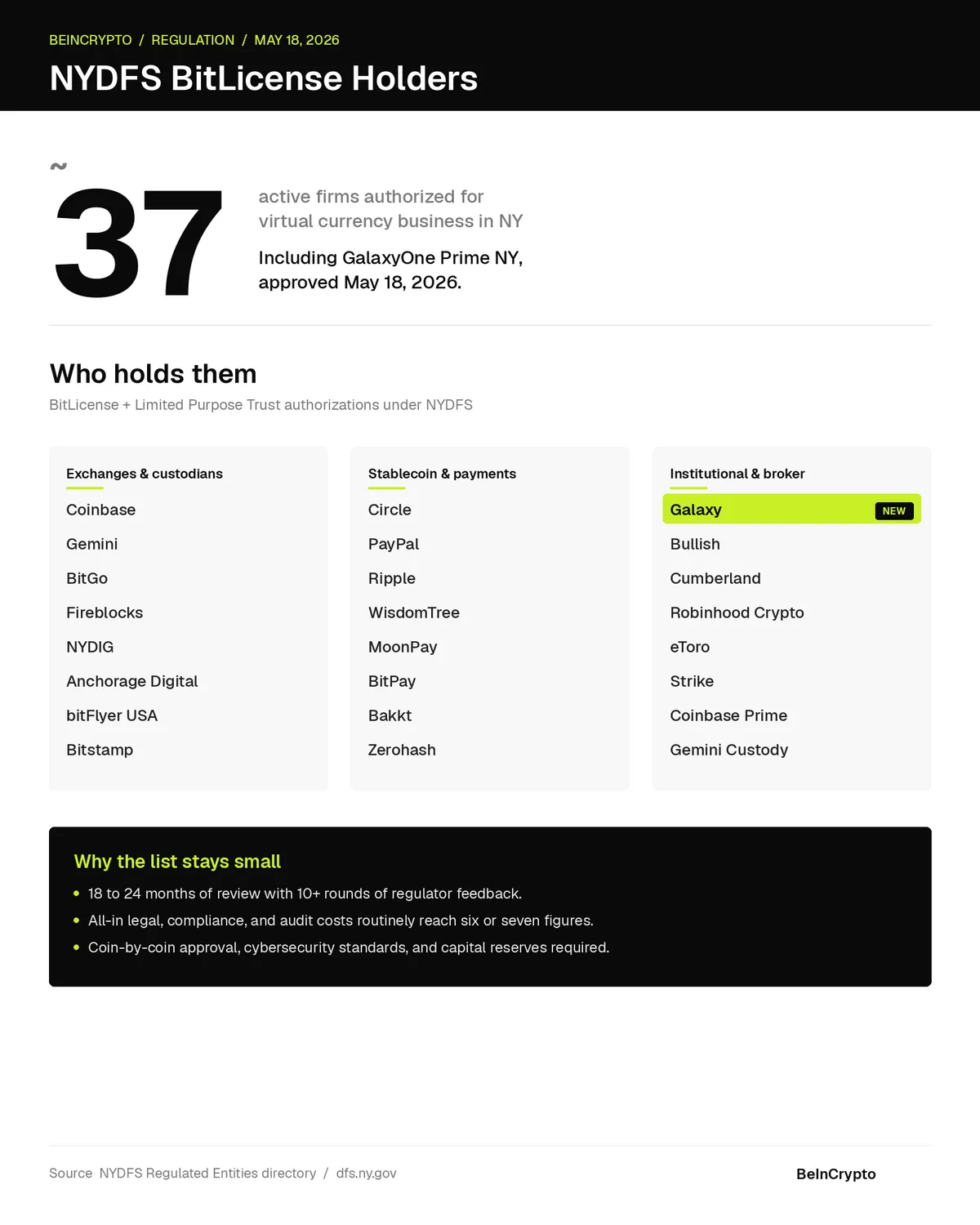
Galaxy is only the second firm to clear the BitLicense bar in 2026 after Strike, the bitcoin-focused payments company founded by Jack Mallers, received its approval in March. In 2025, only two firms — MoonPay and the Peter Thiel-backed Bullish — received the same green light. The NYDFS framework, introduced in 2015, remains one of the most demanding state-level licensing regimes in the country, requiring exhaustive anti-money-laundering controls, cybersecurity attestations, and dedicated capital reserves. The scarcity of approvals underscores the moat incumbent license holders enjoy as competitors face multi-year examination cycles.
The dominant narrative across these developments is regulatory normalization rather than regulatory arrival. Minnesota's custody statute, Galaxy's New York approval, Kraken's federal trust application, and the steady drip of BitLicense grants point to digital asset infrastructure being absorbed into the same legal scaffolding that governs traditional banking. DeFi-adjacent firms and pure-crypto issuers are increasingly forced to choose between two paths: clear the high regulatory bar to access institutional flows, or operate at the consumer-facing margins where compliance burdens are now tightening as well.
AI-generated, AI-reviewed, under COINOTAG editorial oversight.