

Institutions Add $4.6B to MSTR, Silvergate Exec Breaks SEC Silence, IG Taps Bitpanda
Institutions added $4.6B to MSTR in Q1 despite an 18% drop, a former Silvergate exec broke her SEC silence, and IG Europe tapped Bitpanda for EU crypto.

Strategy's MSTR stock attracted heavy institutional accumulation in the first quarter of 2026 even as shares dropped roughly 18%. Chief executive Phong Le disclosed Form 13F filings showing that 13 of the top 15 institutional shareholders increased their positions, lifting combined holdings by $4.6 billion, or 27%. Capital International led the wave with a $1.92 billion increase. Vanguard's portfolio and capital management entities collectively added $967 million, while BlackRock Institutional Trust raised its stake by $377 million. Defiance ETFs entered the top 15 with a $511 million position. Only Morgan Stanley Investment Management trimmed exposure, shaving a modest $7 million during a steep Bitcoin drawdown.
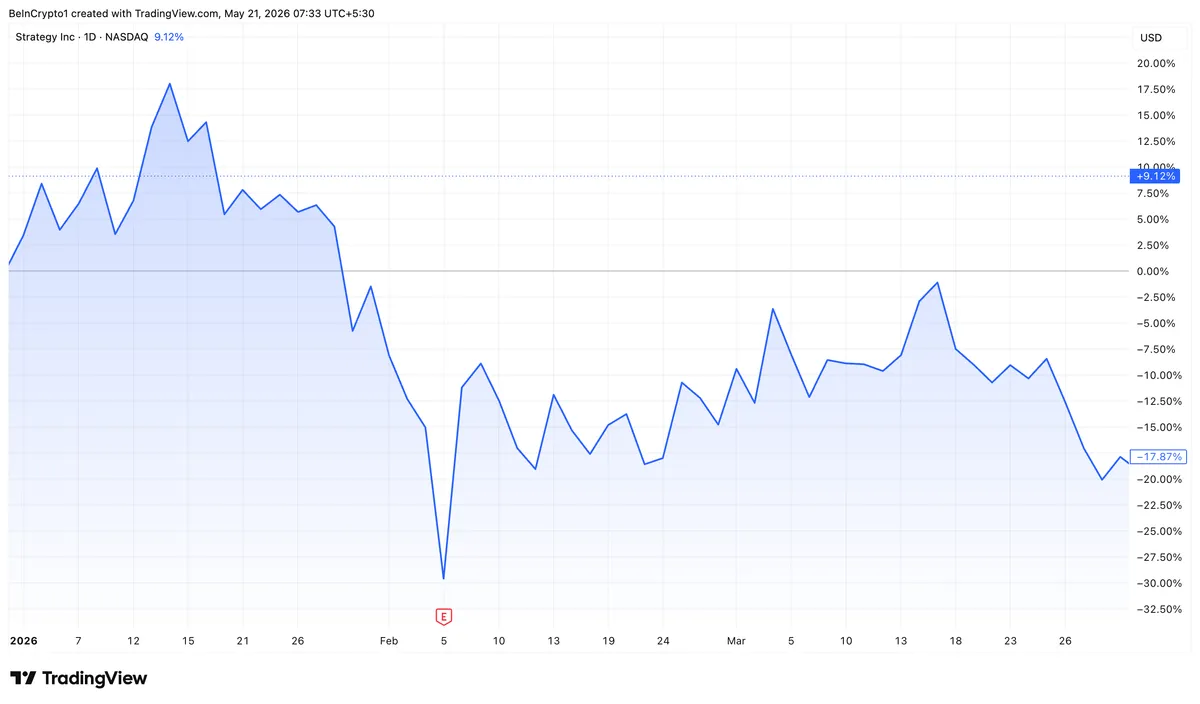
A closer look at the filings draws a sharp line between active conviction and passive index mechanics. Vanguard, BlackRock, State Street, and Geode Capital largely hold Strategy shares through index-tracking vehicles, meaning their additions partly reflect rebalancing rather than pure directional bets on Bitcoin exposure. By contrast, Capital International's nearly $2 billion increase represents a deliberate active wager, while Defiance ETFs' fresh $511 million stake signals dedicated thematic demand. The split matters: passive flows wax and wane with index reconstitution, but active accumulation underscores managers willing to underwrite the Strategy thesis through a deep bear-market drawdown, an unusually constructive signal during a sustained downturn.
Former Silvergate chief risk officer Kate Fraher publicly addressed her 2024 settlement with US securities regulators, speaking just days after the SEC rescinded a decades-old gag rule. Fraher paid a $250,000 civil penalty and accepted a five-year ban from serving as a company executive or board director. She denied that the bank's anti-money laundering controls had actually failed, saying she settled only to avoid a multi-year legal fight. Fraher said she was personally de-banked and saw credit lines summarily closed during the process. She attributed Silvergate's voluntary wind-down to broader regulatory pressure rather than a deposit run or direct FTX contagion.
Blockchain forensics firms are flagging a sharp rise in tax-evasion schemes routed through novel on-chain instruments such as Bitcoin Ordinals, BRC-20 tokens, NFTs, and DeFi protocols. Italy's Economic and Financial Police Unit in Foggia recently uncovered a case in which an individual allegedly concealed roughly $1.1 million in undeclared capital gains by inscribing and trading Ordinals-based tokens. Investigators traced the suspect minting inscriptions, listing them on marketplaces, and routing the sale proceeds back into a primary Bitcoin wallet for reinvestment. Academic studies estimate that only 32% to 56% of US crypto holders report gains, while the IRS pegs the gross annual tax gap at roughly $606 billion across all asset classes.

UK-listed trading group IG has expanded its European crypto offering through a partnership with Vienna-based exchange Bitpanda, executed via its BaFin-regulated subsidiary IG Europe GmbH. Managing Director Esteve Jane said clients wanted exposure to digital assets through a platform they already trust, and the deal broadens IG's altcoin and Bitcoin product range for experienced investors across the EU. The agreement follows a series of crypto-focused moves by IG, including the acquisition of Australian exchange Independent Reserve, the securing of a MiCA license, and the sale of its Small Exchange futures unit to Kraken under a broader strategic collaboration with the global exchange.
Vienna-headquartered Bitpanda continues to scale across European retail and institutional segments, leveraging its enterprise division as a backend for regulated counterparties. Founded in 2014, the exchange reported at least 7.4 million users at the close of 2025 and is reportedly weighing a public listing this year. Recent moves include a launch in the United Kingdom and an expansion of its product menu to thousands of equities and exchange-traded funds, positioning the firm as a multi-asset platform rather than a blockchain pure-play. The MiCA framework's full activation has emboldened compliant venues to integrate digital-asset rails directly into traditional broker stacks.
The dominant arc tying these developments together is the steady absorption of digital assets into the regulated financial mainstream. Long-only institutional allocators continued to underwrite Strategy through a drawdown rather than retreat, signaling conviction in Bitcoin proxy exposure. Regulators are pivoting from enforcement-by-settlement toward more transparent disclosure as the SEC retires its decades-old gag rule. Blockchain forensics now sit at the center of cross-border tax enforcement, narrowing the illicit corridors that thrived during prior cycles. And European brokers are quietly wiring digital-asset rails into traditional trading platforms. Together, these threads describe an industry being institutionalized, not marginalized.
Related Tags

AI-generated, AI-reviewed, under COINOTAG editorial oversight.