

Polymarket $2.4M Iran Bets Probed, Zerohash Lands MiCA EMI, Oppo Open-Sources AI Agent
Crypto News
Chinese smartphone manufacturer Oppo's Multi-X Team has released X-OmniClaw, an open-source Android AI agent framework engineered to run directly on a user's device rather than relying on cloud-hosted virtual phones. The system uses the handset's native camera, microphone, and screen to perceive surroundings and act inside live applications, calling external language models only when heavy reasoning is required. According to the project's technical report, this edge-native design eliminates the gap between simulated environments and real-world interaction contexts, giving the agent direct access to local photos, files, and live sensor input that cloud-emulator agents simply cannot reach across modern mobile workflows.
The framework is structured around three pillars the development team calls Omni Perception, Omni Action, and Omni Memory, looped together so the assistant can observe, decide, and remember across sessions. Omni Perception merges camera feeds, on-screen content, and voice into a single pipeline, with a vision-language model interpreting context before any action triggers. A behavior-cloning module lets users record a navigation path once, after which the agent replays the sequence through Android deep links to bypass multi-step menus. Long-term semantic memory drawn from gallery and session history positions the tool as a continuous companion rather than a single-prompt chatbot for power users.

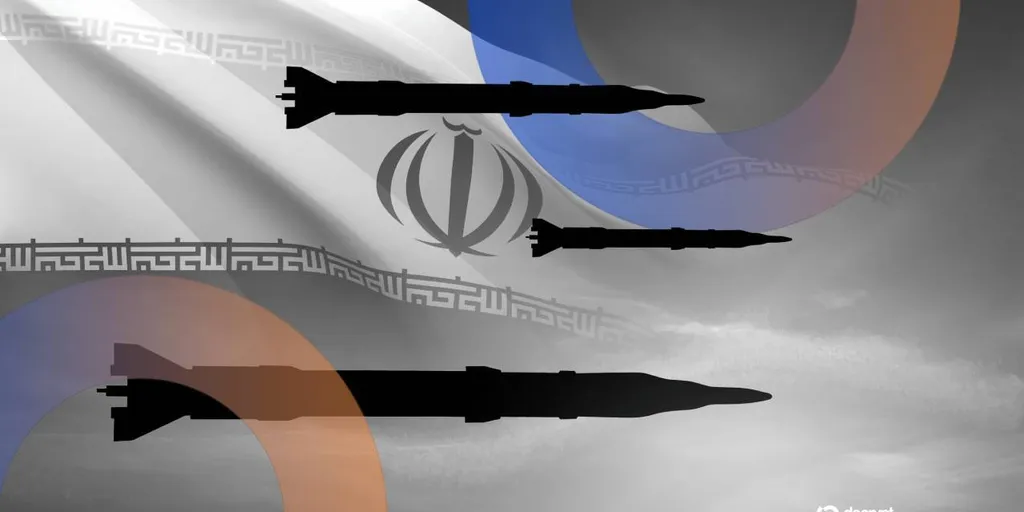
Nine interlinked accounts on the prediction-market platform Polymarket have collectively netted roughly $2.4 million by wagering on U.S. military actions tied to the Iran conflict, according to an on-chain investigation by analytics firm Bubblemaps. The cluster sits within the wider DeFi prediction-market ecosystem and was created days before the initial American bombardment of Iran in late February. The wallets reportedly won 98 percent of their positions, correctly timing strike windows, the removal of Supreme Leader Ali Khamenei, and the eventual ceasefire. Investigators say the few losing wagers were trivial sums apparently posted to confuse forensic trackers.
Funds from the suspicious cluster ultimately exited through Bybit, a Dubai-based centralized exchange, with intermediate flows touching Binance and HTX, Bubblemaps analysts disclosed. Beyond a tongue-in-cheek wallet labeled "whopperlover," no concrete evidence ties the operators to the United States, the firm's chief executive Nicolas Vaiman cautioned, calling the American connection circumstantial. The investigation arrives as regulators sharpen focus on prediction markets, which sit at the intersection of speculative trading and information arbitrage. Public blockchain rails made the coordinated pattern visible to independent analysts, echoing a separate insider-betting case involving a U.S. soldier earlier this year.
Crypto-infrastructure provider Zerohash Europe has secured an Electronic Money Institution license from De Nederlandsche Bank, becoming the first firm to hold both that authorization and a full Markets in Crypto-Assets registration. The company received its MiCA license in October 2025 from the Dutch Authority for the Financial Markets, with the broader EU framework set to take effect in July. Pairing the two regimes lets Zerohash legally service stablecoin flows alongside traditional electronic-money rails across the European Economic Area, opening direct channels to banks, brokerages, fintechs, and payment providers — including Interactive Brokers Europe, already a partner in the region for execution services.
The dual licensing requirement reflects guidance issued by the European Banking Authority, which has argued that certain e-money token flows function effectively as electronic money under existing directives and therefore require additional oversight beyond standard crypto-asset service provider rules. The EBA published a No-Action Letter in June 2025 and added clarifications in February stipulating that firms supporting stablecoin-powered financial flows must obtain EMI authorization. The interpretation has reshaped market structure across the bloc, pushing infrastructure firms to seek hybrid licensing rather than route through unregulated venues, with knock-on effects expected for the wider altcoin sector as enforcement intensifies.
The day's headlines trace a single thematic arc: the boundary between decentralized infrastructure and regulated finance is collapsing in real time. Oppo's edge-AI push answers privacy concerns that cloud-mediated assistants cannot resolve, while the Polymarket episode shows how transparent on-chain rails make even sophisticated coordination visible to public analysts. Europe's MiCA-plus-EMI architecture, meanwhile, is forcing crypto firms to integrate directly with banking-grade oversight rather than route around it. Against a backdrop of Bitcoin-led institutional rotation, these stories underscore a maturing cycle in which compliance, surveillance, and consumer hardware all converge on the blockchain layer.
COINOTAG does not provide financial advisory services. This content is for informational purposes only and should not be considered investment advice. Cryptocurrency investments involve high risk.
Add COINOTAG as a Preferred Source
Add COINOTAG to your preferred sources in Google News and Search to see our coverage first.
Add on GoogleRelated Tags
AI-generated, AI-reviewed, under COINOTAG editorial oversight.