

Prometheum Goes Live, Japan Opens to Foreign Stablecoins, CFTC Sues Minnesota Over Ban
Prometheum executes first crypto trades, Japan admits foreign trust-type stablecoins June 1, and CFTC sues Minnesota over prediction market ban.


After nearly a decade of preparation and roughly $100 million in capital raised, Prometheum has executed its first crypto trades, marking a watershed moment for a platform that long wagered everything on full SEC-style compliance. The brokerage began offering access to altcoin trading last week, with Ethereum as the inaugural listing and additional tokens slated to follow. Co-CEO Aaron Kaplan said the company aims to serve broker-dealers, registered investment advisors, and major asset issuers seeking a regulated bridge between traditional securities and digital assets. The launch arrived quietly, overshadowed by competing spot products that already dominate retail flows and institutional balance-sheet allocations.
The milestone closes a chapter that began under former SEC chair Gary Gensler, whose enforcement-first posture pushed Prometheum to position itself as the industry's compliance poster child. In 2023 congressional testimony, Kaplan argued the agency had already mapped a workable path for crypto firms, a stance that drew sharp criticism from peers fighting the regulator in court. Rivals derided the platform's slow rollout, and skeptics questioned whether a securities-classified Ethereum could attract meaningful liquidity at all. Today the regulatory climate looks dramatically different, with new SEC leadership easing the enforcement pipeline while spot Bitcoin products continue absorbing the bulk of mainstream demand.

Japan's Financial Services Agency has finalized rules that admit foreign-issued trust-type stablecoins into its formal payment system, with the framework published on May 19 and taking effect June 1. The reform reclassifies qualifying foreign tokens as Electronic Payment Instruments under the Payment Services Act, ending the gray-zone status that previously blocked their use in everyday transactions. Issued under Prime Minister Sanae Takaichi's administration, the change effectively dismantles a barrier that had pushed major global blockchain-based tokens to the sidelines of one of Asia's largest financial markets. Industry observers see the policy as a direct counterweight to legislative efforts advancing in Washington this year.
At the core of the new framework sits a strict equivalence standard. Foreign issuers must demonstrate that their home jurisdiction enforces licensing, audit, anti-money laundering, and reserve rules comparable to Japan's, with same-currency reserve backing required to limit exchange-rate risk. Domestic intermediaries carry the primary responsibility for verifying compliance, and SBI VC Trade is already preparing licensed services around globally recognized dollar-backed tokens. Market participants expect the June 1 start date to unlock fresh inflows for remittances, tokenized settlement, and cross-border DeFi rails, while regulators retain enforcement leverage through the intermediary chain rather than pursuing offshore issuers directly.
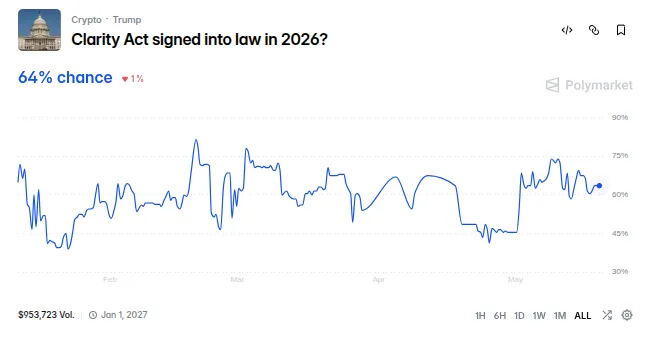
Minnesota has become the first U.S. state to criminalize prediction markets outright, with Governor Tim Walz signing legislation that turns the operation, management, or promotion of such platforms into a felony offense. The new statute targets event-contract venues including Kalshi and Polymarket, whose sports and political wagers have drawn scrutiny from state gambling regulators across the country. Lawmakers framed the measure as a consumer-protection step, arguing that unlicensed wagering markets bypass safeguards built into Minnesota's existing gaming regime. The ban arrives amid a national debate over whether event contracts qualify as federally regulated commodities, regulated securities traded on a DEX, or simply repackaged sports betting.
Within hours of the law's signing, the Commodity Futures Trading Commission and the Department of Justice filed suit against Minnesota, arguing the prohibition unlawfully intrudes on federal authority over event-contract exchanges. The joint complaint contends that prediction market venues operate under exclusive CFTC jurisdiction and that allowing felony prosecution would dismantle a federally regulated market segment. The Trump administration has aggressively defended platform operators in similar disputes with other states this year, signaling a coordinated strategy to centralize oversight in Washington. Legal observers expect the dispute to reach the Supreme Court, where the boundary between state gambling law and federal commodities regulation will ultimately be settled.
Taken together, this week's developments sketch a regulatory landscape in motion. Tokenized securities are moving from theory to live trading, foreign stablecoins are being woven into one of the world's most disciplined payment systems, and the federal-state battle over prediction markets is escalating toward the highest court. The dominant arc is one of jurisdictional sorting, where governments worldwide are deciding which agency, which statute, and which definition will govern the next phase of digital asset adoption. For builders and capital allocators, the implication is clear: regulatory clarity, however uneven, is becoming the primary catalyst shaping the cycle.
AI-generated, AI-reviewed, under COINOTAG editorial oversight.