

Senate Crypto Bill Faces 100+ Amendments as JPMorgan Files Tokenized Fund and Japan Plans Yen Stablecoin
Senate Banking faces 100+ crypto bill amendments as JPMorgan files tokenized money market fund, Japan plans EJPY yen stablecoin, and CFTC backs Kalshi.
The US Senate Banking Committee is heading into a pivotal Thursday markup with more than 100 amendments filed against the chamber's crypto market structure bill, a leaked roster shows. Democratic senators have proposed dozens of revisions while Republicans pursue narrower tweaks, with stablecoin yield, software developer protections, and ethics provisions dominating the debate. Senator Chris Van Hollen is pushing a measure to bar the president, vice president, lawmakers, and their families from owning or promoting crypto assets, while Jack Reed and Tina Smith want a stricter "substantially similar" test on yield restrictions, signaling that consensus on the House-passed CLARITY framework remains elusive.

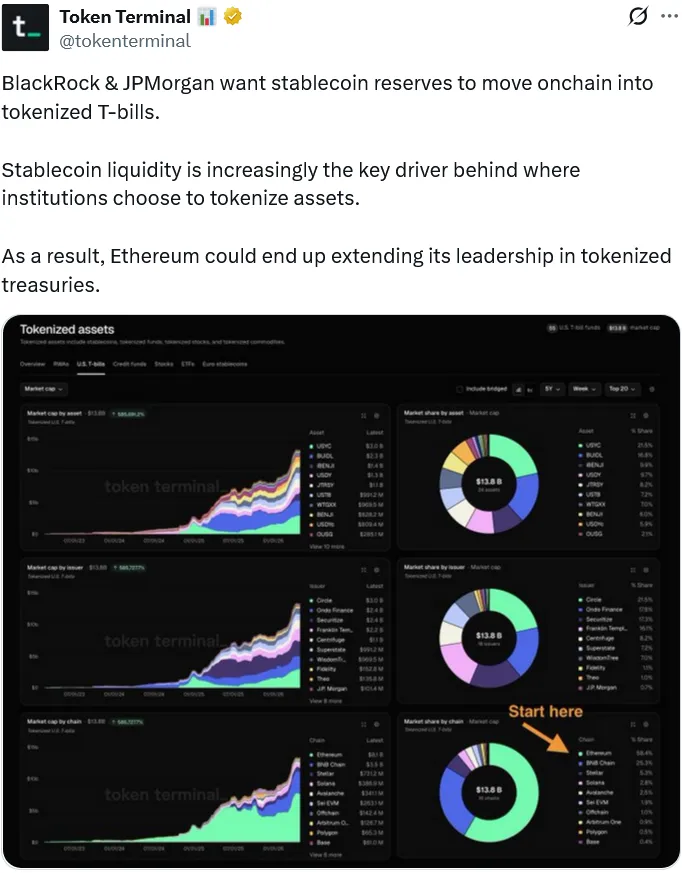
JPMorgan has filed with the SEC to launch the OnChain Liquidity-Token Money Market Fund, ticker JLTXX, on Ethereum, giving stablecoin issuers a regulated vehicle to park reserves while earning interest on US Treasury bills and overnight repos. The fund carries a 0.16% annual fee, requires a $1 million minimum, and is structured to comply with the GENIUS Act passed in July. Managed by JPMorgan's Kinexys Digital Assets unit, JLTXX follows the December launch of the MONY fund and arrives as more than $32.2 billion in real-world assets sit tokenized on public blockchain rails, underscoring Wall Street's pivot toward onchain settlement infrastructure.
Anthropic has escalated its warning to investors that any unauthorized sale or transfer of its private shares, including through tokenized wrappers and special purpose vehicles, is void and will not be recognized on company books. The Claude developer's stance lands as multiple crypto exchanges market pre-IPO exposure to private tech names with implied trillion-dollar valuations. Some products are synthetic perpetuals tied to a reference price, while others use SPVs or secondary holdings to mimic equity exposure. Anthropic's notice draws a hard line against repackaging restricted stock for retail buyers, raising fresh questions about the legal standing of tokenized private equity markets.
Japan Blockchain Foundation announced it will issue EJPY, a yen-pegged trust-type stablecoin, on Japan Open Chain and Ethereum, targeting B2B settlements, digital asset payments, and remittances. JOC is operated by 14 enterprise validators including Dentsu, NTT Communications, and SBINFT. The trust-type structure sidesteps the 1-million-yen per-transaction limit that constrains fund-transfer issuers like JPYC, opening the door to larger institutional flows. The foundation aims to begin issuance within the year. EJPY joins SBI's JPYSC and pending pilots from MUFG, SMBC, and Mizuho in a rapidly maturing Japanese stablecoin landscape since regulators codified the framework in 2023.
Benchmark equity analysts reiterated a Buy on Coinbase and lifted their price target to $270 from $260, framing COIN as foundational infrastructure for the onchain economy rather than a cyclical brokerage. The upgrade follows a Q1 net loss of $394 million on revenue of $755.8 million, a steep miss that triggered a 6% selloff and a 14% workforce reduction. Despite the headline weakness, Coinbase captured an all-time high 8.6% share of global crypto volume, logged its 12th consecutive quarter of net inflows, and now controls roughly half of total USDC economics, with Base stablecoin volume up tenfold year over year.
The Commodity Futures Trading Commission filed an amicus brief at the Sixth Circuit backing Kalshi against Ohio's attempt to regulate prediction markets as unlicensed sports betting. CFTC Chair Michael Selig argued the lower court took an "improperly narrow" view of federal jurisdiction over event contracts. The agency has now sued or intervened in disputes involving Wisconsin, Illinois, Arizona, Connecticut, New York, and Ohio as state attorneys general push back. Last month, 38 state attorneys general filed an amicus brief supporting Massachusetts' suit against Kalshi, framing the clash as a defining test of whether federal commodities law preempts state gambling statutes.
Five major labor unions, including the AFL-CIO, SEIU, and AFT, have joined the American Bankers Association in urging senators to reject the CLARITY Act, warning the legislation could destabilize retirement savings and bank deposits. The unions argue the bill invites "outsized risks" that working people would absorb, while bankers oppose provisions touching stablecoin yield. Strategy's Michael Saylor publicly backed the measure, calling it essential for digital asset adoption. Together with the contested Blockchain Regulatory Certainty Act provisions protecting non-custodial software developers from money transmitter liability, the bill's fate hinges on whether Senate negotiators can reconcile labor, banking, and crypto industry red lines before Thursday's vote.
The dominant narrative this cycle is regulatory definition under pressure, with Washington racing to draw jurisdictional lines while institutional capital quietly builds the rails underneath. JPMorgan's tokenized fund, Japan's enterprise yen stablecoin, and Coinbase's pivot toward infrastructure all point to a maturing onchain economy that no longer waits for legislative permission. Yet the Senate amendment flood, the CFTC-state turf war, and labor-banking opposition to CLARITY show how contested the rulebook remains. Anthropic's pushback on tokenized private equity adds a parallel front: who controls access to decentralized finance primitives applied to traditional assets, and on whose terms.
Related Tags
AI-generated, AI-reviewed, under COINOTAG editorial oversight.