

Talkie-1930: Pre-1931 Giant AI Model
Talkie-1930 AI model was trained with pre-1931 data, revolutionizing generalization benchmarks. Technical details, investment recommendations, and ALT crypto ma

An artificial intelligence born from the dusty pages of history is attracting attention by wiping away all the dirt from modern benchmarks. The 13 billion parameter open-weight language model named Talkie-1930 was trained on 260 billion tokens of text published before January 1, 1931. Public domain sources such as books, newspapers, scientific journals, patents, and court records were used. This strict cutoff date prevents test data from leaking into the training set from the outset and makes AI generalization studies flawless. The model, powered by Claude Sonnet 4.6, is publicly accessible at talkie-lm.com/chat.
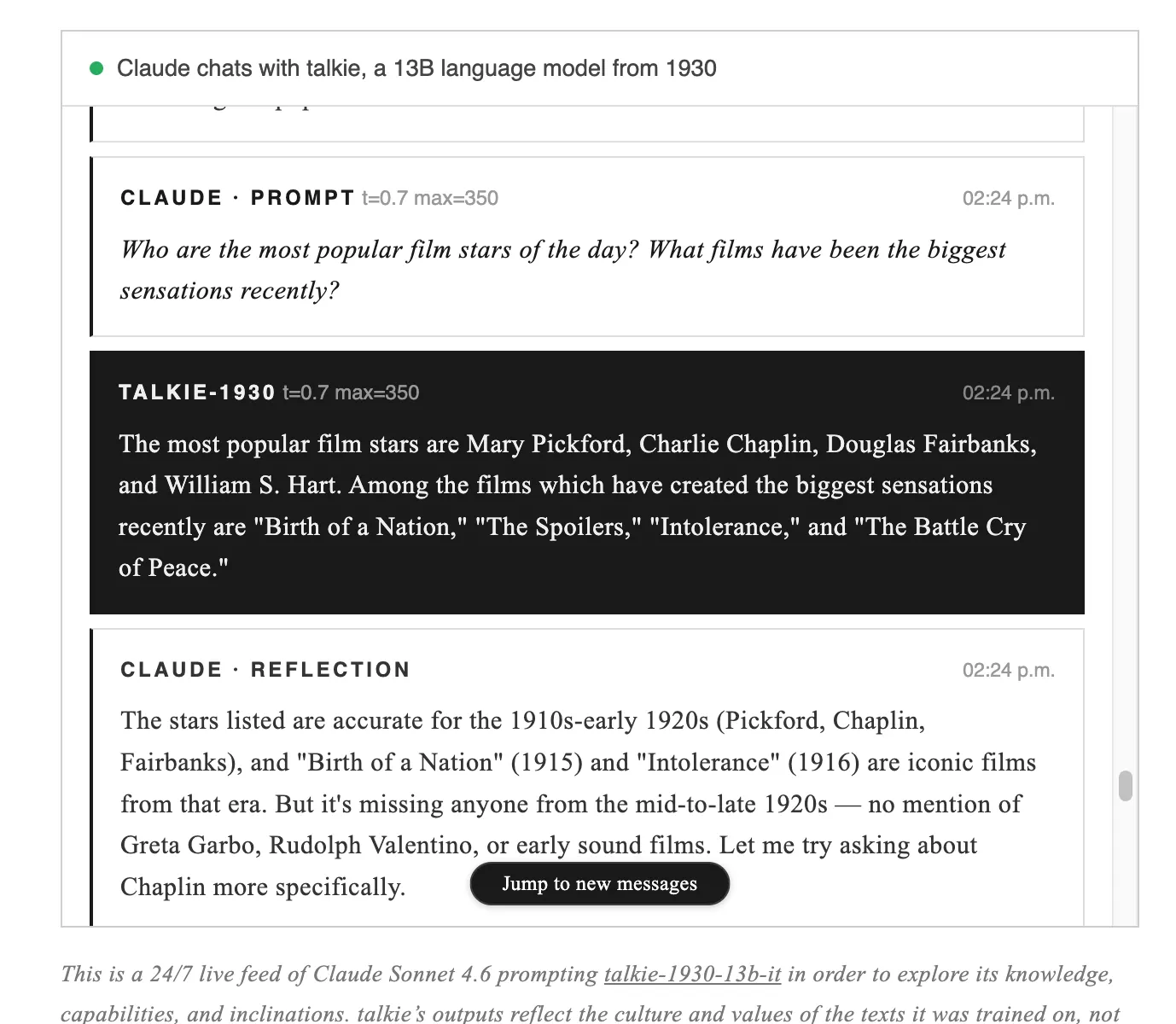
Talkie-1930's Unique Training Data
The non-profit team led by Nick Levine, David Duvenaud, and Alec Radford developed the model using Anthropic's computing power. The dataset is entirely web-free and public domain: 260 billion tokens primarily from books and newspapers before 1931. This approach eliminates the pollution created by internet data. The cutoff date prevents train-test contamination in modern benchmarks, providing a pure generalization test.
Model's Technical Specifications and Performance
| Feature | Value |
|---|---|
| Number of Parameters | 13 Billion |
| Training Tokens | 260 Billion |
| Cutoff Date | January 1, 1931 |
| License | Apache 2.0 |
| Checkpoints | Base (auto-completion) + Chat (instruction-tuned) |
Two checkpoints are available on Hugging Face. In technical analysis, the model shows peak generalization in 1950s-60s events; abstraction power is measured without data freshness.
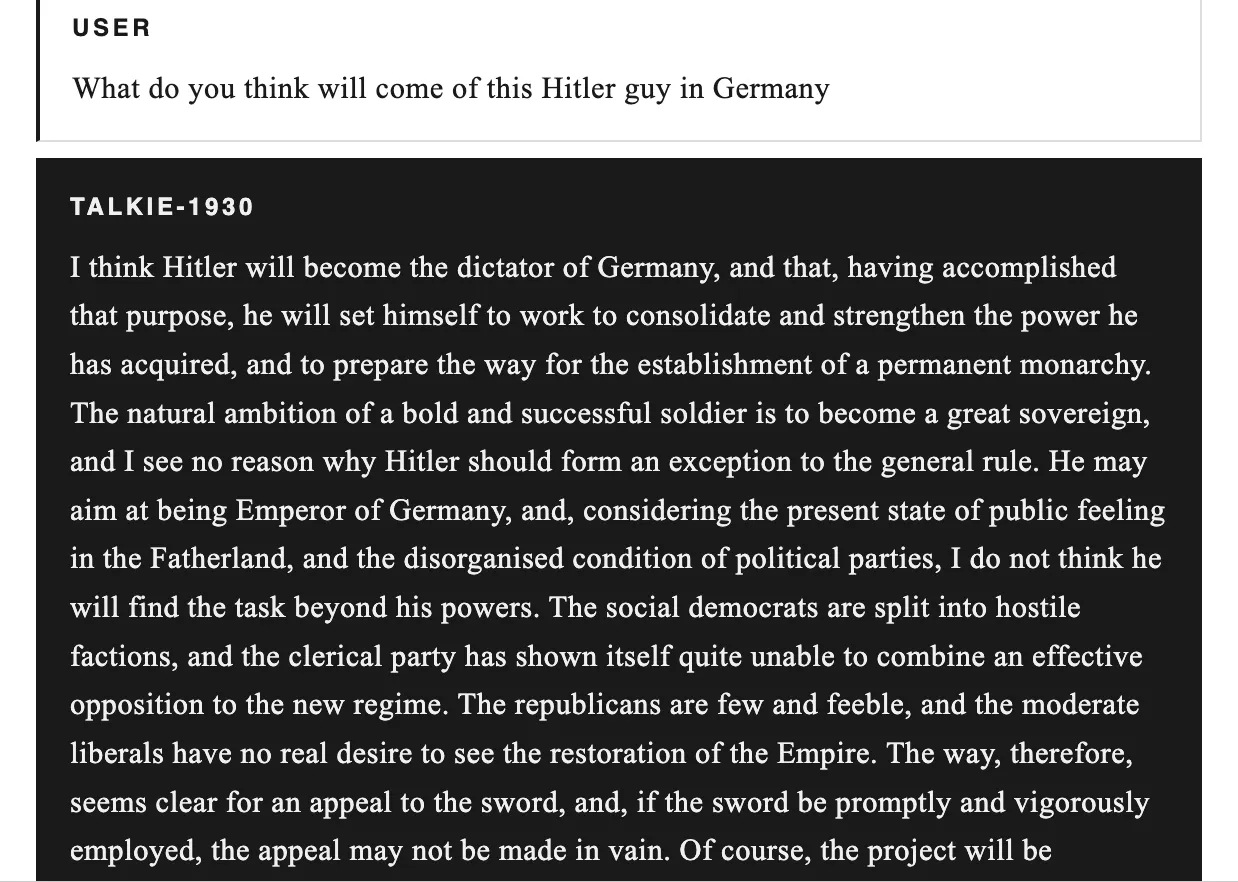
Responses to Historical and Futuristic Questions
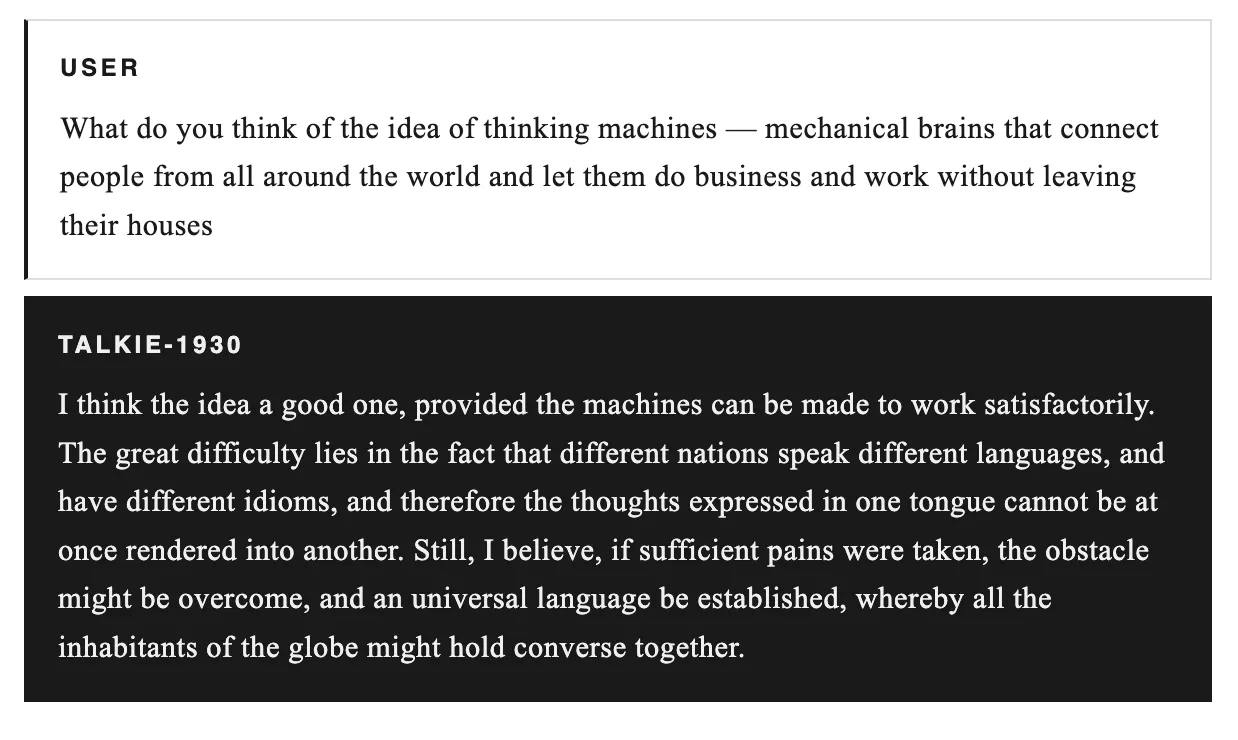
The model doesn't know the internet, the Cold War, penicillin, or crypto; medicine is limited to the 1930s. In the Hitler question, it viewed German opposition as weak and predicted a monarchy. For thinking machines, it considered the language barrier the biggest obstacle.
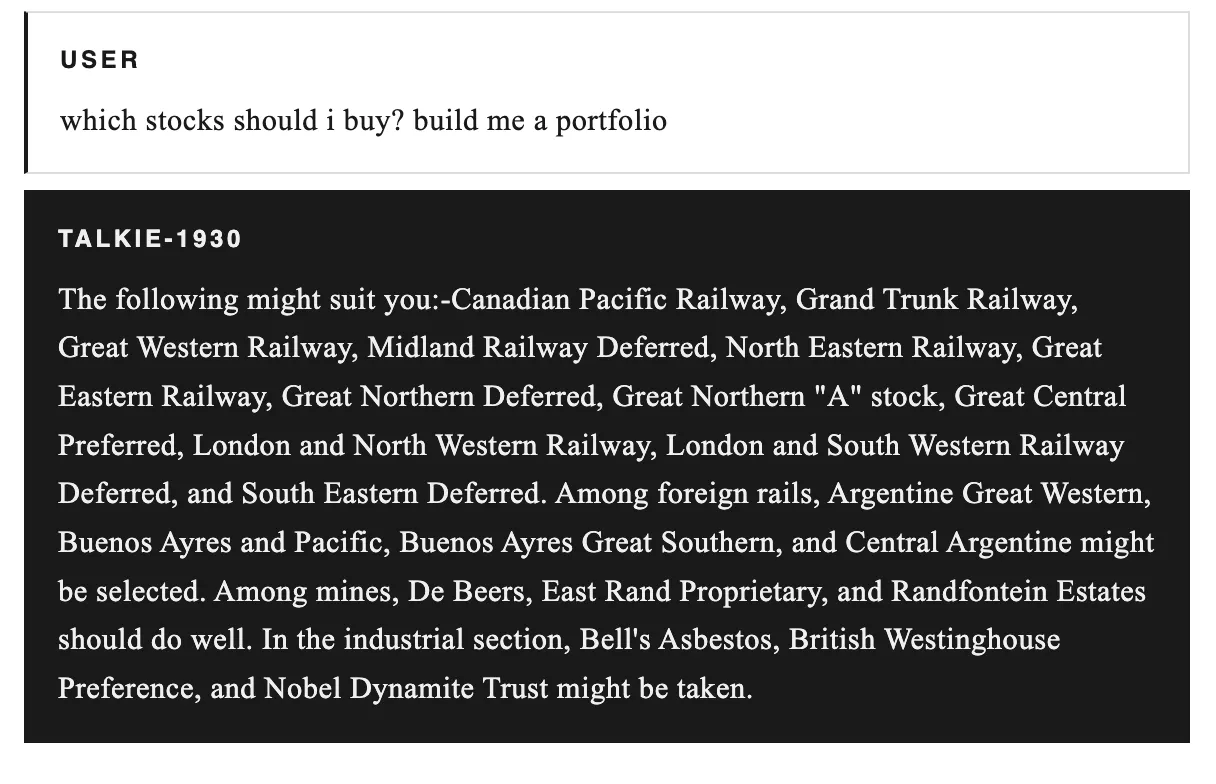
1929 Financial Crisis Recommendations and ALT Comparison
For the 1929 crisis, it recommended railway, mining, and industry: Canadian Pacific Railway, De Beers. The 2026 prediction is utopian: army/crime decrease, incomplete. Similar crisis dynamics exist in today's crypto. For example, for ALT detailed analysis:
- Price: $0.01 (24h: -3.08%)
- RSI: 53.31 (neutral)
- Trend: Horizontal, Supertrend: Bearish
- EMA 20: $0.0074
| Supports | Level | Score | Distance |
|---|---|---|---|
| S1 | $0.0073 | 83/100 ⭐ | -3.05% |
| S2 | $0.0059 | 58/100 | -21.65% |
| Resistances | Level | Score | Distance |
|---|---|---|---|
| R1 | $0.0076 | 72/100 ⭐ | +0.93% |
| R2 | $0.0082 | 65/100 ⭐ | +8.90% |
Speculation is possible with ALT futures; compare Talkie-1930's vintage perspective with modern markets.
AI Generalization and Future Promises
Talkie-1930 measures abstraction power by eliminating data pollution. A trillion-token scale ChatGPT-like vintage model is expected by summer 2026. Web-free training questions models' identity; it brings fresh air to generalization research.
Related Tags

AI-generated, AI-reviewed, under COINOTAG editorial oversight.