

Tether Faces $344M Stablecoin Seizure Bid as Myanmar Eyes Death Penalty and CLARITY Act Advances
Gerstein Harrow seeks $344M in frozen USDt, Myanmar proposes death penalty for crypto fraud, CLARITY Act advances, Poland adopts MiCA, Augustus Bank wins OCC…

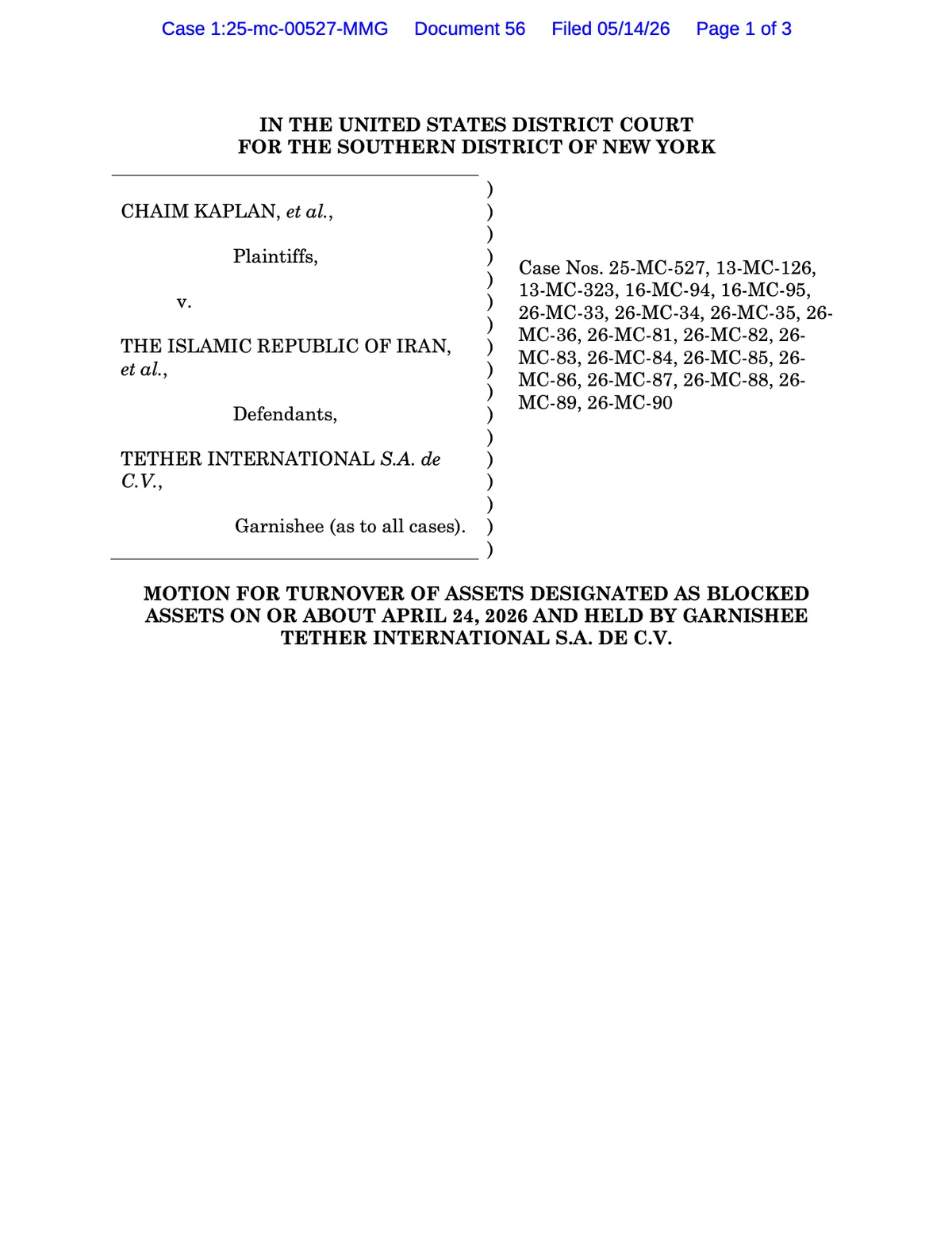
A US law firm has escalated its campaign to redirect frozen blockchain-based assets toward unrelated legal judgments, filing a new motion Thursday demanding Tether hand over more than $344 million in USDt linked to Iranian entities. Gerstein Harrow LLP claims its clients are owed over $532 million in compensatory damages and $1.8 billion in punitive damages tied to acts attributed to Iran stretching back 25 years. The filing extends a broader strategy targeting digital assets frozen following sanctions enforcement or exchange exploits. Onchain investigator ZachXBT publicly criticized the firm's tactics, arguing such filings displace rightful claims of hack victims and delay legitimate restitution efforts already underway in the industry.
Myanmar's military government has unveiled one of the harshest anti-fraud frameworks in the world, releasing the text of an Anti-Online Fraud Bill that proposes life imprisonment and, in certain cases, the death penalty for digital currency fraud. The legislation, published Thursday, directly targets scam centers operating along the country's borders, where trafficked workers are coerced into running pig-butchering schemes and fake investment platforms. Penalties escalate to capital punishment when victims die as a result of forced labor in these compounds. The proposal aligns with regional crackdowns, including China's January execution of 11 individuals linked to Myanmar-based scam operations, and reflects mounting pressure to dismantle Southeast Asia's industrial-scale crypto fraud networks.
The US Senate Banking Committee advanced the CLARITY Act, sending the long-awaited altcoin and digital asset market structure framework to the broader Senate floor. The committee processed more than 100 amendments covering ethics provisions, AI sandboxes, and stablecoin yield rules before passing the bill largely along party lines, with only two Democrats joining Republicans. Senator Jack Reed and other minority members argued the current draft fails to adopt global anti-money laundering standards, exempts DeFi protocols from key financial requirements, and leaves loopholes around mixer services. Despite partisan friction, the bill's path to passage looks favorable heading into election-year deliberations.
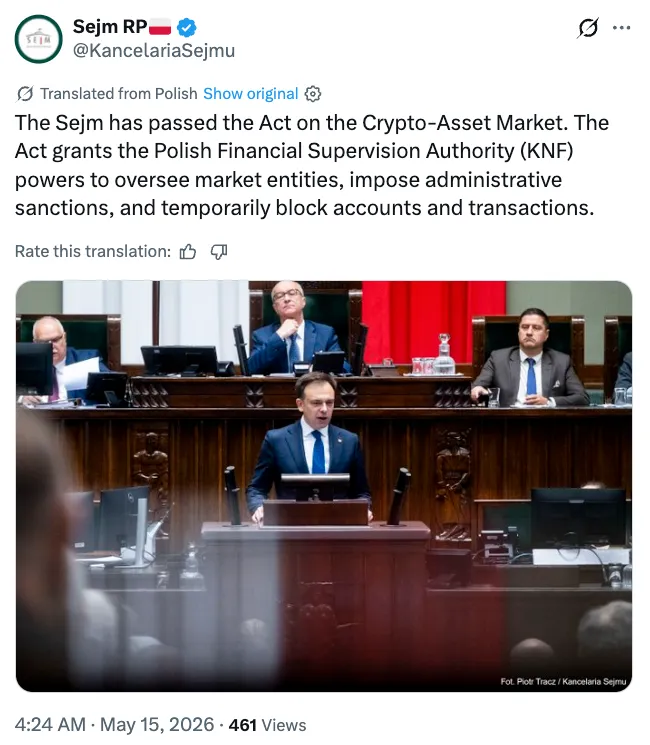
Polish lawmakers approved a Ministry of Finance-backed crypto bill in a 241–200 Sejm vote, finally aligning the country with the European Union's Markets in Crypto-Assets framework after President Karol Nawrocki vetoed two earlier versions. The legislation grants the Polish Financial Supervision Authority sweeping powers to oversee market participants, levy administrative sanctions, and temporarily block accounts or transactions deemed suspect. The vote marks Warsaw's third attempt at MiCA implementation and was passed in preference to three competing draft proposals. Separately, Strategy's Variable Rate Series A Perpetual Stretch Preferred Stock, known as STRC, recorded a $1.5 billion daily trading volume as the company continues funding its Bitcoin accumulation strategy.
Augustus Bank received conditional approval from the Office of the Comptroller of the Currency to charter what its leadership calls the first US clearing bank built natively for AI and programmable money. Granted under the GENIUS Act, the approval allows Augustus to establish a full-service national bank in Dallas centered on fully reserved stablecoins, AI-driven compliance, and automated back-office processes. CEO Ferdinand Dabitz argued that incumbent correspondent banks dominated by global institutions cannot be re-platformed for machine-driven finance. Augustus is pursuing a three-layer stablecoin model designed to free an estimated $3 trillion in idle treasury capital, with full operational launch expected within months pending pre-opening conditions.
Christopher Harborne, a major Tether investor holding roughly a 12% stake in the stablecoin issuer, debuted on the Sunday Times Rich List at number six with an estimated fortune of $24.4 billion. The ranking arrives as UK Parliamentary Standards Commissioner opened an investigation into whether Reform UK leader Nigel Farage should have declared a $6.7 million gift from Harborne ahead of the 2024 general election. Farage has characterized the payment as an unconditional personal gift intended to fund security. Tether reported $1.04 billion in first-quarter profit this year, with reserves of nearly $192 billion backing the USDT supply, underscoring how stablecoin wealth is reshaping global political-finance dynamics.

The dominant narrative threading these developments is regulatory maturation colliding with the scale of digital-asset wealth and crime. Lawmakers from Warsaw to Washington are racing to codify market structure even as criminal enterprises in Southeast Asia force harsher penalties, and as enforcement actions on frozen stablecoins reveal the legal complexity of programmable money. Stablecoin issuers now produce billionaire-class fortunes capable of swaying democratic politics, while banks chartered specifically for tokenized rails challenge legacy clearing. The cycle is no longer about price discovery alone — it is about whether jurisdictions can build coherent frameworks fast enough to govern the financial infrastructure crypto has already become.
Related Tags
AI-generated, AI-reviewed, under COINOTAG editorial oversight.