

Tether Deepens Twenty One Bet, Crypto Funds Bleed $1B, Emmer Backs Clarity Act
Tether acquires SoftBank's Twenty One stake, crypto funds shed over $1B amid geopolitical risk, and Emmer defends the Clarity Act in Washington.

House Majority Whip Tom Emmer dismissed law enforcement concerns over crypto developer protections in the Clarity Act, calling the objections a "red herring" aimed at slowing the broader bill. He cited the Senate Banking Committee's 15-9 bipartisan vote as evidence the legislation still has momentum despite Washington's fractious mood. Emmer forcefully defended the Blockchain Regulatory Certainty Act, which would shield noncustodial software developers from money transmitter rules used to police decentralized finance tools. He predicted Congress would ultimately send the package to President Trump's desk, arguing the U.S. needs clearer rules to keep innovators inside its regulatory perimeter rather than driving them offshore.
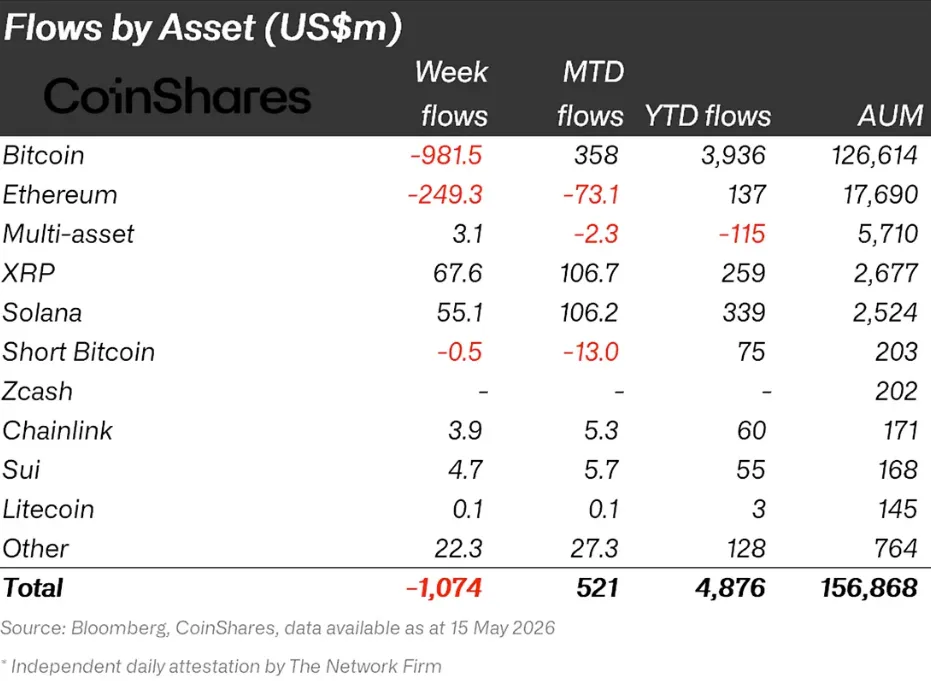
Digital asset investment products posted more than $1 billion in outflows last week as escalating Middle East tensions pushed traders to the sidelines. The withdrawals marked one of the largest weekly reversals of the year so far, with Bitcoin and Ether products absorbing the bulk of the redemptions. Markets dialed back expectations for a durable U.S.-Iran ceasefire, triggering a broad flight from risk assets even as long-term allocators stayed engaged. Year-to-date inflows still total nearly $4.9 billion, reinforcing the view that structural institutional demand remains intact despite tactical outflows whenever geopolitical shocks ripple through global risk markets.
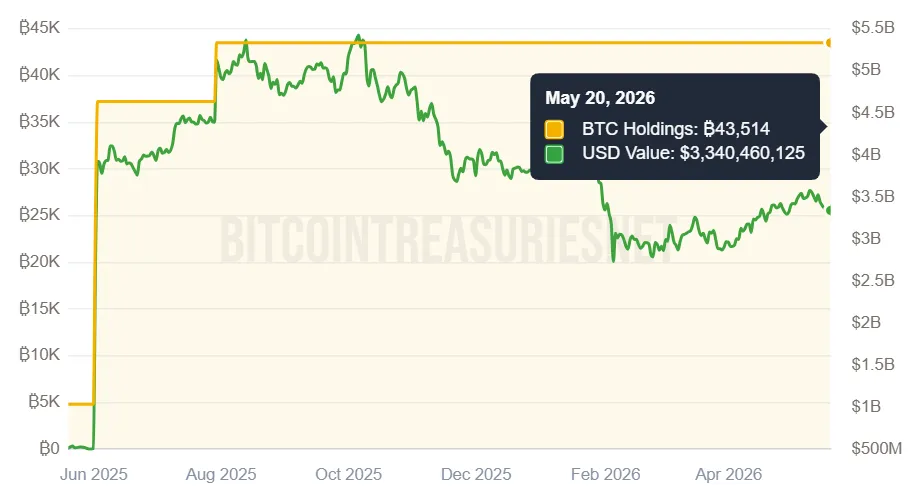
Tether tightened its grip over Twenty One Capital by acquiring SoftBank's roughly 26% stake in the Bitcoin treasury vehicle for an undisclosed sum. The deal consolidates the stablecoin issuer's influence over one of the largest corporate BTC accumulation platforms, which now holds more than 42,000 BTC on its balance sheet. Led by Strike founder Jack Mallers and originally backed by Tether, Bitfinex, Cantor Fitzgerald and SoftBank, Twenty One is preparing to expand beyond pure accumulation into Bitcoin-native financial services. The transaction signals Tether's deepening commitment to anchoring institutional Bitcoin infrastructure outside its core stablecoin business and tightening alignment with U.S.-aligned capital partners.
Bitcoin miners are carving out a strategic role in the buildout of artificial intelligence infrastructure, with Bernstein analysts arguing operators with cheap power contracts and large grid interconnects are uniquely positioned to lease capacity to AI workloads. Several major North American operators running proof-of-work consensus mechanism hardware have already converted portions of their fleets to host high-performance compute, generating contract revenue that often exceeds hashprice yields. The pivot reflects how mining economics have compressed since the latest halving while AI demand continues to outstrip available power. Bernstein framed the convergence as a durable revenue diversification path rather than a temporary opportunistic trade.
Polymarket has partnered with Nasdaq to launch prediction markets tied to private companies, marking one of the most prominent traditional-finance crossovers for the on-chain prediction sector. The integration would allow traders to bet on outcomes ranging from pre-IPO valuations to corporate milestones, with Nasdaq supplying data infrastructure and brand reach while Polymarket contributes the on-chain settlement layer. The deal arrives as prediction markets continue absorbing flow following a record election cycle and as regulators in several jurisdictions soften their stance toward the category. For Polymarket, the tie-up validates years of growth through volatile policy fights and accelerates its push into mainstream financial venues.
Underlying these moves, geopolitical risk has emerged as the dominant macro variable driving short-term crypto positioning, with Middle East tensions overwhelming structural inflow narratives in the latest weekly tape. Bitcoin has reasserted its correlation with global risk appetite, retreating alongside equities and major altcoin indexes even as long-horizon allocators continued treasury accumulation. The split has produced a two-speed market: tactical traders rotating out, while corporate balance sheets, sovereign-adjacent funds and stablecoin issuers extend their footprints. Analysts highlight this divergence as a defining feature of the current cycle, where macro shocks suppress flows briefly but rarely interrupt the longer institutional buildout taking shape underneath.
The thread connecting this week's developments is the steady institutionalization of crypto against a backdrop of policy uncertainty and geopolitical strain. Washington is inching toward a comprehensive market structure framework while law enforcement objections complicate the path. Stablecoin issuers, mining operators and prediction platforms are simultaneously embedding themselves deeper into traditional financial plumbing. The $1 billion outflow episode is a reminder that crypto still trades as a risk asset when global tensions spike, yet the structural story has not reversed. Institutional rotation, regulatory clarity and infrastructure convergence remain this cycle's defining narratives — each story this week reinforced one of them.

AI-generated, AI-reviewed, under COINOTAG editorial oversight.