

US-Iran Peace Draft Adds $500B to Stocks, Oil Drops to $96, NHL Signs CFTC Data Pact
US-Iran peace draft brokered by Pakistan adds $500B to stocks, WTI oil drops to $96.23, Bitcoin rises, NHL signs CFTC integrity pact amid market scrutiny.

The National Hockey League has become the latest major sports body to formalize an integrity partnership with the Commodity Futures Trading Commission, signing a memorandum of understanding focused on hockey-related event contracts. The agreement establishes direct channels between the league and the regulator for data exchange and information sharing, designed to detect insider trading and market manipulation in real time. CFTC Chairman Michael Selig described the pact as another step toward safeguarding sports integrity, while NHL Commissioner Gary Bettman framed it as a reinforcement of the league's existing monitoring framework. The deal follows a similar March arrangement between the CFTC and Major League Baseball, extending the agency's reach across professional sports.
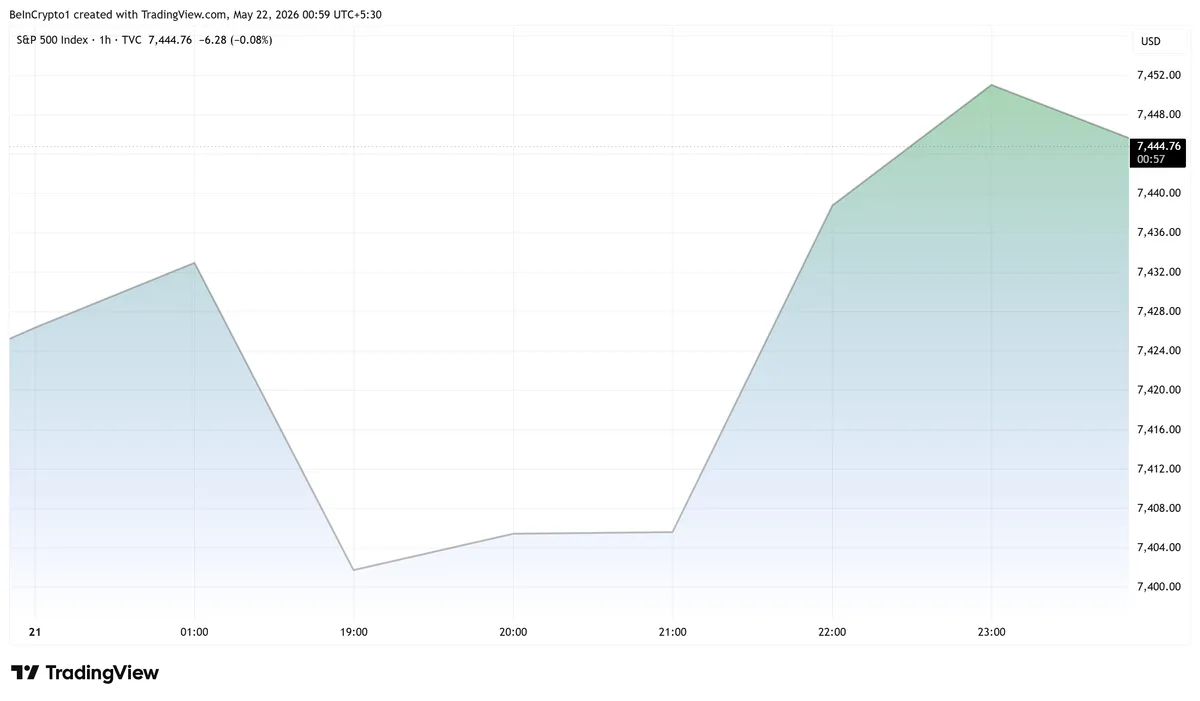
Equity markets surged roughly $500 billion within thirty minutes on May 21 after reports surfaced of a near-final US-Iran peace draft brokered by Pakistan. The leaked terms reportedly include an immediate ceasefire, freedom of navigation through the Strait of Hormuz, and a phased lifting of sanctions tied to a joint compliance monitoring mechanism. The S&P 500 rallied sharply on the headline, capturing optimism that had been absent since the conflict began weighing on global risk appetite earlier this quarter. Bitcoin also edged higher on the news, mirroring its earlier April bounce when Trump paused military strikes against Iran.
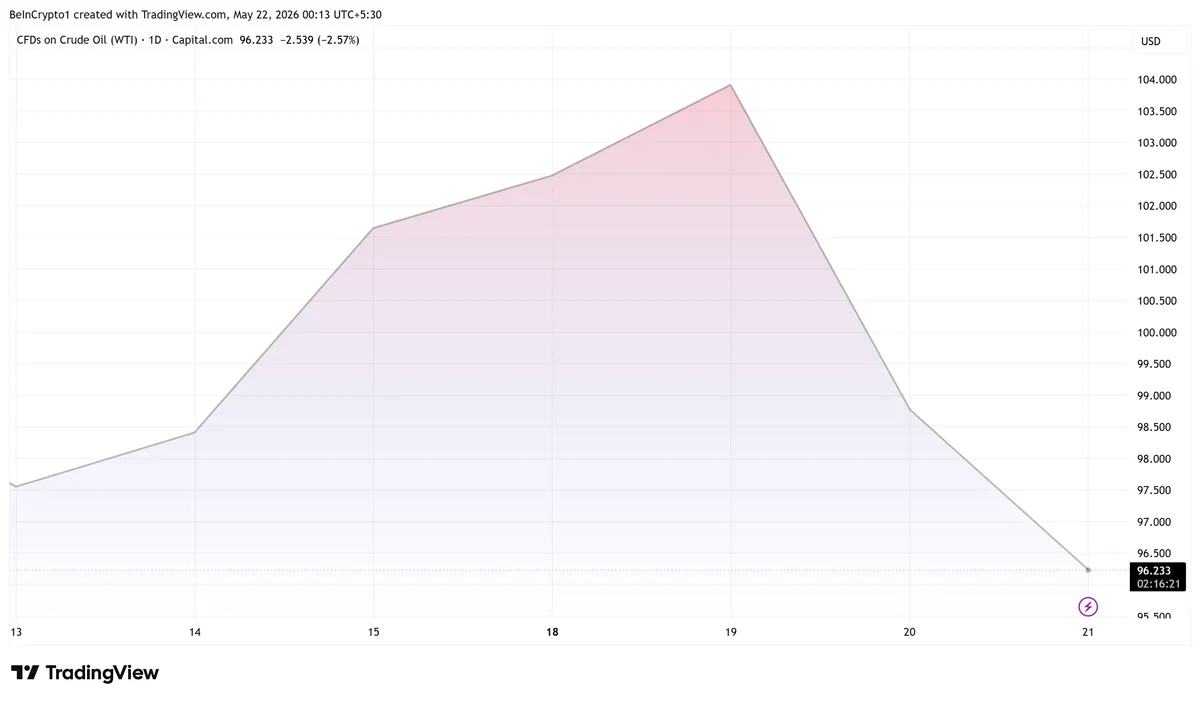
WTI crude oil tumbled nearly three percent on the diplomatic headlines, sliding to $96.23 and unwinding much of the war premium that had built up during the Iran conflict. The pattern mirrors prior risk-off-to-risk-on rotations, where ceasefire optimism strips geopolitical risk from energy markets within minutes. Bulls subsequently began accumulating WTI at the discount, suggesting traders view the dip as a tactical entry rather than the start of a sustained bear market move. The reaction underscores how tightly oil pricing has become tethered to Middle East diplomatic signals, with each leak from negotiating channels triggering outsized moves across the futures curve.
Bitcoin's response to the ceasefire chatter echoed its behavior during Trump's earlier pause on Iran strikes, when the asset briefly carried toward $80,000 on similar peace optimism. The Project Freedom oil reaction earlier this cycle established a template traders now recognize: diplomatic de-escalation tends to lift Bitcoin alongside equities while pressuring oil. Analysts highlight that the cryptocurrency has been trading in tandem with broader risk assets through the geopolitical episode, partially decoupling from its prior safe-haven framing. As ceasefire terms gain credibility, on-chain data shows a modest uptick in spot demand, with derivatives positioning leaning toward another run at the prior all-time high.
Concerns over prediction market integrity intensified this week after accounts on event-contract platforms posted profits exceeding $2.4 million with win rates above 98 percent on Iran War markets. The unusual performance triggered allegations of insider trading on military action outcomes, raising fresh questions about how privileged geopolitical information is being weaponized in nascent prediction venues built atop blockchain rails. The episode landed alongside broader scrutiny of how platforms detect coordinated trading on classified events, with regulators signaling that integrity monitoring frameworks need to scale rapidly. The CFTC has positioned itself as the lead regulator over event contracts, and this case is expected to inform forthcoming rule guidance.
A U.S. special forces member was arrested earlier this year for leveraging privileged information to profit roughly $400,000 on prediction markets tracking the capture of Venezuelan leader Nicolás Maduro. The case has become a touchstone in the integrity debate, demonstrating concretely how operationally sensitive information can leak into civilian betting venues with measurable financial consequence. Prosecutors framed the trades as an exploitation of military access to public markets, and the episode accelerated the CFTC's push to formalize data-sharing agreements with leagues, federations, and government partners. The arrest set the precedent that prediction market manipulation can trigger criminal liability, not merely platform-level enforcement.
Across these threads, a dominant narrative is consolidating this cycle: regulatory infrastructure is racing to catch up with the geopolitical and event-driven markets that crypto-adjacent platforms have unlocked. Prediction venues are now plumbing the world's most sensitive information, from ceasefires to special operations, while traditional risk assets—equities, oil, and Bitcoin—price diplomatic signals in real time. The CFTC's expanding network of integrity agreements, paired with high-profile insider trading cases and the relative calm of a possible bull market resumption, signals that oversight will be the defining battle of the next regulatory chapter for digital and event-based markets.
Related Tags

AI-generated, AI-reviewed, under COINOTAG editorial oversight.