

New Fed Chair Warsh Eyed for Rate Cuts as ECB Rejects Euro Stablecoin Easing Push
New Fed Chair Kevin Warsh is tipped to cut rates as the ECB rejects a euro stablecoin easing proposal, reshaping the 2026 crypto liquidity outlook.

Kevin Warsh, sworn in as Federal Reserve Chairman on Friday, is expected to lower interest rates despite widespread market consensus pricing in a hike, according to author and Bitcoin investor Lawrence Lepard. Lepard argued that Warsh will invoke AI-driven productivity gains and a trimmed inflation framework as justification, while characterizing war-related price pressures as transitory. He pointed to recent commentary from White House National Economic Council director Kevin Hassett and Treasury Secretary Scott Bessent as additional signals pointing toward easing in 2026. The contrarian call diverges sharply from prevailing trader positioning and would meaningfully alter the trajectory for risk assets, including Bitcoin and broader crypto markets.
On Friday, the European Central Bank pushed back against a proposal that would have loosened liquidity requirements for euro-denominated stablecoin issuers and granted them potential access to ECB liquidity facilities. The pitch, authored by Brussels-based think tank Bruegel and presented to EU finance ministers gathered in Nicosia, sought to expand a euro stablecoin market that remains marginal compared with dollar-denominated tokens. ECB President Christine Lagarde and several other central bankers rejected the framework during closed-door discussions, arguing that scaled outflows from European bank deposits into stablecoins would lift bank funding costs and impair credit extension across the bloc.
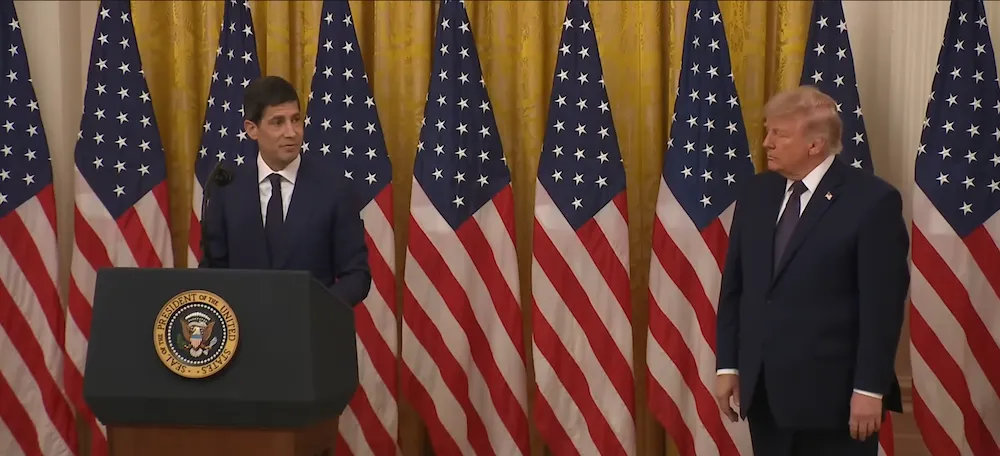
At Warsh's swearing-in, President Donald Trump signaled that the administration intends to address the rising national debt through growth, language traders interpret as supportive of expansionary monetary policy and a softer rate regime. We want to stop inflation, but we don't want to stop greatness, Trump remarked, drawing skepticism from economists who view simultaneous disinflation and aggressive expansion as structurally difficult to deliver. The political backdrop has intensified the debate around Federal Reserve independence, with Senator Elizabeth Warren in April warning that Warsh's appointment could create pressure points if Executive Branch preferences begin shaping monetary decisions inside the central bank.
Trader positioning currently sits in direct opposition to the dovish thesis. Data from the Chicago Mercantile Exchange's FedWatch tool shows roughly 68% of market participants have priced in an interest rate increase of 25 basis points or more by December 2026. That divergence between consensus expectations and the contrarian view championed by Lepard creates outsized convexity around upcoming Federal Open Market Committee decisions. If Warsh delivers cuts rather than hikes, repricing across rates, dollar strength, and risk assets could be sudden and pronounced. Bitcoin and major altcoin markets, historically sensitive to real yields and dollar liquidity, would stand to benefit substantially from any unexpected dovish pivot.

Bruegel's policy authors framed the European stablecoin question as a competitiveness fight. They argued that maintaining EU rules stricter than the US GENIUS Act, signed into law in July 2025, will push issuance and trading offshore and accelerate what they termed digital dollarization. With dollar-pegged stablecoins already dominating onchain settlement volumes across DeFi venues, the think tank warned that Europe risks ceding strategic ground in tokenized finance if regulators do not soften liquidity treatment. EU finance ministers were reportedly split on the proposal, reflecting wider tension between competitive parity with US issuers and the deposit-stability concerns voiced by central bankers.
In place of accommodating private euro stablecoins, Lagarde has steered the conversation toward tokenized commercial bank deposits and the ECB's Pontes and Appia wholesale settlement initiatives, which she presents as the appropriate blockchain plumbing for the bloc. Several officials at the Nicosia meeting also called for redemption restrictions on stablecoins regardless of jurisdiction, citing concerns about reserve runs if foreign holders attempted simultaneous cash-outs. The intervention extends remarks Lagarde delivered earlier in May at a Banco de España forum, where she stated that the perceived international-standing benefits of a euro stablecoin are outweighed by financial-stability and monetary-policy transmission risks.
Taken together, the two threads point to a defining tension in 2026: a dominant narrative of monetary-policy divergence colliding with on-chain financial architecture. A potentially dovish Federal Reserve under Warsh could refuel risk appetite and revive accumulation flows that historically anchor a bull market in digital assets, while the ECB's hawkish posture toward private euro stablecoins constrains how quickly tokenized finance can scale inside the European banking perimeter. Crypto markets now sit at the intersection of central-bank balance-sheet choices and stablecoin regulation, two forces poised to shape liquidity, settlement, and price discovery through the remainder of this cycle.
Related Tags

AI-generated, AI-reviewed, under COINOTAG editorial oversight.