

WhiteFiber Lands $160M AI Deal as House Oversight Probes Kalshi, Polymarket
Crypto News
IREN co-founder Daniel Roberts laid out an ambitious vision Friday for the company to operate as a vertically integrated artificial intelligence infrastructure platform, arguing that physical capacity — power, land, cooling and data center construction — has overtaken silicon as the dominant constraint on AI growth. Roberts framed IREN's approach around three layers: grid-connected infrastructure, NVIDIA-powered compute, and proprietary enterprise software. The former bitcoin miner, previously known as Iris Energy, has aggressively diversified across Texas, British Columbia, Oklahoma, Spain and Australia, securing roughly five gigawatts of grid capacity globally as legacy hashpower operators migrate toward hyperscale AI hosting.
The repositioning is anchored by a deepening commercial relationship with NVIDIA. IREN recently signed a five-year, $3.4 billion AI cloud contract tied to Blackwell GPU deployments in Texas, a deal that effectively converts mining-grade power assets into high-margin enterprise compute revenue. Roberts argued that owning the full stack — from substation to software — creates a durable competitive moat as global demand outpaces grid build-out and underserved markets in Europe and Asia-Pacific scramble for capacity. The model now resembles a hybrid between a colocation operator, a power developer, and a managed cloud provider, blurring the line between traditional mining economics and AI infrastructure.
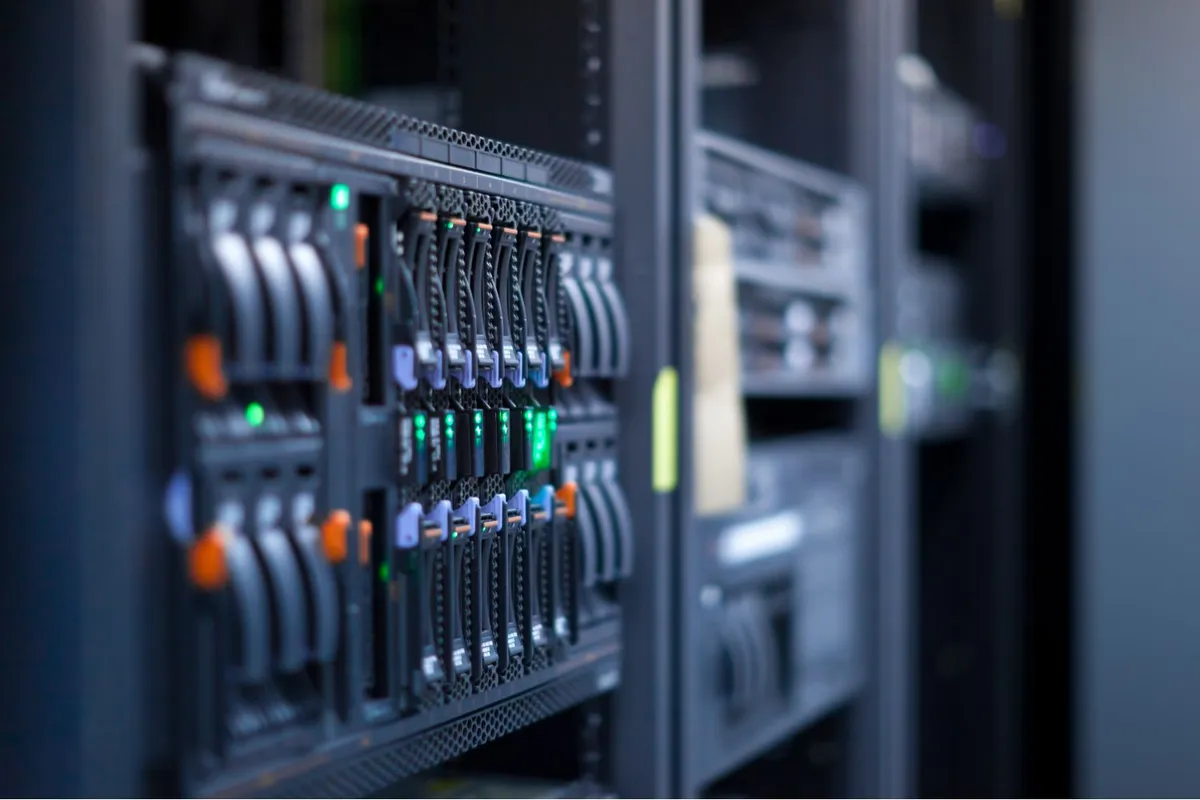
WhiteFiber shares jumped roughly 6% in pre-market trading Friday after the company disclosed a five-year AI compute agreement valued at more than $160 million with what it described as an investment-grade technology customer. The contract centers on NVIDIA GPU deployments in the Paris region, extending the company's European footprint at a moment when continental demand for sovereign AI capacity is climbing sharply. The deal underscores how regional data center operators with secured power and modern GPU fleets are commanding multi-year, fixed-revenue contracts — mirroring the asset-heavy cloud model now reshaping capital allocation across the former crypto-mining industry.
On the regulatory front, House Oversight and Government Reform Committee Chairman James Comer opened a formal inquiry into insider trading safeguards at Kalshi and Polymarket, dispatching letters Friday to chief executives Tarek Mansour and Shayne Coplan. The committee is demanding documentation on identity verification, geographic restrictions and anomalous-activity detection, with a June 5 production deadline. Comer signaled on national television that the probe would shape legislation barring members of Congress, administration officials and federal employees from trading on prediction markets, citing wagers tied to U.S. elections and military action in Venezuela and Iran.
Recent evidence underscores why congressional attention is intensifying. A U.S. soldier was arrested in April for allegedly leveraging non-public information about the ouster of former Venezuelan leader Nicolas Maduro to net roughly $400,000 in Polymarket positions. Separate investigations identified more than 80 Polymarket users who placed suspicious wagers, including bets entered hours before joint U.S. and Israeli strikes on Iran. Pressure from seven Democratic lawmakers led by Representative Chris Pappas, who called on May 11 for subpoenas, ultimately forced the committee's hand and converted what had been bipartisan concern into a formal document request.
Both platforms moved to tighten internal controls ahead of the announcement. Kalshi suspended three congressional candidates in April after they wagered on their own races in violation of platform rules. Polymarket retained blockchain analytics specialist Chainalysis in late April to detect insider trading and manipulation patterns, part of a broader push toward CFTC approval. Kalshi operates under CFTC oversight in New York and prohibits anonymous trading, while Polymarket is licensed in Panama and runs its core platform outside U.S. supervision through a limited domestic product. Several bipartisan bills targeting prediction-market insider trading have already been introduced this Congress.
The dual storylines — AI infrastructure consolidation and prediction-market enforcement — capture this cycle's defining tension: a digital-asset industry maturing on two simultaneous tracks. Former miners are converting stranded power into multi-billion-dollar compute contracts, while Washington presses prediction venues to professionalize surveillance and curb privileged-information trading. Both arcs reward operators with regulatory legitimacy, transparent infrastructure and credible counterparty controls. Capital is increasingly migrating toward platforms that resemble regulated financial or industrial businesses rather than speculative venues, signaling that the next phase of crypto-adjacent growth — including DeFi — will be defined by institutional plumbing rather than retail speculation.
COINOTAG does not provide financial advisory services. This content is for informational purposes only and should not be considered investment advice. Cryptocurrency investments involve high risk.
Add COINOTAG as a Preferred Source
Add COINOTAG to your preferred sources in Google News and Search to see our coverage first.
Add on GoogleAI-generated, AI-reviewed, under COINOTAG editorial oversight.