

Bitcoin Miners Lock $90B in AI Deals as Truth Social Pulls Spot BTC ETF Filing
Bitcoin miners control 27 GW of power and $90B in AI deals as Trump's Truth Social withdraws its spot BTC ETF filing amid Morgan Stanley fee pressure.

Bitcoin miners have emerged as a strategic linchpin in the buildout of artificial intelligence infrastructure, according to a fresh institutional research note. Analysts argue that grid bottlenecks and lengthy permitting timelines—averaging roughly 50 months across U.S. states—are giving publicly listed mining operators a decisive structural edge in supplying both power and data-center real estate to hyperscalers. The note estimates that listed Bitcoin miners now control more than 27 gigawatts of planned power capacity, an asset class that has rapidly become as scarce and contested as advanced AI chips. Even in industry-friendly jurisdictions like Texas, utility interconnect queues have stretched well beyond the patience of greenfield developers.
One bellwether of the miner pivot is Soluna Holdings, which reported a 58% year-over-year jump in first-quarter revenue, fueled overwhelmingly by its data-center hosting business rather than coin issuance. The operator's revenue mix has tilted sharply away from pure-play Bitcoin production since the 2024 halving compressed block subsidies and squeezed margins across the sector. Soluna's results echo a broader industry rotation in which co-location of GPU clusters at hash-rate sites is generating high-margin, recurring contract revenue. Investors are increasingly modeling listed miners as hybrid power-and-compute operators, with the AI hosting business commanding markedly higher valuation multiples than legacy mining cash flows.
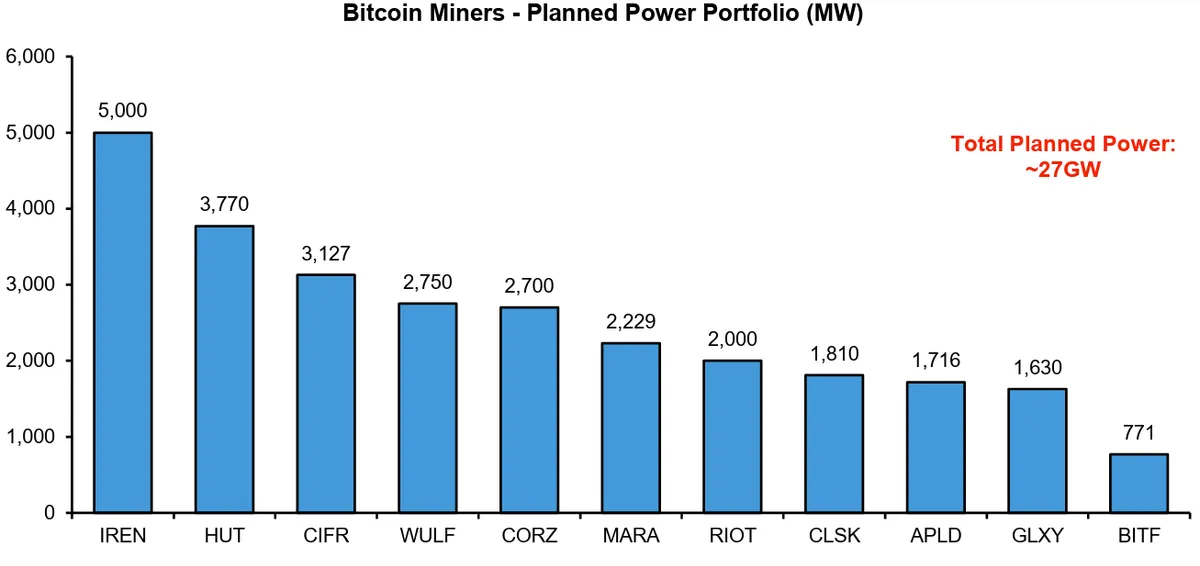
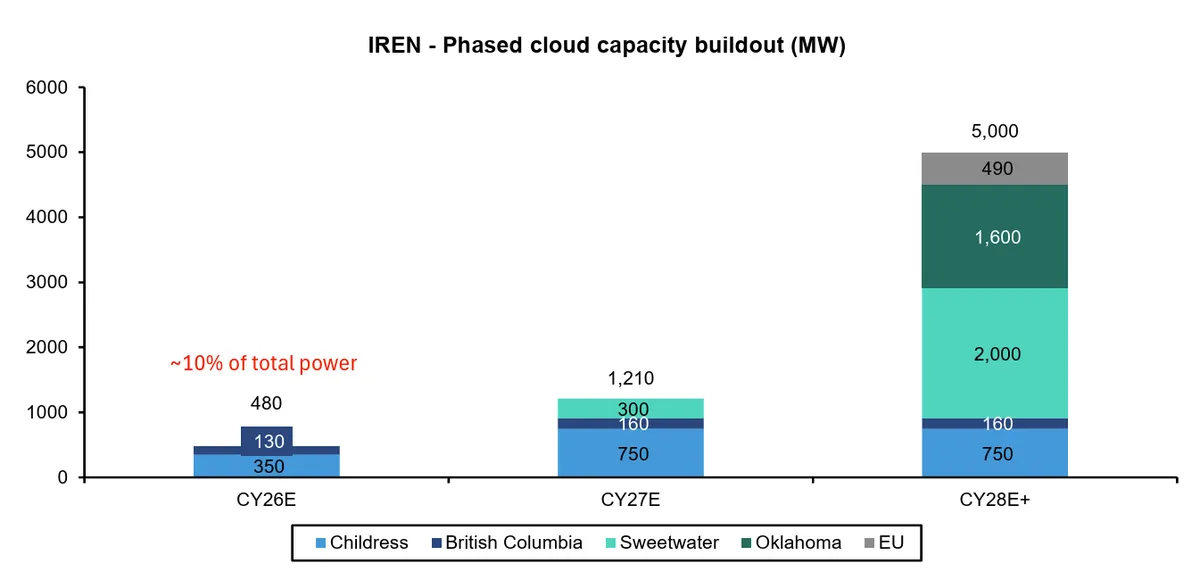
IREN has been singled out as the cleanest expression of the trend, with the firm cited as well-positioned to redirect the bulk of its operations toward AI infrastructure on the back of multibillion-dollar agreements with Microsoft. Across the listed mining cohort, more than $90 billion in AI-related agreements have already been announced, encompassing roughly 3.7 gigawatts of contracted capacity sold to hyperscalers, neocloud providers and chipmakers. The strategic logic is straightforward—miners possess grid-connected sites, energy expertise and high-density compute experience derived from years of running blockchain hashing operations that newer entrants cannot replicate within the four-year permitting windows now constraining new data-center builds.
Trump Media & Technology Group has withdrawn both of its proposed spot crypto products, formally requesting the cancellation of Form S-1 registrations covering the Truth Social Bitcoin ETF and the Truth Social Bitcoin & Ethereum ETF. The filings, originally lodged in June 2025, had faced repeated regulatory delays. In a statement accompanying the withdrawal, sponsor Yorkville America described the decision as a strategic pivot rather than a retreat from the asset class, signaling that the issuer intends to refile under a different statutory framework better suited to the differentiated product structures it now plans to bring to market.
The reorientation is unusually technical for a high-profile branded product. Yorkville's leadership argues that the Investment Company Act of 1940 framework, rather than the Securities Act of 1933 used by today's spot funds, offers structural advantages that include enhanced investor protections, tax efficiency, broader accessibility and the latitude to deploy more complex strategies. The shift implies a likely move toward actively managed or multi-asset crypto fund structures rather than simple passive holding vehicles. For retail-oriented brands seeking differentiation in an increasingly commoditized spot product line, the '40 Act route is one of the few remaining levers to escape direct fee competition with incumbent issuers.
The competitive backdrop weighs heavily on the calculus. Morgan Stanley's MSBT launched last month carrying the lowest expense ratio among U.S. spot Bitcoin funds at 14 basis points and has already pulled in more than $230 million in inflows, surpassing several smaller incumbents in net assets within weeks. Cumulative inflows across the spot Bitcoin ETF category have now eclipsed $57.7 billion since the SEC's January 2024 approval, cementing the cohort as one of the most successful ETF launches on record. The same flows route through every major U.S. exchange, leaving new entrants with little room to differentiate on price alone.
Bitcoin is changing hands near $76,627, fractionally lower on the day and locked inside a sideways regime defined by immediate support at $76,147 and resistance at $76,858. RSI at 44.45 sits in a neutral-to-soft zone while the MACD prints a bearish cross, suggesting momentum favors sellers without confirming a trend break. A clean reclaim of $78,466 would invalidate the cautious setup and open a retest of $80,478, whereas a daily candlestick close beneath $74,979 would expose $72,673 and tilt the structure back toward a deeper bear market re-acceleration. Watch volume on the next directional move for conviction.
Related Tags

AI-generated, AI-reviewed, under COINOTAG editorial oversight.