

LAB Token Crashes 77% Wiping $6B, Mastercard Adds Stablecoin Settlement, DOJ Probes Santos Kalshi Trades
Crypto News
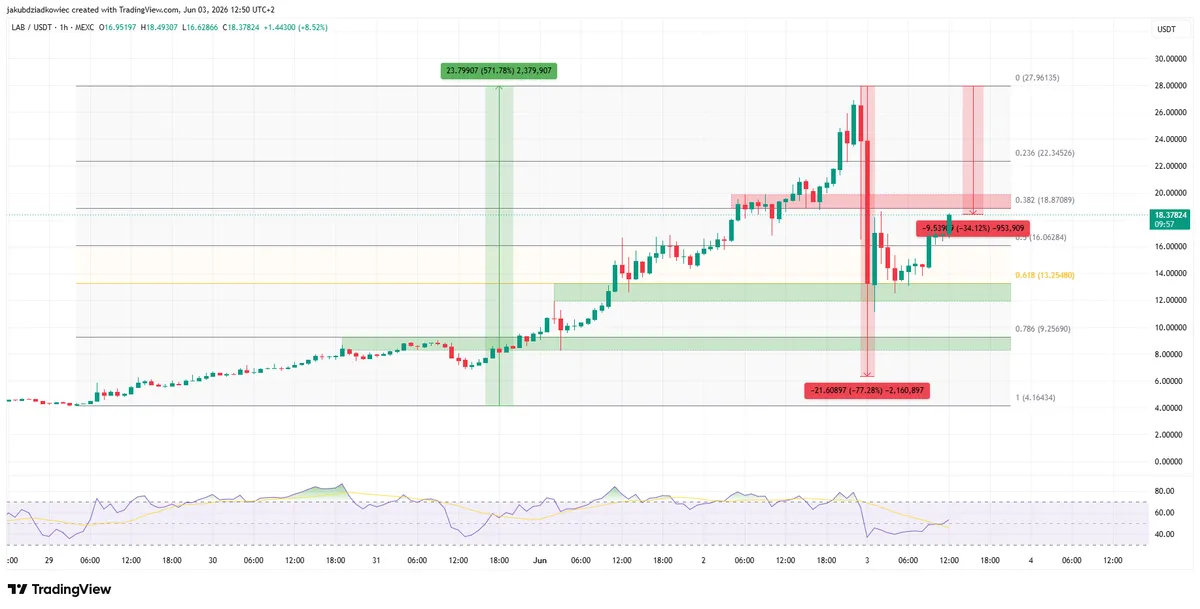
LAB token suffered one of the most suspicious drawdowns of the year on June 2, sliding 77% from a record $27.96 to roughly $6 inside two hours and erasing close to $6 billion in market value. The collapse on MEXC followed a buyback announcement and vesting changes that pushed the altcoin from $7.31 to its all-time high in 24 hours before the move unwound entirely. On a circulating supply of roughly 312 million tokens, market cap dropped from $8.7 billion to about $2 billion, with fully diluted valuation imploding from $28 billion to under $7 billion.
The Department of Justice and the Commodity Futures Trading Commission have opened parallel investigations into pardoned former U.S. Representative George Santos over trades placed on prediction market Kalshi. Santos allegedly wagered tens of thousands of dollars against his own attendance at President Donald Trump's February State of the Union address while publicly telling followers he would appear in the gallery. Kalshi flagged the activity, suspended his account, and referred the case to federal regulators. The probe extends a widening enforcement push targeting prediction-market insider trading, following recent charges against a Google engineer and a U.S. Army Special Forces soldier tied to Polymarket bets.
Mastercard moved deeper into tokenized money this week, expanding settlement capabilities so issuers and acquirers can clear card transactions using regulated stablecoins. The new option covers intraday, weekend and holiday settlement and supports Circle's USDC, Paxos-issued PYUSD, USDG and USDP, Ripple's RLUSD and SoFi's SoFiUSD across networks including Arbitrum, Base, Ethereum, Polygon, Solana and XRPL. ARQ, CBW Bank, Cross River, Lead Bank and Nuvei are expected among the first partners in the U.S. and Latin America. The rollout follows Mastercard's New York BitLicense approval in May and underscores how the $320 billion stablecoin market is hardening into core payments infrastructure.
Parallel to that move, Stripe, Visa and Mastercard are reportedly close to unveiling a joint stablecoin platform designed to standardize tokenized-dollar settlement across the global payments stack. Coinbase is examining whether to participate, according to people familiar with the discussions. The initiative arrives as the stablecoin market cap nears $325 billion, dominated by Tether's USDT at $115 billion, with Circle's USDC at $76 billion. Stripe's 2024 acquisition of Bridge for $1.1 billion and Mastercard's purchase of BVNK earlier this year signal how aggressively card networks are repositioning around blockchain rails as the Coinbase-Circle revenue-sharing agreement approaches an August renewal window.

Crypto-aligned super PACs went undefeated in Tuesday's primaries, with all 11 candidates supported by Fairshake affiliates advancing in races across California, New Jersey and South Dakota. Winners included Democrats Zoe Lofgren, Ted Lieu, Dave Min, Lou Correa, George Whitesides and Rob Menendez, along with Republican Senator Mike Rounds. Democrats accounted for 10 of the 11 victories, signaling a deliberate bipartisan pivot as industry groups seek influence regardless of which party controls Congress after November. The wins follow a $9 million spend in Texas the prior week, where longtime crypto critic Representative Al Green was defeated, cementing the sector's growing electoral leverage.
The United Kingdom's Financial Conduct Authority issued formal warnings to Premier League and other football clubs over sponsorship arrangements with unauthorized crypto firms and trading platforms. The regulator said partnerships with unlicensed operators may breach UK financial services laws, expose clubs to legal and reputational risk, and put fans in front of potentially harmful products. Sports Minister Stephanie Peacock backed the action, emphasizing that fans deserve responsible and accountable partners. Separately, Binance confirmed it will close its centralized NFT marketplace on July 3, giving users one month to withdraw transferable assets to external wallets or lose access permanently.
Taken together, these stories sketch a single thematic arc: regulators and incumbents are tightening the grip on crypto's edges while institutional rails absorb its core. Card networks, banks and payment processors are racing to embed stablecoins into settlement, normalizing tokenized dollars as financial plumbing. At the same time, enforcement is sharpening around prediction-market abuse, sponsorship disclosures and questionable token launches like LAB. Political capital, meanwhile, is being deployed bipartisanly to lock in favorable policy. The cycle's defining dynamic is no longer speculative excess on the periphery but the institutionalization of crypto infrastructure under heavier compliance scrutiny on every side.
COINOTAG does not provide financial advisory services. This content is for informational purposes only and should not be considered investment advice. Cryptocurrency investments involve high risk.
Add COINOTAG as a Preferred Source
Add COINOTAG to your preferred sources in Google News and Search to see our coverage first.
Add on GoogleRelated Tags
AI-generated, AI-reviewed, under COINOTAG editorial oversight.