

MoneyGram Debuts MGUSD on Stellar, Polymarket $150M Bitcoin Bet in Dispute
BTC/USDT
$18,072,192,824.07
$65,622.83 / $63,270.00
Change: $2,352.83 (3.72%)
+0.0030%
Longs pay

Crypto News
MoneyGram launched MGUSD, a US dollar stablecoin built on Stellar, marking the remittance firm's deepest move yet into blockchain-based cross-border payments. The token will be integrated directly into the MoneyGram app through a self-custodial wallet, allowing users to hold dollar-denominated balances, move funds across jurisdictions, and convert into local currencies on demand. The initial rollout targets the US market, with worldwide expansion planned over the coming quarters. By embedding a regulated digital dollar into a mainstream consumer app, MoneyGram is shifting from backend settlement rails toward putting tokenized-dollar balances directly into the hands of retail remitters and small businesses.
The infrastructure behind MGUSD reflects how institutional stablecoin issuance has consolidated around a small set of regulated providers. The tokens are issued by Bridge, Stripe's stablecoin platform, which received conditional approval from the US Office of the Comptroller of the Currency to operate as a federally chartered national trust bank earlier this year. Mint-and-burn smart contract logic is supplied by M0, while wallet infrastructure comes from Fireblocks. MoneyGram framed the product as a continuation of its multi-year collaboration with the Stellar Development Foundation, signaling that the partnership has matured from settlement pilots into a full-stack issuance, custody and balance-management offering.
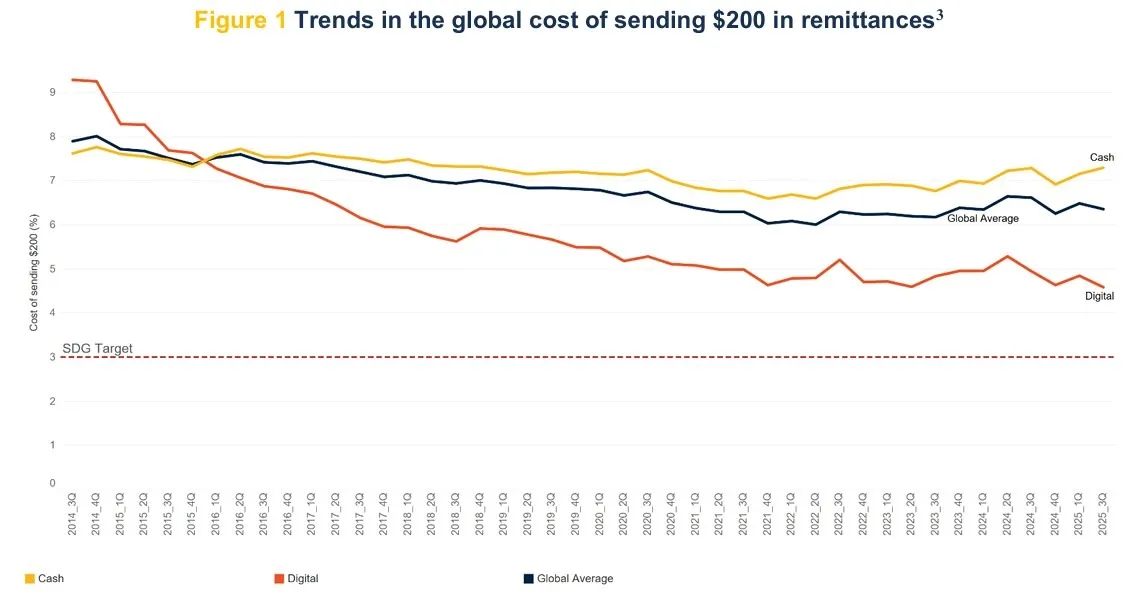
The launch arrives as remittance providers race to retool cross-border payment flows that remain stubbornly expensive. World Bank data shows that sending $200 across borders cost an average of 6.36% in the third quarter of last year, meaning roughly $12.72 in fees and foreign-exchange margins on a typical $200 transfer, more than double the United Nations sustainable-development target. A recent Bank for International Settlements paper described cross-border payments as more costly, less accessible, slower and less transparent than domestic equivalents. Stablecoin rails promise near-instant settlement and lower fees, and the app-native dollar token sits among the most consumer-facing experiments yet attempted by a household-name payments brand.
Meanwhile, a nearly $150 million prediction market on Polymarket has collapsed into chaos after administrators moved to deny payouts to traders who correctly forecast that Strategy would sell a portion of its Bitcoin holdings. The dispute centers on the gap between when an event occurs and when it is publicly disclosed, a structural fault line that has now exposed how decentralized prediction venues resolve multimillion-dollar wagers. On June 1, the corporate treasury firm formerly known as MicroStrategy filed an 8-K confirming it had sold 32 BTC worth roughly $2.5 million between May 26 and May 31. Traders initially read the filing as definitive proof of a Yes outcome.
The contested contract asked whether Strategy would sell any Bitcoin by 11:59 p.m. ET on May 31, with the company's public disclosures and on-chain data designated as the primary resolution sources. Because the 8-K landed on June 1 while the market was still actively trading, several participants rushed to buy Yes shares at around 80 cents on the dollar, anticipating a 20% arbitrage payoff. One trader operating under the handle willo2 staked $527,000 on that thesis. Administrators then issued a post-deadline clarification ruling that the underlying sale, although executed before the cutoff, did not qualify under platform conventions because confirmation arrived late.
The resolution has triggered widespread allegations of market manipulation and intense scrutiny of the operational customs that govern DeFi-adjacent betting venues. Critics argue that designating regulatory filings as a resolution source while then disqualifying the very filing that confirmed the event creates an unworkable standard for participants. The fight matters beyond a single contract: prediction platforms have been pitching themselves as legitimate financial primitives competing with centralized order books and even decentralized exchanges. With nearly $150 million in notional exposure on the line, the episode is forcing the industry to confront whether decentralized arbitration can credibly handle high-value, time-sensitive disputes at scale.
Taken together, this week's developments highlight two parallel tracks reshaping the digital-asset landscape. On one side, regulated stablecoin issuance is moving deeper into mainstream consumer rails, with payment incumbents betting that tokenized dollars can finally crack the remittance cost problem. On the other, decentralized financial primitives are running headlong into governance challenges that legacy markets resolved decades ago. The common thread is institutional maturation, with stablecoins acquiring bank-grade backing while prediction markets confront the limits of their resolution mechanics. Both arcs point to a cycle defined less by speculative altcoin rotation than by structural integration between crypto rails and traditional finance.
COINOTAG does not provide financial advisory services. This content is for informational purposes only and should not be considered investment advice. Cryptocurrency investments involve high risk.
Add COINOTAG as a Preferred Source
Add COINOTAG to your preferred sources in Google News and Search to see our coverage first.
Add on GoogleRelated Tags
AI-generated, AI-reviewed, under COINOTAG editorial oversight.