

Warsh Sworn In as Fed Chair With 0% Rate Cut Odds, Polymarket Hit by $600K Exploit
Crypto News
Kevin Warsh was officially sworn in as the new chairman of the United States Federal Reserve on Friday, ushering in a leadership change at the world's most influential central bank at a delicate moment for risk assets. At the swearing-in ceremony, President Donald Trump emphasized that Warsh would remain independent from the Executive Branch on interest rate decisions and reiterated his administration's intention to grow the economy out of its debt obligations. The transition arrives as traders weigh whether the new chair will accelerate or slow the pace of monetary policy adjustments, with implications stretching across Bitcoin, equities and the broader crypto market.
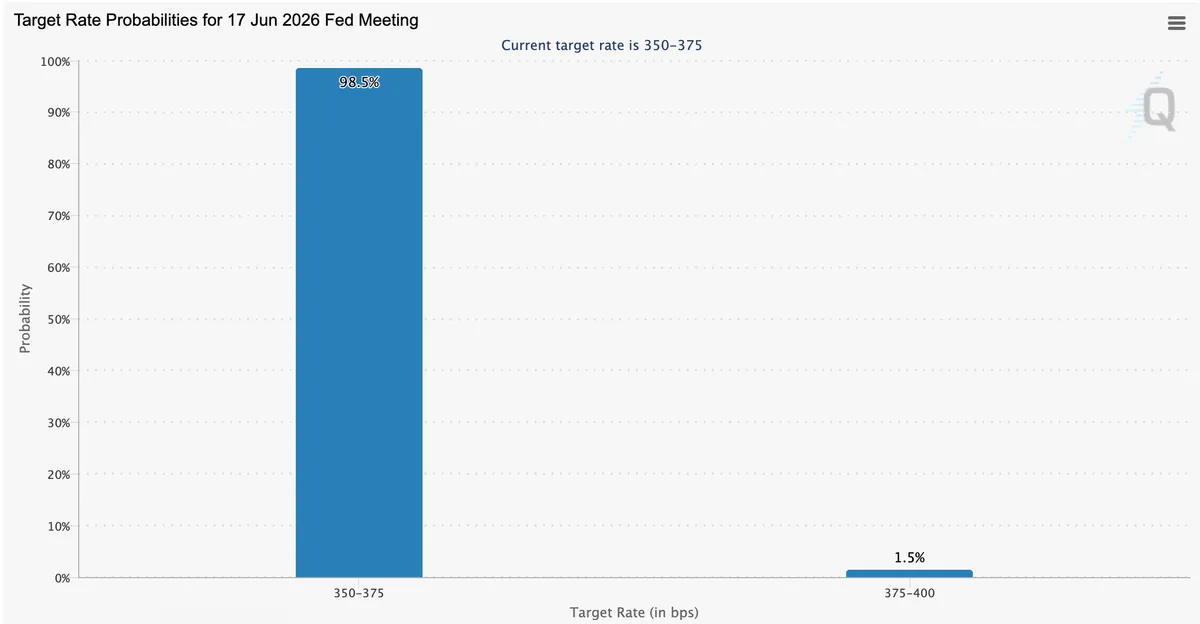
Despite the leadership reshuffle, market expectations for monetary easing remain firmly anchored at zero for the remainder of 2026. CME FedWatch data shows traders assigning a 0% probability to any interest rate cut at upcoming Federal Open Market Committee meetings, with the current federal funds target sitting between 350 and 375 basis points. Around 3.5% of investors price a 25 basis point hike at the June 17 meeting, while odds rise to 17% for July and roughly 67% for the FOMC's final meeting of the year. Lower rates typically buoy a bull market in Bitcoin.
Prediction market platform Polymarket confirmed that a security incident impacting part of its infrastructure was traced to a suspected private key compromise tied to a wallet used for internal top-up operations. The team stressed that user funds and ongoing market resolution remain unaffected, and that the core blockchain contracts powering the platform were never at risk. Polymarket leadership confirmed that all permissions associated with the six-year-old compromised key have been revoked. The platform ranks as the second-largest prediction venue globally, processing roughly $3.7 billion in monthly trading volume across an expanding catalogue of event-driven markets.
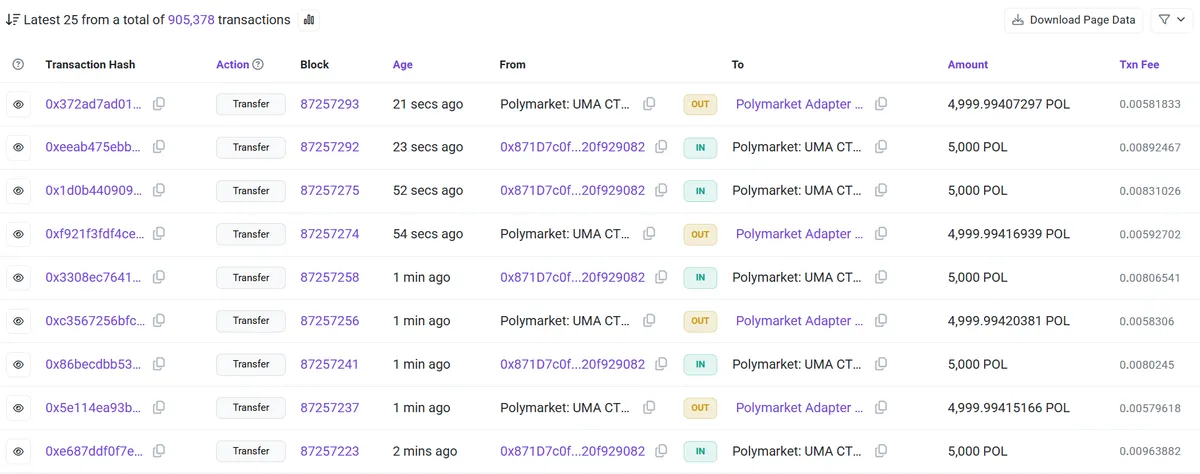
Blockchain investigators initially flagged the breach as a compromise of the UMA Conditional Tokens Framework adapter contract deployed on Polygon, a critical piece of oracle infrastructure that helps Polymarket settle outcomes through UMA's Optimistic Oracle. On-chain data shows the attacker has been steadily withdrawing approximately 5,000 POL tokens every thirty seconds, accumulating losses that have surpassed $600,000 at last count. More than one hundred small transfers funneled into the suspect wallet, a pattern consistent with deliberate dust-style extraction designed to evade automated detection systems. Engineers have isolated the affected infrastructure to limit further outflows while the investigation continues.
At least five high-profile crypto companies announced wind-down operations during the past week, underscoring fresh stress across digital asset businesses that scaled aggressively during the previous expansion. The closures span exchange platforms, infrastructure providers and consumer-facing wallet services, with several firms citing deteriorating revenue conditions and shrinking institutional demand. Industry observers note that the wave of shutdowns coincides with weakening trading volumes across major venues, contributing to a softer environment for altcoin liquidity. The contraction sits in contrast to the capital inflows still rotating through select DeFi protocols and tokenized treasury products.
Public opposition to South Korea's proposed taxation regime on digital asset gains gained significant momentum after a citizen petition demanding to scrap the framework surpassed the signature threshold required for formal government review. The campaign forces officials to issue an official response and revisits a debate that policymakers in Seoul have postponed repeatedly. South Korean retail traders have consistently been among the most active participants in global crypto trading, and industry advocates argue that the tax would dampen on-exchange and DEX activity alike. The outcome of the review could shape how other Asian jurisdictions approach individual crypto taxation in the coming year.
The dominant narrative connecting this week's developments is a tightening grip of policy and security stress that is testing crypto's resilience just as participation broadens. Hawkish positioning at the Federal Reserve sets a restrictive monetary backdrop, while the Polymarket incident and the chain of firm closures reinforce that operational and counterparty risk remain elevated even at well-capitalized venues. The simultaneous push by South Korean retail investors to roll back planned taxation highlights an opposing force, where grassroots demand continues to pressure regulators toward accommodation. The result is a market navigating policy headwinds, security headlines and persistent retail conviction in parallel.
COINOTAG does not provide financial advisory services. This content is for informational purposes only and should not be considered investment advice. Cryptocurrency investments involve high risk.
Add COINOTAG as a Preferred Source
Add COINOTAG to your preferred sources in Google News and Search to see our coverage first.
Add on GoogleRelated Tags
AI-generated, AI-reviewed, under COINOTAG editorial oversight.