

Crypto Market Sheds $13B as Squid Loses $3.2M, Warsh Takes Fed Helm
Crypto market sheds $13B as Bitcoin holds $76,786, Squid distances from $3.2M exploit, Kevin Warsh sworn in as 17th Fed Chair, and CLARITY Act gains support.

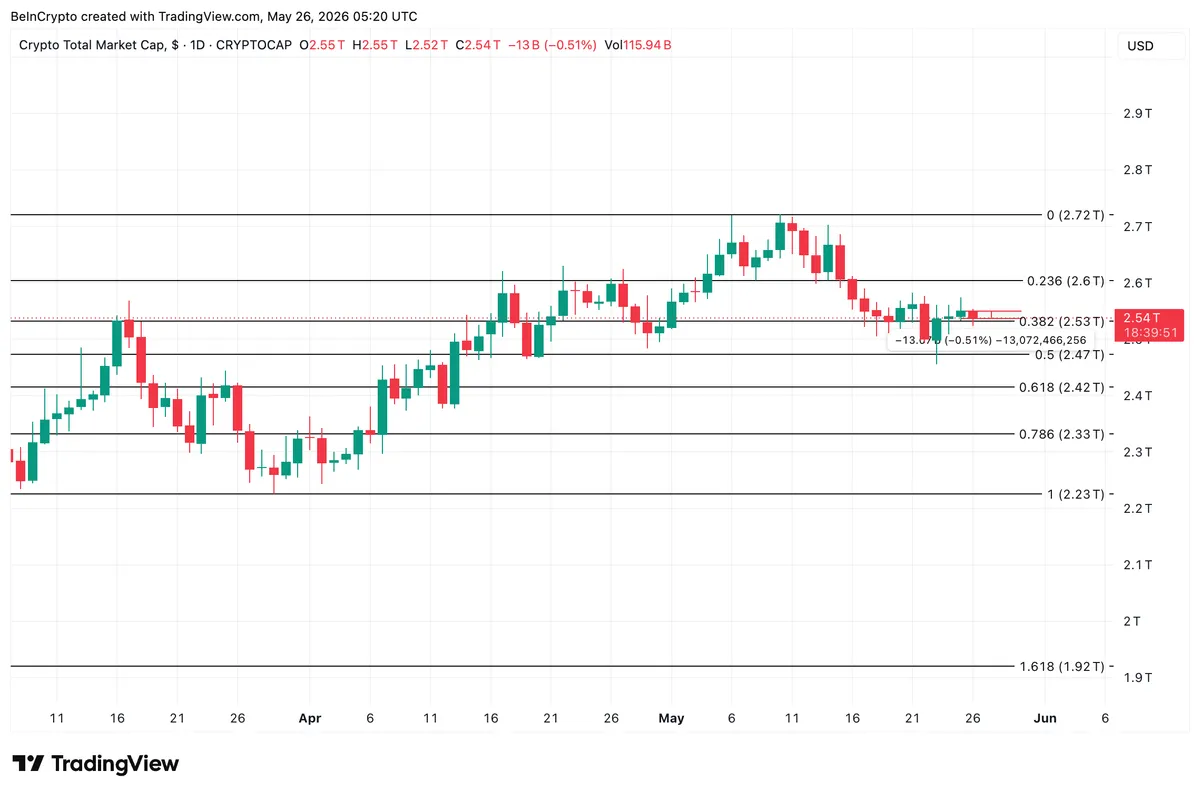
The total crypto market capitalization slipped 0.51% over the past 24 hours, shedding roughly $13 billion and dropping to $2.54 trillion as risk capital continued rotating toward US equities. Bitcoin traded at $76,786, down 0.60% and pinned just above a key technical level, while Zcash led the downside with a 4.25% drop to $624 on lighter sell volume than recent sessions. The print rests directly on the 0.382 Fibonacci level at $2.53 trillion, drawn from the late-March low to the early-May peak. Memorial Day kept US stocks shut on Monday, but Friday's S&P 500 close at 7,473.47 carried risk-off momentum through Asia and into the European session.
Commonwealth Bank of Australia chief executive Matt Comyn warned that artificial intelligence will reshape work across the broader economy, cautioning that downplaying the technology's impact on jobs offers no protection to workers. In an opinion piece, Comyn argued that while certain tasks will become automated and some positions may shrink, other roles are expected to expand, and many jobs could retain their structure even as required skills evolve. The remarks land as CBA prepares to eliminate roughly 120 additional roles, following a separate round of 300 layoffs earlier this year. Website builder Wix is reportedly preparing to cut 20% of its global workforce, affecting around 1,000 employees across Israel and international operations.
Cross-chain router Squid moved quickly to distance itself from a third-party Gnosis Safe module after attackers drained roughly $3.2 million across Ethereum and Base, affecting 86 Safe accounts in roughly two hours. The exploited contract, named SquidRouterModule on Basescan, shares the protocol's name but is not its code, the team emphasized, adding that no users of its router were affected. Security trackers showed the attacker swapped stolen assets into Dai through attacker-controlled Uniswap V3 pools and was originally funded with 2.1 ETH from Tornado Cash. The compromised blockchain module was a third-party smart-wallet product integrated with multiple protocols, including Squid.
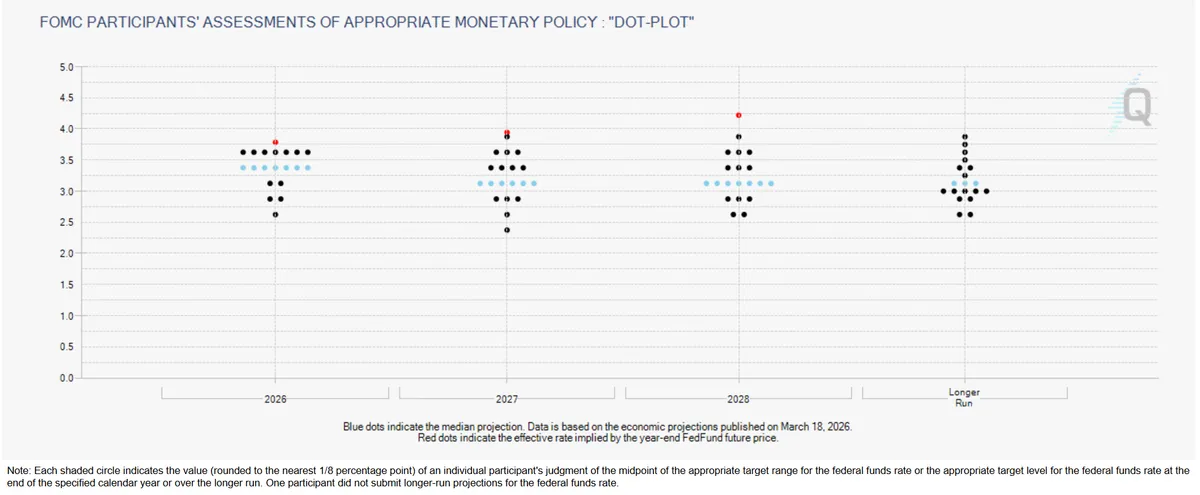
Kevin Warsh was sworn in on May 22 as the 17th Chair of the Federal Reserve, replacing Jerome Powell after a narrow Senate vote and inheriting sticky inflation, a $6.7 trillion balance sheet, and an increasingly Fed-sensitive crypto market. Warsh has long argued the post-2008 Fed grew too large, having resigned in 2011 over additional quantitative easing while calling for scarcer reserves and tighter inflation discipline. With the federal funds target at 3.50% to 3.75% and headline inflation at 3.3% in March on an oil shock, the March dot plot pencils in just one cut for 2026. Traders read his confirmation testimony as a signal for accelerated quantitative tightening rather than near-term rate cuts.
Coinbase executives publicly endorsed the CLARITY Act, framing payment stablecoins as lower-risk than commercial banks under the GENIUS reserve framework now advancing through Washington. The pitch positions fully reserved payment stablecoins as a regulated, transparent layer of the dollar system, distinct from fractional-reserve banking and the credit risks embedded within it. Industry advocates argue that codifying market structure rules alongside the GENIUS stablecoin regime would give US firms the legal certainty needed to scale onshore issuance, while removing the regulatory ambiguity that has pushed activity offshore. The endorsement adds institutional weight to a bill viewed as the most consequential US crypto legislation yet under the Warsh-era Fed.
Hyperliquid launched canonical outcome markets based on offchain events, with validators voting on the deployment and settlement of each contract. The structure brings prediction-market style instruments directly into the perpetuals venue, settled by validator consensus rather than centralized oracles, and aims to capture a slice of the activity that has migrated to dedicated event-trading platforms. By tying settlement to validator votes on a DEX stack, Hyperliquid is positioning itself as a venue where traders can speculate on outcomes alongside spot and perpetual exposure. Each market's deployment requires explicit validator approval, a deliberate brake against listing the kind of frivolous contracts that have plagued rival venues.
The dominant narrative this cycle is rotation and tightening, not euphoria. A leaner Fed under Warsh, sticky 3.3% inflation, and capital flowing toward US equities are squeezing risk premiums out of altcoin markets even as DeFi exploits and AI-driven labor disruption add background uncertainty. Yet underneath the soft tape, regulatory progress on the CLARITY Act and validator-governed product launches on venues like Hyperliquid suggest the cycle's surviving theme is institutional plumbing, not retail speculation. The market's holding $2.53 trillion is less a bullish signal than a referendum on whether macro tightening can coexist with the slow, structural normalization of crypto inside the US financial system.

AI-generated, AI-reviewed, under COINOTAG editorial oversight.