

Crypto Winter Debate Rages at $67K Bitcoin, FCA Targets EPL Sponsors, Euro Stablecoins Hit $900M
Bitcoin near $67,200 fuels coldest winter debate, Bitget rolls out Stocks 2.0, FCA warns Premier League clubs, and euro stablecoins hit $900M under MiCA.
Bitcoin sits near $67,200 after a 47% drawdown from its $126,000 all-time high, and the debate over whether this qualifies as the deepest crypto winter on record has reached fever pitch. One widely circulated thesis now lists twelve reasons supporting the call, citing renewed US Dollar strength, the fading "still early" narrative, and the AI sector siphoning electricity, talent, and capital that once flowed to digital assets. Critics push back, noting that spot ETFs delivered structural institutional adoption and regulatory clarity has improved materially since 2022. The argument matters because it shapes allocation decisions across funds weighing whether to lean into weakness or wait for clearer reversal signals.

A major global exchange has rolled out an upgraded tokenized equity product designed to link onchain stock trading directly with deep US market liquidity. The new tier offers 1:1 economic mapping of underlying shares, with cash dividends paid out in USDT and corporate actions such as splits and reverse splits mirrored at the token level. Eligible stock tokens can also be deployed inside margin, grid, and yield products, giving traders unified exposure across crypto and equity rails on a single blockchain-native venue. Pricing undercuts most competing real-world asset offerings, with a 0.1% base rate and 0.05% maker/taker fees for VIP tiers, signaling an aggressive push to capture tokenized equity flow.
The UK's Financial Conduct Authority has formally warned Premier League clubs that sponsorship deals with unauthorized crypto firms could breach financial promotion rules. Clubs enabling such promotions face exposure to legal liability, money laundering concerns, and reputational damage. Companies outside the FCA's crypto register may only advertise in the UK if their marketing materials are approved by an authorized signatory. The warning landed amid scrutiny of high-profile arrangements, including OKX's sleeve sponsorship at Manchester City and Kraken's deal with Tottenham Hotspur. Kraken sits on the FCA's authorized list through its Payward entity, while OKX does not, leaving certain top-flight partnerships in regulatory limbo heading into the summer transfer window.
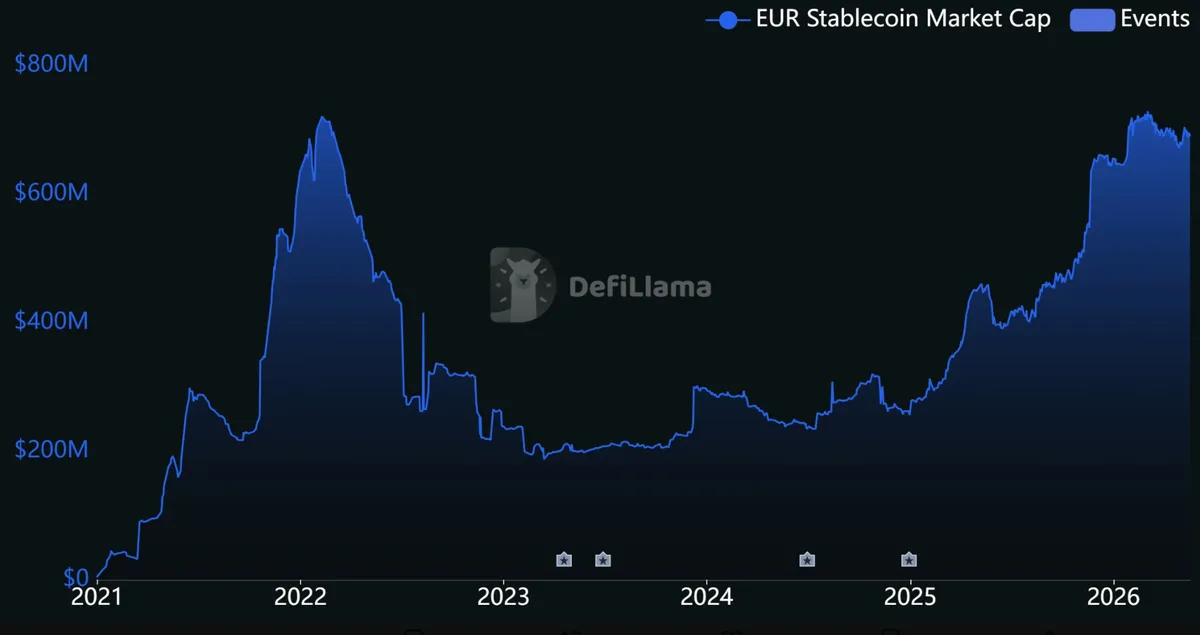
Euro-denominated stablecoins have climbed to roughly $900 million in circulating supply, surpassing the early 2022 peak of $721 million. The expansion reflects regulatory consolidation under the MiCA framework rather than fresh retail demand, with the segment still holding just 0.3% of the $300 billion global stablecoin market. Circle's EURC now controls roughly half of all euro stablecoin liquidity, with Société Générale's EURCV, Banking Circle's EURI, and Stasis EURS rounding out the top issuers. Tether's exit from the segment via the EURT wind-down opened a vacuum that compliant issuers quickly absorbed as European venues delisted non-conforming tokens.
Renewed dollar strength compounds the pressure on risk assets at exactly the moment crypto's "fiat hedge" branding is being stress-tested. With electricity demand from AI training clusters competing directly with mining operations, miner economics face structural cost pressure even before factoring in post-halving block reward dynamics. Tech and semiconductor equities have also delivered competitive returns this cycle, raising the opportunity cost of holding non-yielding digital assets and deepening the bear market mood. The combined effect has pushed retail attention toward equities and AI-themed exposure, leaving crypto with fewer marginal buyers that historically powered late-cycle rallies.
Compliance demands under the MiCA framework now require euro stablecoin issuers to hold segregated reserves, publish regular audits, and guarantee redemption rights. Non-compliant tokens face delisting from EU venues, which has concentrated liquidity into a small group of licensed players including bank-affiliated issuers and pure crypto-native firms operating across DeFi rails. The European Securities and Markets Authority has authorized 19 e-money token issuers across 11 member states, yet euro variants still represent under 0.4% of total stablecoin supply globally. The pattern suggests the European market is consolidating into a regulated oligopoly rather than expanding the user base.
The dominant thread tying these stories together is regulatory consolidation pulling against macro headwinds. Authorities from London to Brussels are forcing the industry to professionalize, licensing stablecoin issuers, vetting sponsorship channels, and mandating disclosures, while traders contend with a strong dollar, AI's gravitational pull on capital, and equity markets delivering returns that erode crypto's relative appeal. The institutional rails are being built and tokenized equity products are extending crypto into traditional finance, yet retail enthusiasm has faded to a whisper. Whether this represents a structural reset or the late stage of a buyable drawdown will hinge on whether regulated infrastructure attracts the next wave of allocators.
Related Tags
AI-generated, AI-reviewed, under COINOTAG editorial oversight.