

News
Lenovo Rallies 109% on AI, Dimon Attacks Clarity Act, Pi Whale Tops 400M
Lenovo posts a 109% May rally on AI server boom, Jamie Dimon escalates the fight against the Clarity Act, and a single Pi Network whale crosses 400M tokens.


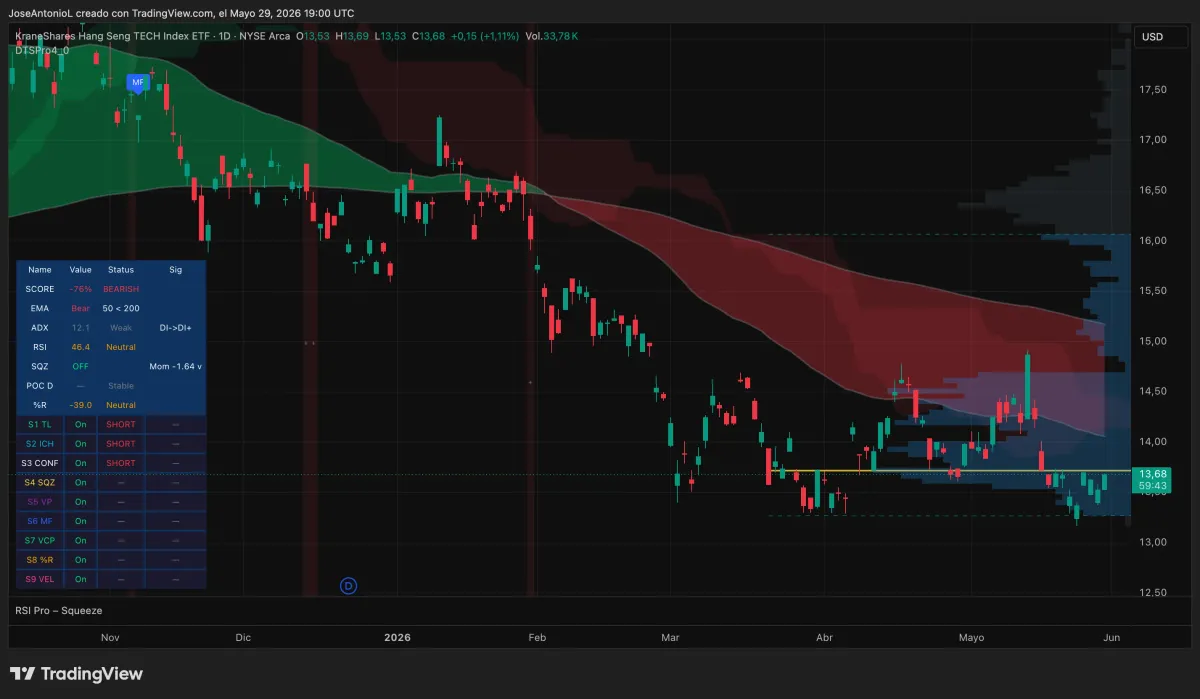
Lenovo's stock posted a 109% rally in May 2026 — its strongest monthly performance since 1999 — driven by an AI server boom that has reshaped enterprise computing economics. Shares of the world's largest PC maker have more than doubled this month, lifting Lenovo to the top of the Hang Seng Index year-to-date with a 159% gain. The rally followed quarterly results showing $21.6 billion in revenue, up 27% year-on-year, with net profit surging 479% to $521 million. Goldman Sachs more than doubled its price target after the print. AI-related revenue now accounts for 38% of total quarterly sales, growing 84% year-on-year and signaling a structural shift in how legacy hardware vendors capture data center spending.
JPMorgan Chase CEO Jamie Dimon escalated his opposition to the pending Clarity Act this week, calling the crypto market structure bill a threat to the financial system and labeling Coinbase CEO Brian Armstrong "full of sh*t" in a televised interview. Dimon argued that allowing crypto firms to pay interest on stablecoin holdings would let them function as banks without the corresponding regulatory burden — including Anti-Money Laundering rules, FDIC insurance, capital requirements, and liquidity standards. He warned that cross-border stablecoin payments create untraceable money flows that could enable illicit finance. The American Bankers Association, community banks, and credit unions are aligned in opposition, framing the markup as a defining fight over the future of blockchain-based deposit alternatives.
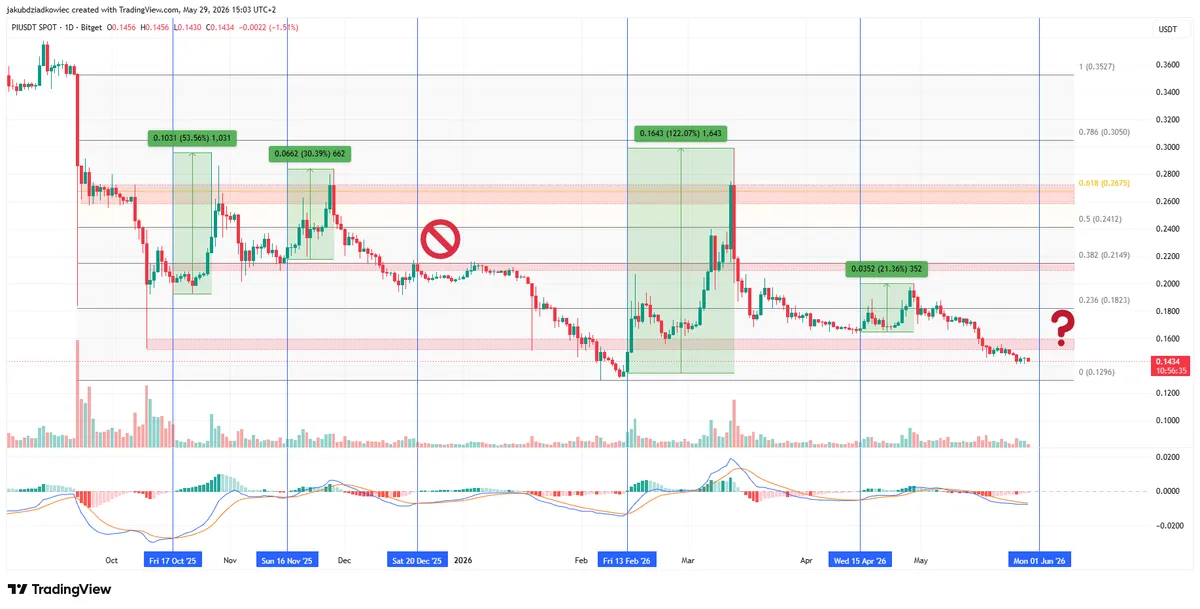
Pi Network enters June with the token trading near $0.143, hovering just above its $0.1296 all-time low after months of selling pressure from daily unlocks. A single wallet tracked as "GAS…ODM" has now crossed 400 million PI, recently adding more than 1.5 million tokens in a single day to become the largest known holder of the altcoin. The address has accumulated through May despite the broader downtrend, and analysts have speculated it may serve a buyback or treasury role — though no party has publicly confirmed ownership. Tagged exchange wallets currently hold roughly 545 million PI, with net inflows of about 1.5 million tokens over the past 24 hours, a setup typically associated with incoming sell pressure on circulating supply.
The broader AI infrastructure cycle reinforced Lenovo's bid. Dell Technologies reported Q1 FY2027 revenue of $43.84 billion, up 88% year-on-year, and lifted full-year AI server guidance to $60 billion against a $51.3 billion backlog. Hyperscaler demand from Amazon, Microsoft, and Google continues to anchor orders, but enterprise inferencing workloads are now spreading through the channel and benefiting conventional server original equipment manufacturers. Lenovo's Infrastructure Solutions Group posted record quarterly revenue of $5.6 billion, up 37% year-on-year, and crossed $19.2 billion for the full fiscal year. The print framed AI capacity buildout as a multi-vendor tailwind rather than a hyperscaler-only story for the remainder of 2026.

At the center of the Clarity Act standoff sits the question of yield-bearing stablecoins. Banks warn that allowing exchanges to compensate users for holding dollar-pegged tokens would accelerate deposit flight from traditional institutions and unwind the funding model that has defined American banking for a century. Crypto advocates frame the same incentive as a natural evolution of payments infrastructure that brings programmable settlement and DeFi-style yield to consumers. Dimon flagged that cross-border stablecoin flows can move through serial wallets with no visibility once funds leave a regulated platform, citing potential exploitation by trafficking networks. With markup approaching, neither lobby is signaling compromise on the core text of the legislation.
On the charts, PI's daily timeframe leans bearish with lower lows since the February peak and volume tapering through May. The Moving Average Convergence Divergence indicator is approaching a fresh bullish cross, a signal that has preceded sharp rallies of 53%, 30%, and 122% over the prior eight months. Averaging those prior moves implies a potential 55.65% advance from current levels, which would lift PI to roughly $0.22 — aligning with the 0.382 Fibonacci retracement of the broader downtrend. The December 2025 cross failed in low-volume conditions, leaving the indicator as a probabilistic signal rather than a guarantee for the month ahead.
Three storylines define the cycle's late-spring backdrop: capital rotating into AI infrastructure plays at scale, a hardening regulatory battle over how stablecoins integrate with the deposit system, and small-cap token price action shaped increasingly by single-wallet flows rather than retail conviction. The thread connecting them is structural — institutional capital is choosing where to sit for the next leg, whether in legacy hardware names retooled for AI, in compliant stablecoin rails the banking lobby is fighting to slow, or in single-name token treasuries quietly absorbing supply. The outcomes of the next earnings cycle and the Clarity Act markup will likely set the tone for risk appetite and the next bull market phase into the second half.
AI-generated, AI-reviewed, under COINOTAG editorial oversight.