

News
Lummis Warns China Could Eclipse US on CLARITY Stall as $1B Iran Crypto Seized, Gravity Bridge Loses $5.4M
Senator Lummis warns China could overtake US on CLARITY delay; Treasury seizes $1B Iranian crypto; Gravity Bridge loses $5.4M; Circle freezes $12.6M USDC.


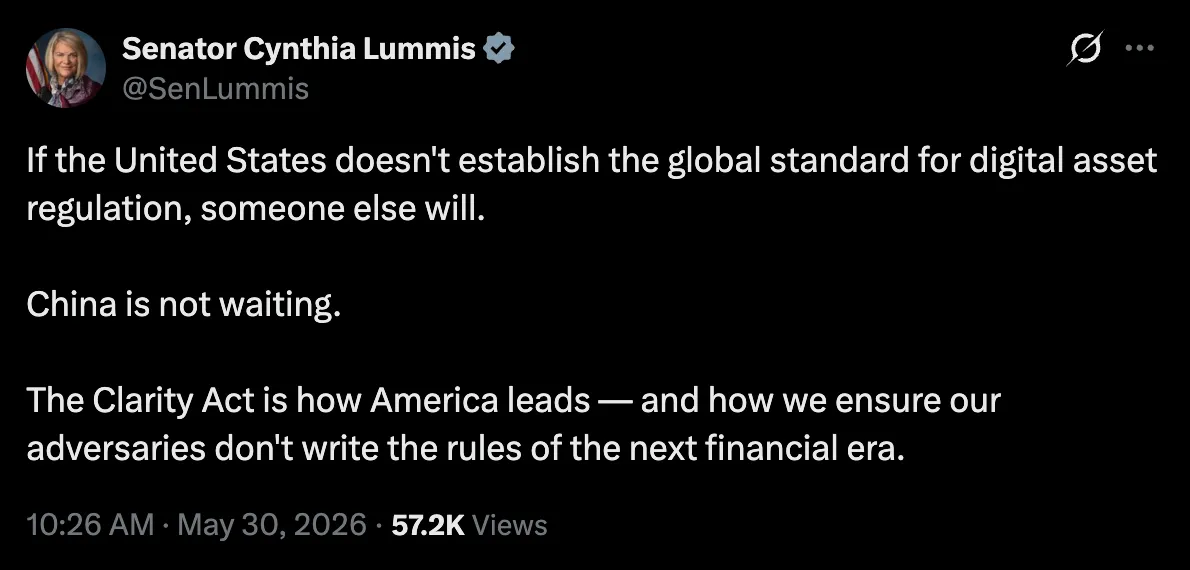
Wyoming Senator Cynthia Lummis has issued a stark warning that the United States risks ceding global leadership in digital assets to China and other rivals if Congress fails to enact the Digital Asset Market Clarity Act before the legislative window closes. Lummis argued that a comprehensive market structure framework is essential to ensure foreign jurisdictions do not dictate the rules of the next financial era, drawing a direct line from the dollar's century of dominance to the coming era of tokenized finance. The Senate Banking Committee advanced the legislation in May after months of delay, yet ratification before the midterm cycle remains uncertain as competing interests inside Washington continue to pressure the text.
JPMorgan chief executive Jamie Dimon publicly committed the banking lobby to opposing the current draft of the CLARITY Act, citing provisions that allow crypto firms to pay interest on customer deposits without the anti-money-laundering and capital reserve obligations imposed on chartered banks. Dimon dismissed industry lobbying efforts, naming Coinbase chief Brian Armstrong specifically, and signaled that traditional finance will continue to push back against any framework it views as regulatory arbitrage. The friction underscores how the DeFi sector and incumbent banks remain locked in a structural dispute over which set of rules should govern programmable money and on-chain yield.
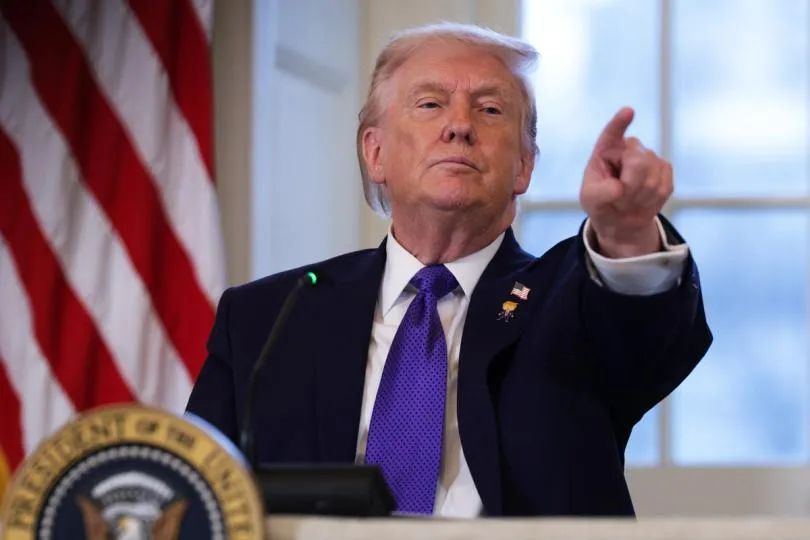
Compounding the political pressure, President Donald Trump's expanding personal involvement in digital-asset ventures has emerged as a liability for the same legislation his administration champions. With the CLARITY Act awaiting a full Senate vote, lawmakers are debating ethics provisions that would bar elected officials from participating in crypto businesses, a debate sharpened by Trump's TRUMP memecoin and his family's stake in World Liberty Financial. Estimates place Trump-linked crypto earnings at roughly $1.4 billion since inauguration, giving opponents fresh ammunition to demand restrictions that industry advocates fear could derail the entire blockchain rulebook.
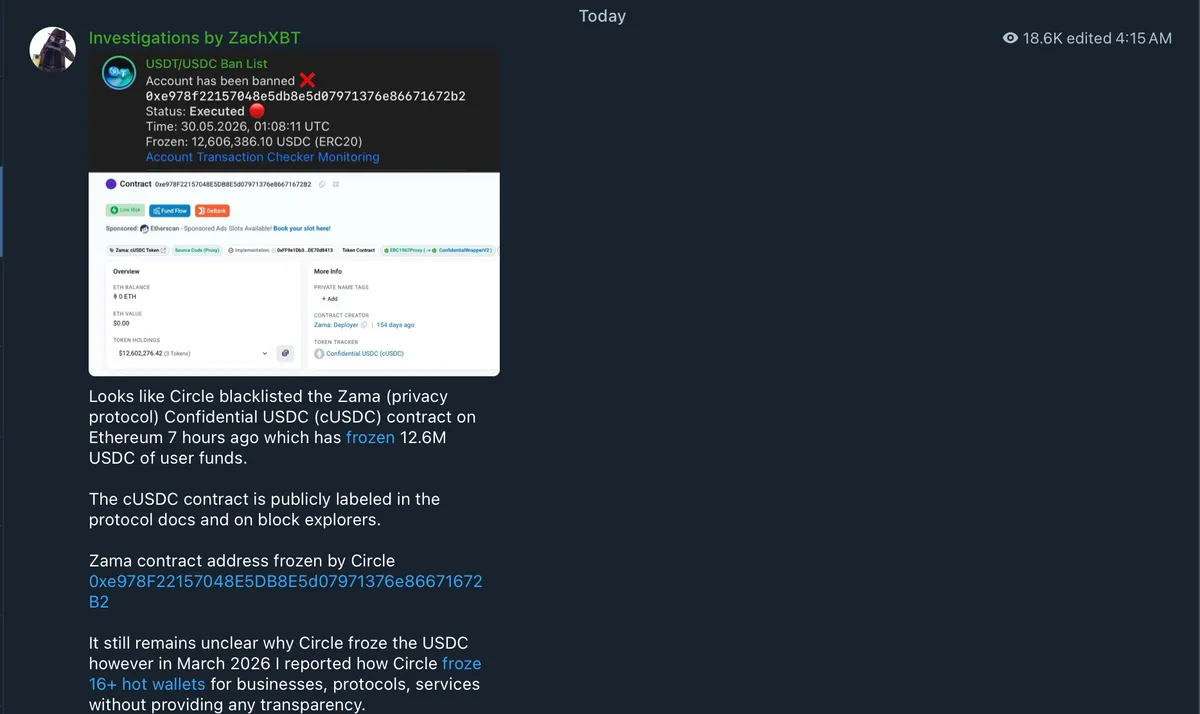
Stablecoin issuer Circle froze approximately $12.6 million in USDC tied to the Zama privacy protocol's confidential USDC smart contract on Saturday without prior notice to the development team, according to on-chain investigator ZachXBT. The publicly labeled contract had received roughly $12.4 million in deposits earlier in May from wallets associated with Overnight Finance, a DeFi protocol that recently held a governance vote over treasury distributions amid rug-pull allegations. Critics argue the unilateral freeze sets a troubling precedent because Zama users' funds were commingled with the flagged deposits, while Circle has previously failed to act on roughly $420 million in stolen funds across fifteen separate exploits since 2022.
Cross-chain protocol Gravity Bridge was drained of roughly $5.4 million early Saturday in what security researchers describe as a likely signing-key compromise rather than a contract exploit. On-chain analysts and PeckShield tracked the outflow as $4.3 million in USDC, 274 wrapped ether worth about $553,000, $434,000 in tether, and 14.16 PAXG tokens. The attacker began laundering proceeds through ChangeNow and Binance almost immediately, prompting validators to halt the bridge while investigators trace the breach. The incident mirrors the KelpDAO and Resolv exploits from earlier in 2026, reinforcing that the authorization layer, not audited smart contract code, remains the soft underbelly of cross-chain infrastructure.
The Securities and Exchange Commission filed civil charges against Texas resident Nathan Fuller, accusing him of orchestrating a $12.3 million scheme that recruited roughly 150 investors through false claims of AI-powered arbitrage bots and guaranteed monthly returns of 40 to 50 percent. According to the complaint, only about $380,000 — roughly three percent of investor capital — was ever deployed into crypto markets, while Fuller allegedly diverted $6.2 million to personal expenses including a home, gambling, and vehicles, and circulated $5.5 million as Ponzi-style payments. The agency says fabricated account statements and an AI-generated auditor letter were used to suppress withdrawal requests as the operation unraveled.
The United States Treasury announced the seizure of approximately $1 billion in cryptocurrency tied to Iran under Operation Economic Fury, an initiative designed to choke off Tehran's access to overseas revenue, shadow banking networks, and digital-asset infrastructure. Treasury Secretary Scott Bessent said authorities had directly secured the wallets and disclosed parallel sanctions on weapons-supply networks and an Iraqi official facilitating illicit oil sales. Bessent linked the pressure campaign to deteriorating conditions inside Iran, citing inflation above 200 percent, unpaid military salaries, and food-voucher rationing, while noting that hundreds of millions of dollars per month had previously moved through these channels before intervention.
The dominant arc threading through this weekend's news is the accelerating collision between sovereign authority and permissionless rails. Washington is simultaneously legislating a market structure for Bitcoin and tokenized finance, seizing billion-dollar Iranian wallets, prosecuting AI-themed crypto fraud, and watching centralized stablecoin issuers freeze contracts on demand — even as decentralized bridges continue to bleed value through key-management failures. The throughline is enforcement: regulators, banks, and Treasury agents are projecting power into on-chain venues at unprecedented scale, forcing builders to confront the reality that censorship-resistance and institutional integration cannot coexist without far sharper boundaries than the industry has yet drawn.
AI-generated, AI-reviewed, under COINOTAG editorial oversight.