

Micron Hits $1 Trillion Cap on AI Memory Boom as Google Files 32M Mosquito Plan
Micron surged 19% to a record $895.88 on AI memory demand, briefly topping a $1T market cap, while Google's Debug filed to release 32M mosquitoes in Florida.

Micron Technology surged to a historic all-time high on May 26, climbing nearly 23% intraday before settling up more than 19% at $895.88. The breakout briefly pushed the memory chipmaker's market capitalization above $1 trillion, placing it among the largest technology firms on the planet. Overnight trading extended the move, with shares pressing toward $920 as momentum carried beyond the close. The catalysts were twofold: accelerating demand for AI-grade memory and a fresh price-target upgrade from UBS. Investors are now weighing whether the rally signals a durable structural re-rating or simply an aggressive momentum spike against an already extended chart.
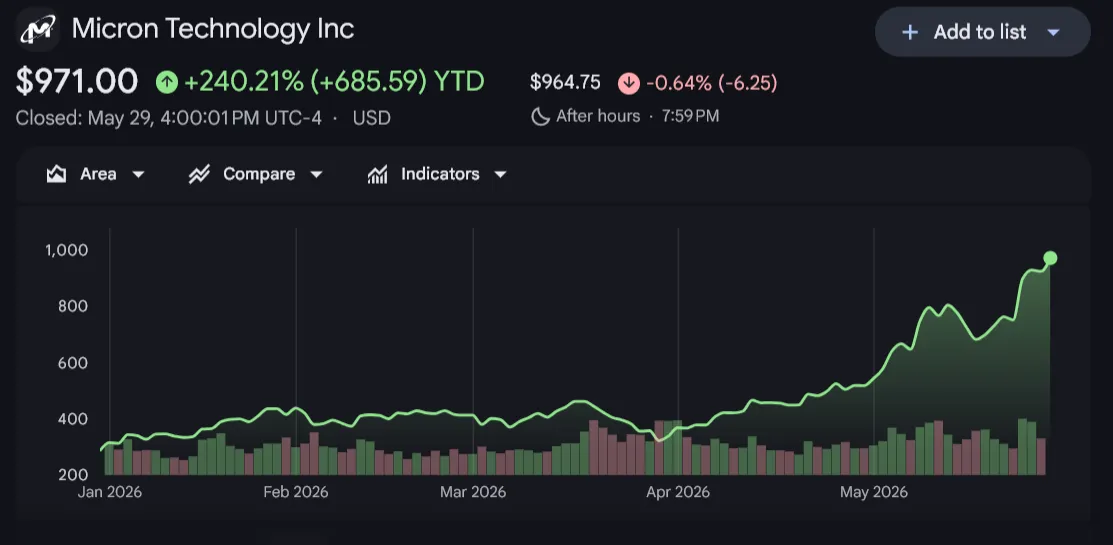
Behind Micron's surge sits a tightening supply picture across the global memory industry. AI model training and inference workloads consume vast quantities of advanced DRAM and high-bandwidth memory, and the small handful of producers capable of delivering at scale have regained pricing power that was absent for most of the prior cycle. The dynamic mirrors prior commodity squeezes that fueled a sustained bull market for upstream suppliers, with leading semiconductor names absorbing a disproportionate share of hyperscaler capital expenditure. Recent market data indicates that order backlogs at the largest memory vendors have stretched well into 2027, reinforcing the case for elevated margins through the next product cycle.
Micron has paired the demand tailwind with a domestic manufacturing push that management frames as a multi-decade commitment. The company recently brought its $2 billion Manassas, Virginia facility into full production of 1-alpha DRAM, supplying customers across aerospace, defense, automotive, industrial and healthcare segments. Executives have positioned the site as one component of a broader $200 billion long-term investment plan aimed at reinforcing US semiconductor capacity. The geographic footprint matters: policymakers and corporate buyers are increasingly willing to pay a premium for supply chains insulated from geopolitical disruption, a dynamic that has historically rewarded producers controlling onshore advanced-node capacity.
In a separate development sitting at the intersection of biotech and Big Tech, Google's Debug initiative has filed for federal approval to release up to 32 million Wolbachia-treated male mosquitoes across Florida over a two-year window. The application, lodged under EPA docket EPA-HQ-OPP-2025-3951, also covers a parallel release plan in California. The public comment period closes on June 5, after which regulators will decide whether to approve, deny, or impose conditions on the field test. Under the proposal, Florida would receive up to 16 million male mosquitoes in each of the two trial years, with the same maximum volume earmarked for California sites.
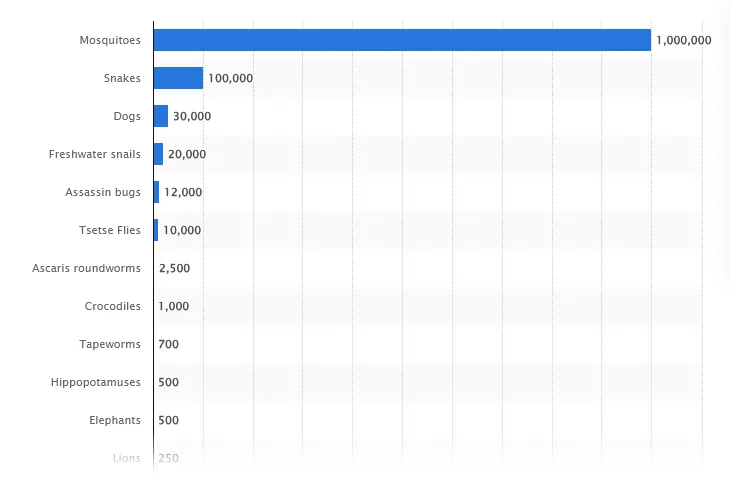
The EPA filing identifies the test species as male Culex quinquefasciatus carrying the Wolbachia pipientis wAlbB strain. Culex quinquefasciatus, commonly called the southern house mosquito, is a primary vector for West Nile virus and several other mosquito-borne pathogens. The Wolbachia bacterium suppresses reproduction when treated males mate with wild females, producing eggs that fail to hatch. Although the application is filed under federal pesticide law, the approach involves no conventional chemical spraying. Regulators are reviewing the program as a biological control method, which is why the experimental-use permit moves through the same channel as a more traditional pest-management product registration.
For Google, the Florida and California trials are designed to generate the field data required to support a future commercial product registration. If approved, the program would mark one of the largest sterile-insect releases ever attempted on US soil, building on smaller pilots run in Fresno County and parts of the Pacific. Public response is already polarized, with supporters citing the public-health upside against dengue and West Nile, and critics raising questions about ecological knock-on effects. The outcome of the June 5 comment window will set the tone for whether engineered biological controls become a mainstream tool in the United States or remain confined to narrow research deployments.
Taken together, the two stories illustrate the dominant narrative shaping this technology cycle: capital is concentrating into infrastructure plays that scale non-linearly. Micron's trillion-dollar print reflects how aggressively investors are pricing the AI buildout into upstream silicon, while Google's biotech filing shows the same companies extending their platform logic into physical-world systems traditionally dominated by governments. Just as institutional rotation into Bitcoin and blockchain infrastructure has reshaped crypto's market structure, AI memory and engineered biology are absorbing the next wave of strategic capital, a backdrop traders across DeFi and equity desks alike will be watching closely.

AI-generated, AI-reviewed, under COINOTAG editorial oversight.