

Revolut Pledges $116M to France, SoftBank Backs €75B AI Buildout Push
Revolut pledges $116M to France, SoftBank backs €75B AI data centers, and $380B floods AI firms as Bezos, Huang and Son frame the productivity debate.

Revolut has committed an additional $116 million (€100 million) to France and pledged to create 200 new jobs by 2030, deepening its push to make Paris its European hub for financial innovation. French President Emmanuel Macron unveiled the commitment on Monday at the 2026 Choose France summit held at Versailles. The announcement builds on Revolut's earlier $1.16 billion (€1 billion) pledge in 2025 for its Western Europe headquarters in Paris. France remains the fintech's largest market in the European Union with roughly 7 million customers, and Revolut is targeting 10 million users by the end of 2026 and 20 million by the close of 2030.
The 2026 Choose France summit delivered record-breaking foreign investment pledges totaling approximately $108 billion (€93 billion), alongside commitments for more than 15,000 new roles across the country. The haul positions France as a serious competitor to London, Berlin, and Amsterdam for high-value digital investment. Brookfield and Salesforce joined the wave with sizable commitments, while much of the new money is being directed toward French data centers and artificial intelligence infrastructure. Macron framed the summit's outcome as evidence that France can attract top-tier technology capital at a moment when European jurisdictions are competing aggressively for compute, financial services, and emerging-tech buildouts.
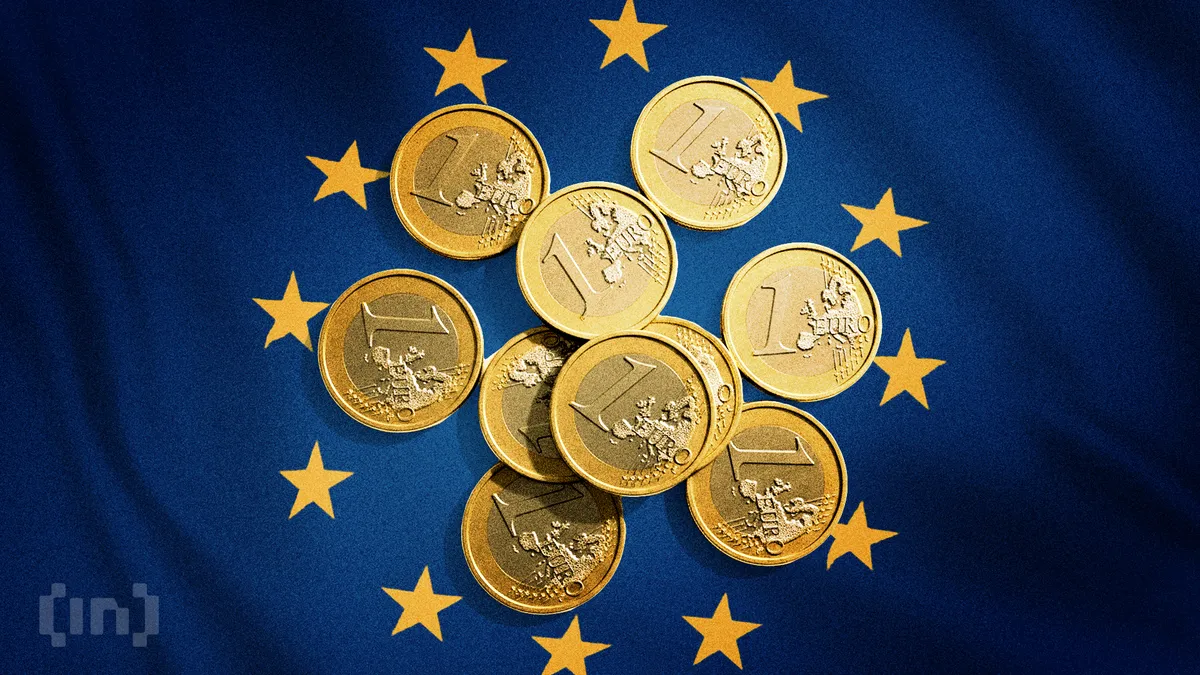
Beyond capital deployment, Revolut is pursuing a French banking licence through the Autorité de Contrôle Prudentiel et de Résolution. Securing the licence would let the platform expand deposits, credit, and lending under direct local supervision rather than relying on its Lithuanian licence for euro-area operations. Revolut already runs Markets in Crypto-Assets (MiCA) licensed services across the European Economic Area through a Cyprus-based entity, supporting Bitcoin and altcoin trading that complements its broader retail product. The fintech signed a 10-year lease on a refurbished property in the Bourse district that will house the regional headquarters and is scheduled to open in early 2027.
SoftBank emerged as the single largest contributor to the French investment wave with a €75 billion ($87 billion) commitment to develop five gigawatts of artificial intelligence data center capacity in the country. The pledge was unveiled alongside Macron in Paris and underscores how rapidly compute infrastructure is becoming a sovereign-scale priority for advanced economies. SoftBank's allocation alone exceeds the total foreign investment haul of several prior Choose France editions, marking a step-change in scale. The capacity buildout positions France as a strategic node in the global AI supply chain at a moment when access to power, silicon, and grid interconnect defines competitive advantage.
Capital flows into artificial intelligence businesses have reached roughly $380 billion year-to-date in 2026 across three primary channels: investment-grade debt, venture funding, and high-yield credit. AI-linked firms have issued approximately $140 billion in investment-grade bonds, representing about 49% of total IG issuance, while attracting close to $220 billion in venture funding, or 87% of the tracked total. High-yield credit contributed another $21 billion. The combined $380 billion accounts for roughly 64% of all capital flows tracked across these channels, a concentration that rivals the rotation patterns seen during prior digital-asset bull market cycles and is reshaping how investors price duration and technology exposure.
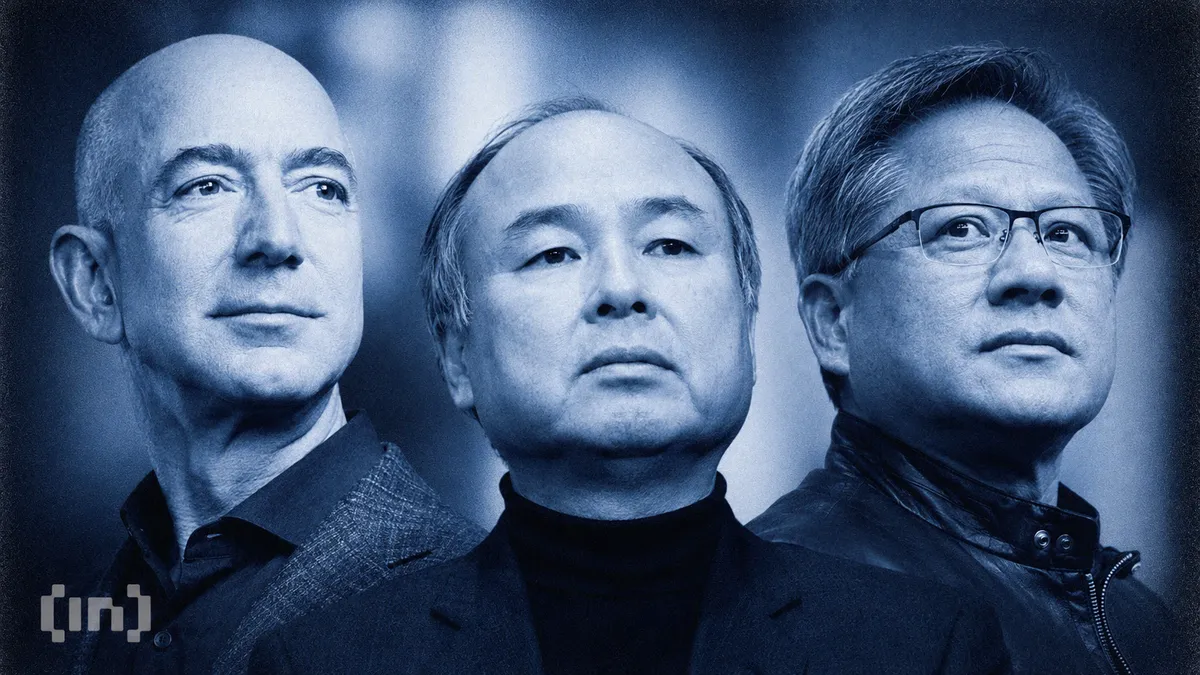
Three of technology's most influential figures — Jeff Bezos, Jensen Huang, and Masayoshi Son — have publicly framed the contours of the AI debate as the capital wave intensifies. Nvidia chief executive Huang dismissed claims that AI is eliminating jobs in his keynote at GTC Taipei 2026, calling such concerns "complete nonsense." Son, meanwhile, argued that the current cycle is "more than 10x, probably 50x bigger than dotcom," describing the buildout as a generational productivity shift rather than a speculative bubble. Their commentary lands as reports emerge of Amazon cautioning staff over runaway compute token spending, sharpening questions about durability across both equity and credit markets.
The dominant narrative emerging from this cycle is the collision of sovereign industrial policy with private-sector AI ambition, with parallels to earlier institutional rotation phases in digital assets and DeFi markets. France's record-breaking investment haul, SoftBank's gigawatt-scale data center commitment, Revolut's deepening European hub strategy, and the $380 billion that has flowed into AI-related firms this year all point to the same underlying dynamic — capital is consolidating into a narrow set of strategic compute and financial infrastructure projects, mirroring the supply-scarcity dynamics that blockchain networks have long modeled. Whether the concentration delivers durable productivity gains will define the remainder of the cycle.

AI-generated, AI-reviewed, under COINOTAG editorial oversight.