

News
Samsung Buys $408M Upbit Stake as Crypto Sheds $897M in Longs, Mastercard Lands BitLicense
Samsung takes a $408M stake in Upbit operator Dunamu as crypto sheds $897M in long liquidations and Mastercard secures a New York BitLicense.


Three Samsung affiliates have agreed to purchase a 4% stake in Dunamu, the operator of South Korea's largest cryptocurrency exchange Upbit, in a transaction valued at 612.8 billion won, or roughly $408 million. Samsung Securities will take a 2% slice through a 306 billion won cash deal, while Samsung Card and Samsung SDS will each absorb 1%. The shares are being divested by affiliates of tech conglomerate Kakao, which has now offloaded approximately $1.5 billion of Dunamu equity in under a month following earlier sales to Hana Bank and Hanwha Investment and Securities. The deals are scheduled to close on June 19, deepening Samsung's footprint in digital assets after launching its cold wallet service in 2019.
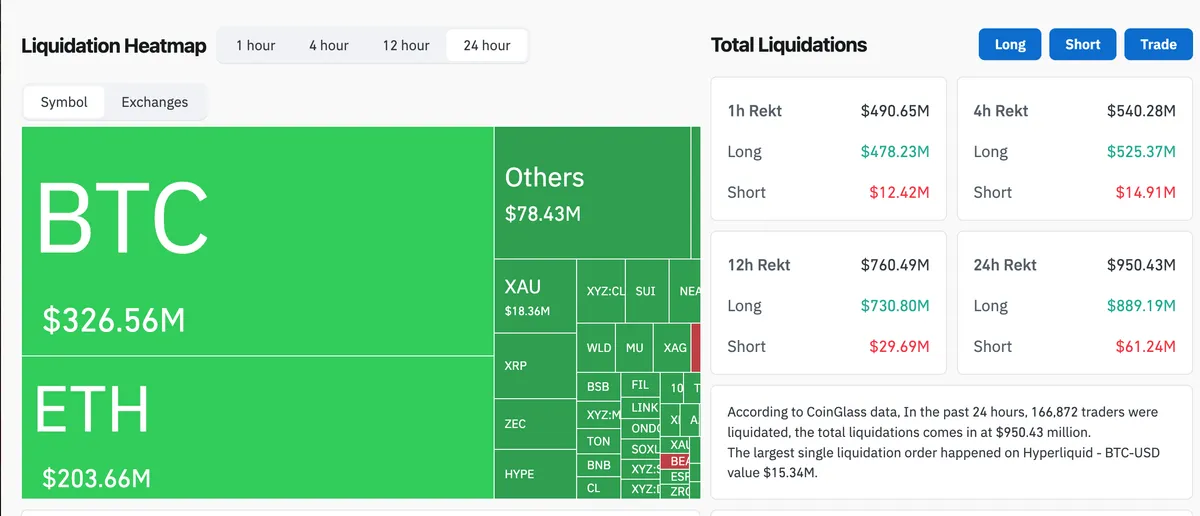
Risk assets buckled after U.S. airstrikes in the Strait of Hormuz dashed ceasefire hopes, with Bitcoin sliding to its lowest level since April 13 near $73,400 and Ether breaking below $2,000 for the first time since late March. Crude oil spiked to $96 a barrel before easing to $94, reigniting inflation concerns across global markets. Roughly $958 million in crypto positions were liquidated over 24 hours, with longs absorbing $897 million of the damage versus only $61 million in shorts. Ether open interest paradoxically climbed to a record 16.39 million ETH even as price fell, a divergence pointing to fresh short positioning rather than dip buying.
Token launch failures rarely stem from weak branding or poor exchange placement; they originate in the economic design itself. Analysts highlight that locked supply movements expose every prior decision around allocations, vesting schedules, discounts, and airdrop distributions. When early backers receive steep discounts, they can exit profitably at prices that already inflict losses on retail entrants. Short vesting windows accelerate sell pressure before genuine product demand materializes, while tokens lacking embedded utility leave holders reliant on speculative price confidence alone. The strongest economic designs balance fundraiser incentives with long-term alignment, tying unlock schedules to product milestones and market depth rather than calendar dates.
The broader market shed $40.91 billion in 24 hours as total capitalization slipped 1.66% to $2.43 trillion, hitting the 0.618 Fibonacci retracement from the late-March low to the May high near $2.72 trillion. Spot Bitcoin exchange-traded funds compounded the pressure with $733.4 million in net outflows on May 27, with BlackRock's IBIT alone bleeding $527.8 million. Ondo paced top-100 declines, falling more than 11% on the day and extending a 25% retreat from its May 22 peak. With 94% of forced exits coming from long positions, the cascade reflected overleveraged bullish positioning unwinding rather than coordinated short pressure entering the market.
Cryptocurrency-aligned political action committees are flexing fresh muscle after six endorsed candidates won Texas congressional and Senate primaries on Tuesday. Combined spending by Fairshake, Defend American Jobs, Protect Progress, Blockchain Leadership Fund and Fellowship PACs exceeded $10 million across the races, with Fairshake alone holding more than $193 million in its war chest as of January. Democrat Christian Menefee unseated incumbent Al Green in the 18th district, while Republican Ken Paxton defeated Senator John Cornyn with over 63% of the vote. The PAC pledged to aggressively back pro-crypto candidates heading into June 2 primaries across California, Iowa, Montana, New Jersey, New Mexico and South Dakota.
Mastercard has secured a New York BitLicense from the state's Department of Financial Services, clearing the path for expanded regulated digital asset activity in one of the strictest crypto regulatory jurisdictions in the United States. The payments network plans to focus on stablecoin and tokenized deposit infrastructure rather than consumer-facing products. The approval follows Mastercard's pending $1.8 billion acquisition of stablecoin infrastructure firm BVNK, expected to close later this year. Earlier this month, the company completed its first cross-border U.S. Treasury transaction on the XRP Ledger, underscoring growing momentum behind tokenized financial assets in a market industry estimates currently value above $33.8 billion excluding stablecoins.
The week's headlines trace a single arc: institutional capital is consolidating its grip on crypto infrastructure even as leveraged speculation gets violently flushed. Samsung's Upbit stake, Mastercard's BitLicense, and United Texas Bank's national charter conversion all point to deep-pocketed players cementing regulated rails, while political action committees translate that capital into electoral influence. Simultaneously, geopolitical shocks and ETF outflows are exposing how thinly retail leverage was layered atop the rally. The dominant narrative is no longer accumulation versus distribution, but the steady migration of crypto from a speculative bull market playground into a regulated, institutionally owned segment of mainstream DeFi-adjacent finance.
AI-generated, AI-reviewed, under COINOTAG editorial oversight.