

UK Lords Push Back on BOE Stablecoin Caps as US Treasury Sanctions Nobitex and SEC Backs Tokenization
UK Lords urge BOE to ease stablecoin caps, US Treasury sanctions Nobitex and three Iranian exchanges, SEC backs tokenization, and Democrats fight crypto…


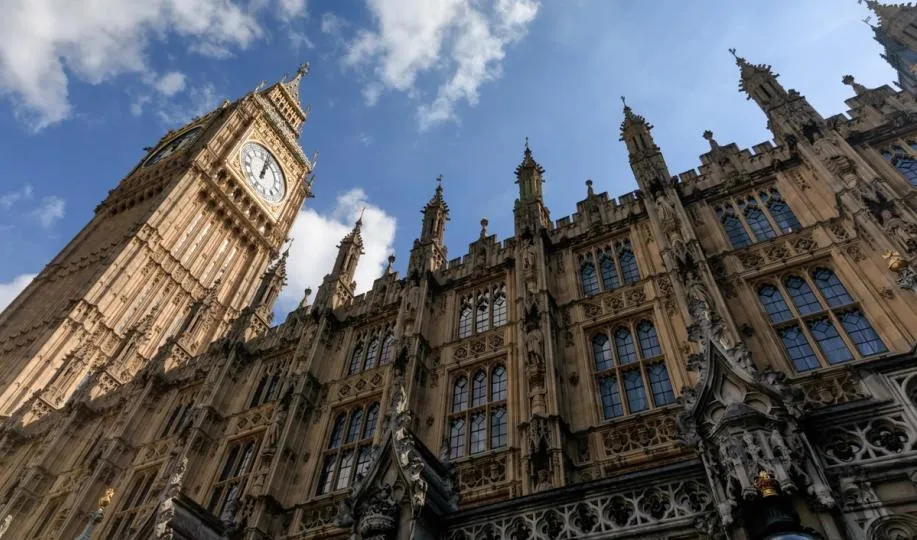
A UK House of Lords committee has urged the Bank of England to soften its proposed restrictions on consumer stablecoin holdings, arguing the limits risk stifling a nascent market before it can mature. In its newly published report, the cross-party Financial Services Regulation Committee questioned the central bank's planned 20,000-pound cap per coin for individuals and 10 million pounds for businesses, alongside a requirement that issuers hold at least 40% of reserves in non-interest-bearing central bank deposits. The committee recommended monitoring market growth before imposing pre-emptive ceilings, while BOE deputy governor Sarah Breeden has already conceded the framework was "overly conservative," hinting at imminent revisions.
The US Treasury's Office of Foreign Assets Control designated four Iranian cryptocurrency exchanges — Nobitex, Wallex, Bitpin, and Ramzinex — for allegedly funneling digital assets to terrorist financing, sanctions evasion, and ransomware operations linked to the Islamic Revolutionary Guard Corps. Treasury officials claim Nobitex alone processed more than half of Iran's blockchain inflows in 2025 and helped the Central Bank of Iran route hundreds of millions in stablecoins to defend the rial. Four individuals tied to Nobitex, including chairman Amir Hossein Rad and CEO Seyed Ali Khoee, were also designated as enforcement against Tehran's crypto pipeline accelerates.
Senior Democrats on Capitol Hill are mounting opposition to a Labor Department proposal that would permit digital assets and other "alternative" instruments inside 401(k) retirement plans. Senators Bernie Sanders and Elizabeth Warren, joined by Representative Bobby Scott, sent a letter to acting Labor Secretary Keith Sonderling demanding the rule be withdrawn, citing the volatility of Bitcoin and other tokens alongside what they describe as weakened fraud enforcement at the SEC. The policy stems from an August 2025 executive order from President Trump aiming to "democratize" alternative-asset access for the roughly $10.1 trillion held in American 401(k) accounts.
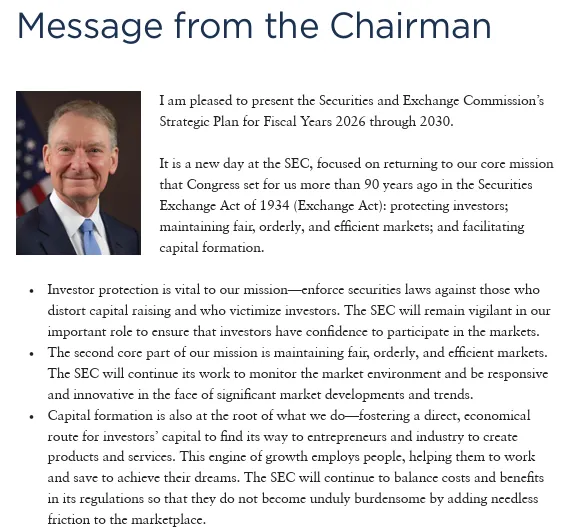
The Securities and Exchange Commission has elevated digital assets to a top-tier priority in its draft Strategic Plan for fiscal years 2026 through 2030, signaling a sharp departure from the agency's prior enforcement-led posture. Chair Paul Atkins' team wrote that blockchain and crypto technologies "have the potential to revolutionize America's financial infrastructure," pledging a "rational, coherent, and principled approach" to rulemaking. The plan explicitly endorses tokenized securities offerings, onchain capital formation, and clearer treatment of custody, trading, and staking services, while calling for a sharper jurisdictional line between the SEC and the Commodity Futures Trading Commission.
The sanctions package against Nobitex underscores how aggressively Washington is now mapping the on-ramps used by sanctioned states. Treasury Secretary Scott Bessent recently disclosed that his department has seized roughly $1 billion in cryptocurrency tied to Iranian wallets and exchanges since the campaign began, and Tether earlier froze $344.2 million in stablecoins attributed to the Central Bank of Iran. Combined with the Nobitex action — which followed a $90 million hack of the platform in mid-2025 — the enforcement trajectory suggests stablecoin issuers and centralized exchanges face mounting compliance obligations whenever flows touch jurisdictions under US restrictions.
The CLARITY Act, the digital asset market structure bill working through Congress, has become the central battleground for the same jurisdictional and conflict-of-interest concerns raised in the 401(k) debate. Lawmakers opposing the Labor Department rule have flagged President Trump's family ties to crypto venture World Liberty Financial, and they are pushing amendments to the bill that would tighten guardrails around tokens issued by politically exposed actors. With the SEC's strategic plan calling for legislative clarity and a coordinated handoff with the CFTC, the legislative calendar around CLARITY is set to define how tokenization, custody, and staking are supervised through the back half of the decade.
Across these six developments, a single arc is becoming visible: regulators are no longer debating whether digital assets belong inside mainstream finance, but how aggressively to gate the entry points. London is weighing whether to loosen consumer-stablecoin caps, Washington is hardening sanctions enforcement against hostile-state exchanges, and the SEC is laying groundwork for tokenized markets even as Congress argues over retirement-account exposure. The result is a bifurcated cycle — institutional rails for compliant DeFi, tokenization, and ETF-style products on one side, and tightening enforcement against illicit-finance corridors on the other — with the altcoin and stablecoin sectors squarely in the middle.
AI-generated, AI-reviewed, under COINOTAG editorial oversight.