

News
US Treasury Sanctions Nobitex and 3 Iranian Crypto Exchanges, Seizes $1B in Crackdown
US Treasury sanctions Nobitex, Wallex, Bitpin and Ramzinex under Economic Fury campaign, seizes $1B in Iranian crypto, designates exchange executives.


The U.S. Treasury Department's Office of Foreign Assets Control on Tuesday designated Nobitex, Iran's largest digital asset trading venue, as a sanctioned entity under the Trump administration's "Economic Fury" campaign. Officials stated the platform processed more than 50 percent of all Iranian digital asset inflows during 2025, casting it as a central node for sanctions evasion, terrorist financing, and transactions linked to the Islamic Revolutionary Guard Corps. The action effectively cuts Nobitex off from the U.S. financial system and prohibits American persons from engaging with the exchange. The move represents the most aggressive U.S. enforcement step yet aimed at Tehran's blockchain-based financial network.
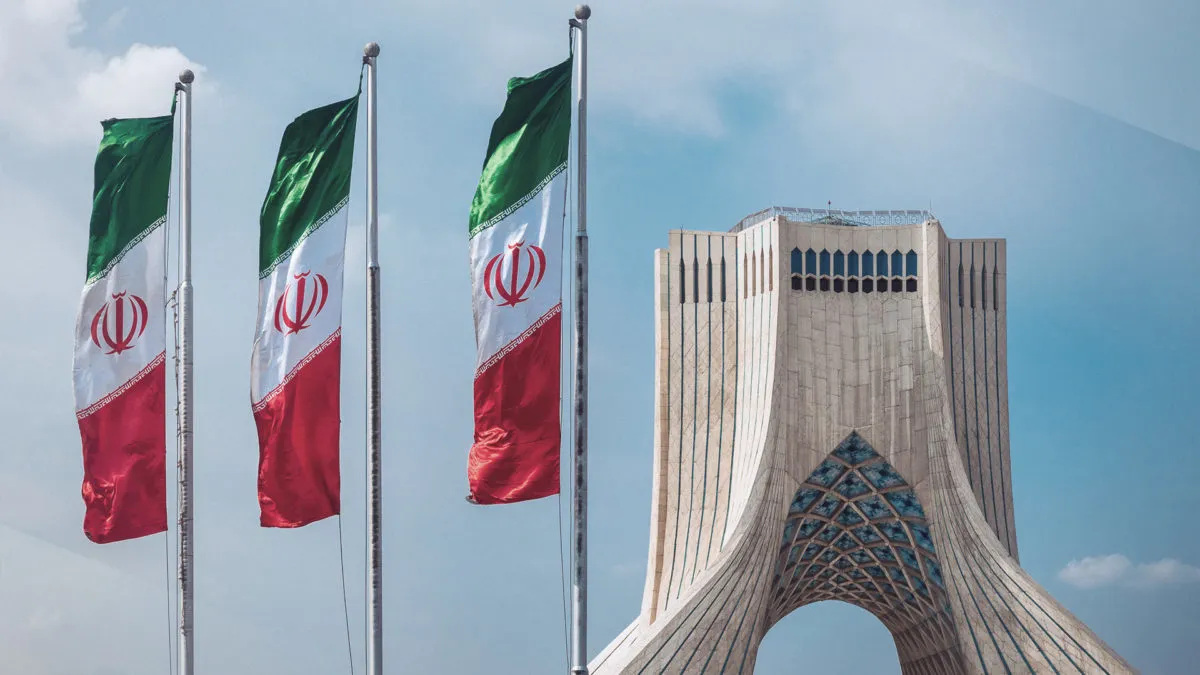
Alongside Nobitex, three additional Iranian platforms were placed under sanctions in the same package. Wallex, identified as the country's second-largest crypto venue by volume, captured approximately 12 percent of national digital asset inflows last year and allegedly facilitated transactions tied to IRGC affiliates. Bitpin, which handled roughly 10 percent of those flows, counts investors with documented ties to sanctions-evasion operations among its backers. Ramzinex, a Tehran-based exchange founded in 2018, processed more than $2.45 billion in cumulative transactions, including payments routed through a state-linked financial institution. Together, the four designated venues represent the backbone of Iran's domestic crypto trading infrastructure.
The designations extended beyond corporate entities to the individuals running them. Treasury named Nobitex chairman and co-founder Amir Hossein Rad, chief executive Seyed Ali Khoee, and co-founders Ali and Mohammad Kharrazi — brothers tied to one of Iran's most politically connected families. Investigative reporting has linked the Kharrazi brothers to senior figures within Iran's supreme leadership, with hundreds of millions of dollars in sanctioned-entity-linked funds moving through their platform. Adding executive-level sanctions signals an effort to ensure the affected individuals cannot simply reconstitute operations through new corporate shells or alternative jurisdictions, narrowing the practical escape routes available to designated parties.
Treasury Secretary Scott Bessent framed the measures as confirmation that Washington's maximum-pressure strategy is reshaping Iran's economic landscape. Bessent argued that as the broader Iranian economy weakens, the regime has increasingly leaned on digital assets to move wealth offshore and evade financial controls. He also confirmed that the United States has now seized approximately $1 billion in Iranian cryptocurrency through the broader Economic Fury campaign, a sharp escalation from the roughly $500 million in seizures disclosed earlier this year. Officials described the program as an ongoing operational effort rather than a one-off enforcement push targeting Tehran's cold wallet reserves.
The latest action follows a series of earlier blows to Iran's on-chain reserves. In April 2026, stablecoin issuer Tether froze approximately $344.2 million held across two wallets attributed to the Central Bank of Iran. The addresses carried documented links to the IRGC-Qods Force and Hizballah, and forensic analysts described the freeze as the largest on-chain immobilization of Iranian sovereign crypto holdings on record. The episode underscored how centralized stablecoin issuers retain significant unilateral power to neutralize sanctioned wallets, a leverage point that has become increasingly central to U.S. financial enforcement strategy and a defining feature of the current sanctions playbook.
Forensic estimates place Iran's broader crypto infrastructure at roughly $7.8 billion in active capital, a figure that has elevated the country's digital asset footprint into a top-tier U.S. national security concern. Analysts tracking wallet clusters have identified behavior patterns at Nobitex consistent with IRGC-linked financial activity, including coordinated movements during internet blackouts that accompanied U.S. military operations inside Iran. The combined picture — sanctioned exchanges, frozen reserves, designated executives, and an estimated $7.8 billion shadow economy — suggests that Tehran has built one of the world's most consequential state-adjacent crypto ecosystems entirely outside Western regulatory oversight.
The Tuesday action draws a clear line under the dominant policy narrative of this cycle: regulators are no longer treating cryptocurrency as a peripheral compliance question but as a frontline instrument of geopolitical and economic warfare. From sweeping exchange designations to direct stablecoin freezes, U.S. authorities are signaling that the perimeter of Bitcoin and broader digital asset enforcement now extends deep into adversarial financial networks. For the wider DeFi and decentralized exchange ecosystem, the pressure underscores how rapidly compliance, custody, and counterparty risk are being redrawn around state-level enforcement priorities.
AI-generated, AI-reviewed, under COINOTAG editorial oversight.